How to Choose a Wisconsin or Southern Minnesota Commercial Roof Installation Company
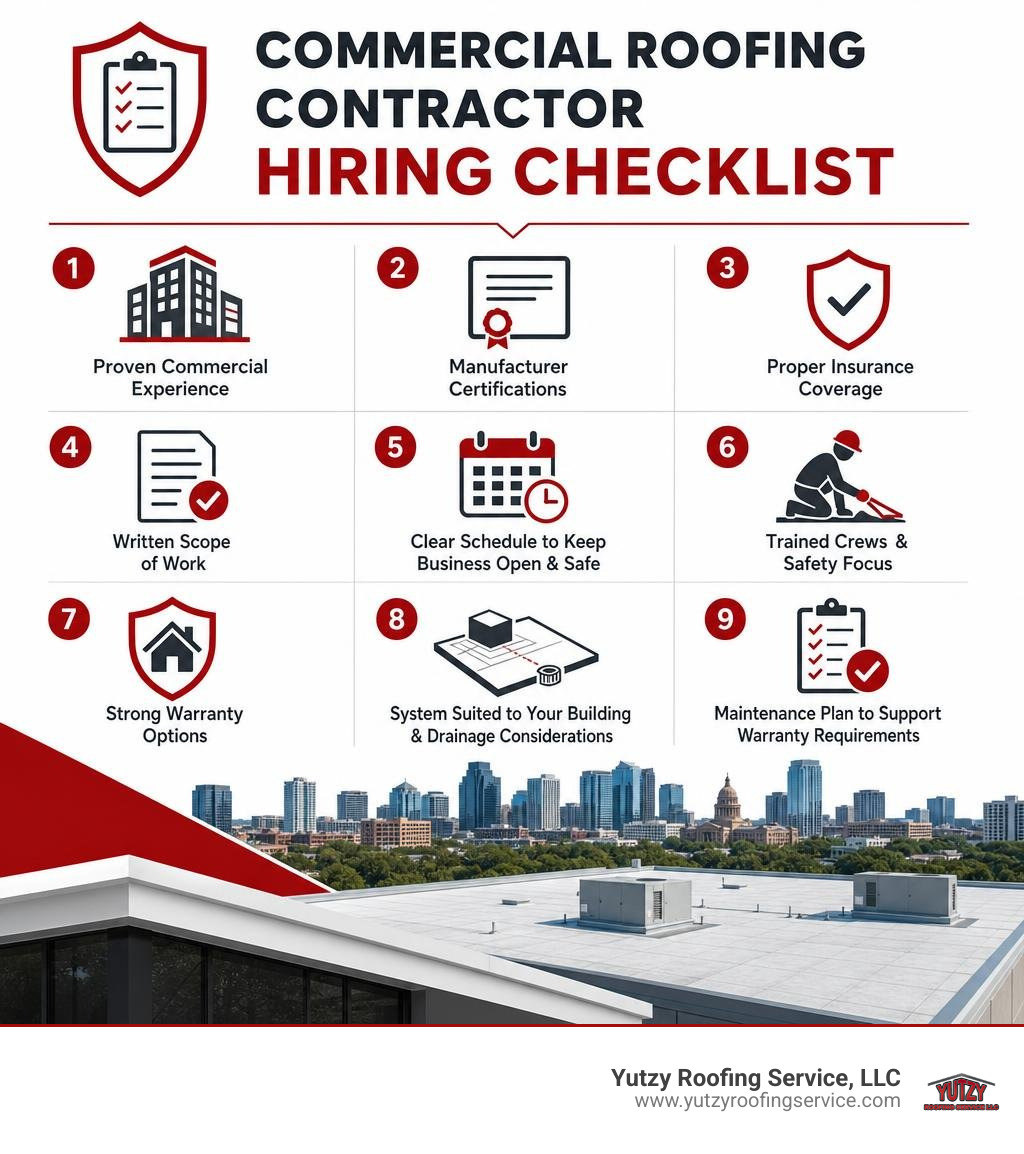
If you found this resource while searching for an Austin commercial roof installation company, use the same vetting principles for commercial properties in Yutzy Roofing Service’s Wisconsin and southern Minnesota service areas. Choose a commercial roof installation company that can prove its commercial experience, manufacturer certifications, insurance coverage, and warranty options. Ask for a written scope, a clear schedule for keeping your business open and safe, and a maintenance plan that supports warranty requirements.
Commercial roofs in markets such as Marshfield, Madison, Appleton, Wausau, Green Bay, Eau Claire, Fond du Lac, Rochester, and Mankato face UV exposure, freeze-thaw movement, heavy rain, wind, snow, ice, and hail. Those conditions can weaken membranes, flashing, and seams over time. A qualified contractor should recommend a system that fits your building, identify drainage concerns, document existing damage, and explain how the crew will protect occupants and operations during the work.
I am Josh Yutzy of Yutzy Roofing Service, LLC, a family roofing professional with experience delivering durable commercial roofing solutions backed by labor and material warranties. While evaluating a commercial roof installation company, use the same standards that protect any business asset: quality materials, trained crews, clear communication, and proactive care.
Commercial roof installation company word roundup:
What to Look for in a Wisconsin or Southern Minnesota Commercial Roof Installation Company
Commercial roofing projects are substantial financial investments. When evaluating a commercial roofer, you are not simply purchasing roofing materials; you are hiring a dedicated project management team. Selecting the right crew requires vetting specific credentials, verified safety standards, and manufacturer accreditations.
Understanding how to choose the best commercial roofing company for your needs begins with verifying that the contractor specializes specifically in commercial applications rather than dividing their focus. Commercial flat roofs, low-slope properties, and industrial facilities present architectural requirements that differ radically from other structures.
Key items to verify immediately include:
- Active general liability coverage tailored for multi-story commercial facilities
- Workman’s compensation coverage for all on-site personnel
- Verifiable standing with top industrial membrane manufacturers
- Proven ability to offer comprehensive No Dollar Limit (NDL) manufacturer warranties
- A dedicated team capable of navigating storm damage assessments and commercial insurance documentation
Key Qualifications of a Wisconsin or Southern Minnesota Commercial Roof Installation Company
A primary indicator of workmanship is manufacturer authorization and alignment with industry benchmarks from groups like the National Roofing Contractors Association. Elite certifications from leading manufacturers, such as Master Elite designations, are awarded to only a small fraction of commercial roofers nationwide (often fewer than 2%). These elite programs require contractors to maintain continuous safety training, hold verified insurance, and undergo random on-site quality audits by manufacturer inspectors.
Reviewing what you need to know before hiring commercial roofers involves examining whether a contractor relies on in-house certified technicians or untracked subcontractors. In-house crews provide superior accountability, tighter schedule adherence, and uniform installation standards across every square foot of membrane.
Questions to Ask Before Signing a Contract
Before signing a commercial roofing proposal, property managers should secure detailed written answers to operational questions. Using a clear checklist for your commercial roof installation contractor: what to look for before you hire ensures complete transparency:
- Scope of Work: Does the proposal explicitly state the tear-off depth, insulation R-value, attachment method, flashing details, and clean-up protocols?
- Turnkey Management: Will the contractor coordinate all permits, waste disposal containers, safety barricades, and third-party manufacturer inspections?
- Emergency Weather Protocols: What measures will the installation crew take if sudden rainfall develops while sections of the commercial roof deck are exposed?
- Schedule & Logistics: What are the daily working hours, where will materials be staged, and how will parking and customer building access be preserved?
Commercial Roofing Systems and Upper Midwest Climate Challenges
Commercial facilities in Wisconsin and southern Minnesota endure demanding weather swings throughout the year. Summer sun, winter freeze-thaw cycles, heavy rain, snow, ice, wind, and hail all place stress on commercial roof assemblies. This seasonal movement causes constant expansion and contraction, stressing seams, curbs, and perimeter flashings.

When following a practical guide to commercial roof installation, building owners must account for the combined threats of UV exposure, wind-driven rain, snowmelt, ice, and severe hail storms. Without proper weather resistance and high puncture resistance, standard roofing assemblies can degrade years ahead of schedule.
Single-Ply Membranes and Restoration Coatings
Commercial properties rely heavily on durable single-ply membranes and fluid-applied systems designed to withstand heavy seasonal loads:
- TPO (Thermoplastic Polyolefin): A bright white, heat-welded membrane that reflects substantial solar radiation. TPO lowers cooling costs and resists chemical exposure, making it a popular choice for retail centers and distribution warehouses.
- EPDM (Ethylene Propylene Diene Monomer): A synthetic rubber membrane prized for exceptional elasticity, long-term UV resistance, and proven performance across varying climate zones.
- PVC (Polyvinyl Chloride): A reinforced, fire-resistant membrane ideal for restaurants and manufacturing plants that exhaust oils, grease, or chemicals onto the roof.
- Fluid-Applied Elastomeric Coatings & Restoration: Seamless silicone, acrylic, or spray foam coating systems applied directly over aging substrates to eliminate leak paths, improve thermal insulation, and renew waterproofing performance.
Selecting from modern commercial roofing solutions for every building type allows building managers to balance capital investment with long-term energy efficiency goals.
Preventing Premature Commercial Roof Failure
Commercial roof failures rarely occur overnight; they develop through progressive weathering and unaddressed moisture penetration. Standing water, defined as ponding that remains on the membrane 48 hours after rain or snowmelt, breaks down adhesives, accelerates UV degradation, and places unnecessary dead-load weight on internal structural decking.
When water breaches the exterior membrane, it saturates underlying polyiso insulation boards, reducing the building’s thermal efficiency and creating conditions for structural rot and mold growth. Routine maintenance, proper cricket installation, and cleared drain scuppers prevent small seam separations from developing into structural repairs.
The Installation Process: What Commercial Building Owners Should Expect
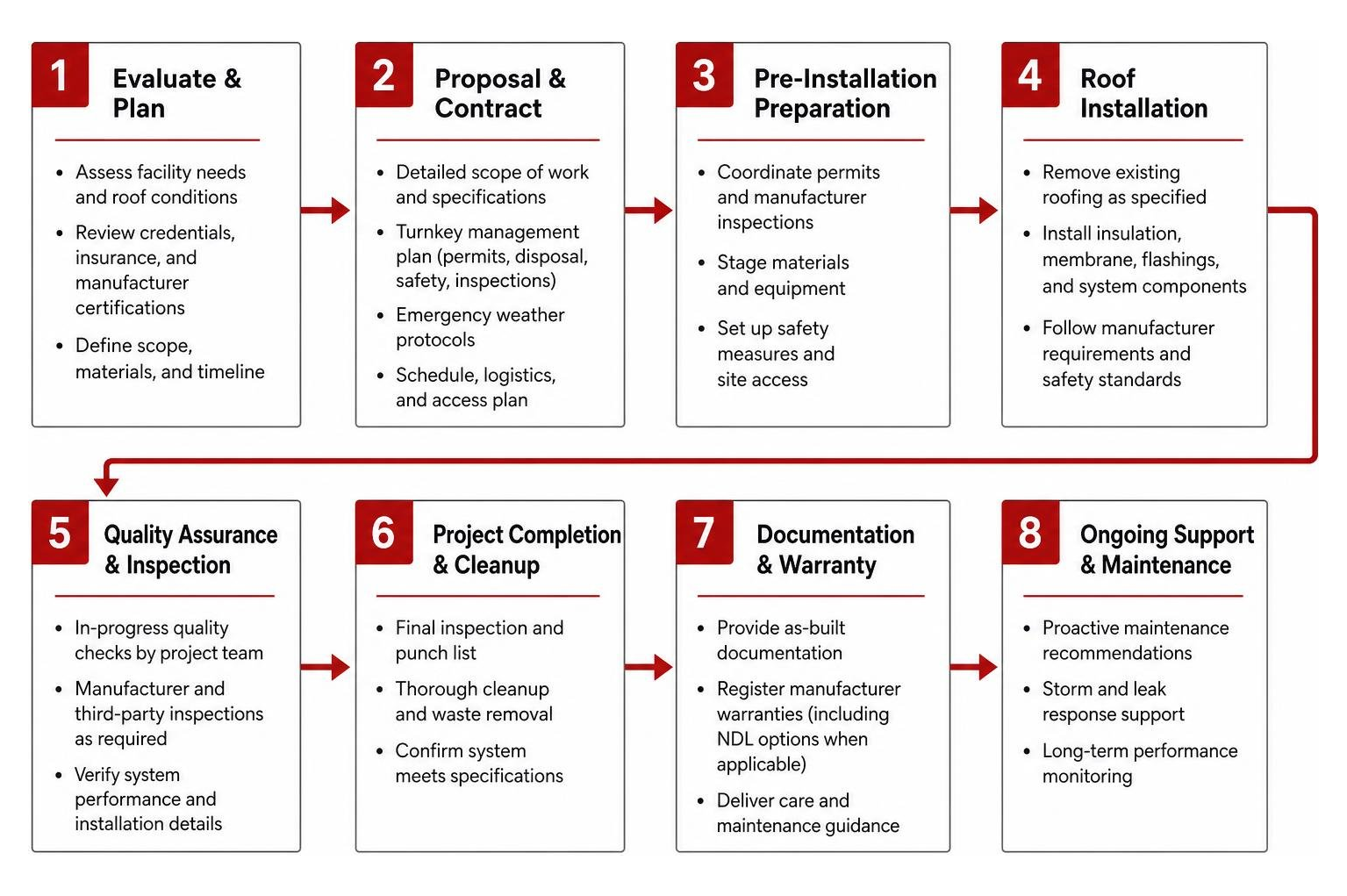
A smooth commercial installation relies on thorough planning and clear communication. Understanding what to expect during a professional roofing installation helps commercial property owners keep their facilities fully functional throughout the build.

Step-by-Step Commercial Installation Workflow
A professional commercial installation follows a structured process:
- Core Sampling & Deck Evaluation: Technicians take physical core cuts of the existing assembly to assess moisture levels, deck type (steel, concrete, or wood), and the number of existing roof layers.
- Substrate Preparation & Tear-Off: Aging, saturated materials are stripped down to the structural deck, followed by repairs to any corroded decking or damaged joists.
- Insulation & Cover Board Installation: High-density polyisocyanurate (polyiso) insulation panels are mechanically fastened or adhered using low-rise foam adhesives to meet local commercial energy codes.
- Membrane Application & Seaming: Single-ply sheets are laid, aligned, and joined using robotic hot-air welders (for TPO and PVC) or specialized seam tapes and primers (for EPDM).
- Detailing, Flashing, and Penetrations: Technicians flash all parapet walls, HVAC curbs, skylights, plumbing vents, and drainage scuppers with reinforced membrane boots.
- Final Quality Audit: The contractor conducts a multi-point inspection alongside the manufacturer’s technical representative to ensure complete compliance with warranty standards.
Reviewing a detailed new commercial roof installation guide to keep you covered provides building owners with the necessary benchmarks to evaluate work at each phase.
How a Wisconsin or Southern Minnesota Commercial Roof Installation Company Minimizes Business Disruption
Commercial facilities cannot afford unannounced closures during a roof replacement. Professional roofers use deliberate logistics strategies so daily operations can continue safely:
- Strategic Material Staging: Crane deliveries and heavy pallet placement are scheduled outside peak business hours to maintain parking availability and tenant access.
- Targeted Noise Management: Heavy mechanical fastening and tear-off operations are coordinated around corporate meetings, medical appointments, or production shifts.
- Odor Mitigation: When applying hot asphalt or solvent-based adhesives, crews position equipment downwind and seal fresh-air HVAC intakes to keep odors out of tenant spaces.
- Strict Safety Perimeters: Ground crews erect heavy-duty perimeter fencing, debris chutes, and covered walkways to protect employees, visitors, and delivery drivers.
Taking these proactive measures ensures you don’t let it rain on your parade with a commercial new roof installation, keeping your staff safe and your daily business operations running smoothly.
Long-Term Protection: Commercial Warranties and Preventative Maintenance
A commercial roof warranty is only as reliable as the ongoing maintenance that supports it. Most major membrane manufacturers require verified, bi-annual commercial roof inspections to keep warranty protections valid.
| Warranty Feature | Standard Material Warranty | No Dollar Limit (NDL) Manufacturer Warranty |
|---|---|---|
| Material Defect Coverage | Covered (prorated over time) | 100% Non-Prorated Coverage |
| Installation Workmanship | Contractor workmanship warranty only | Backed directly by the Manufacturer |
| Repair Cost Ceiling | Capped at initial material purchase price | No financial cap on covered repairs/replacements |
| Leak Remediation | Materials only; labor often excluded | Full labor, materials, and disposal covered |
| Inspection Requirements | Self-monitored | Mandatory scheduled inspections & documentation |
Proactive preventative maintenance programs provide documented proof of regular upkeep, helping owners catch minor flashing shifts, clogged drains, or punctures before moisture reaches the interior.
Frequently Asked Questions About Commercial Roofing in Wisconsin and Southern Minnesota
Why is professional installation crucial for commercial building structures?
Improperly installed commercial roofing allows moisture to seep into structural steel decking, concrete slabs, and drywall assemblies. Beyond damaging interior inventory, trapped water compromises load-bearing integrity and can cause mold growth within wall cavities, creating indoor air quality and tenant safety concerns.
How does the Upper Midwest climate accelerate commercial roof wear?
Wisconsin and southern Minnesota weather can combine strong summer UV exposure with freeze-thaw cycles, heavy snow, ice, wind, and hail. That movement stresses roof membranes, seam adhesives, perimeter flashings, rooftop penetrations, and drainage areas, especially when minor damage is not inspected and repaired promptly.
What are the benefits of a No Dollar Limit (NDL) warranty?
An NDL warranty provides premier financial protection. Unlike standard warranties that prorate coverage or cap payouts at the original material purchase price, an NDL guarantee is backed directly by the manufacturer and covers the entire cost of labor and materials needed to correct covered failures, with no dollar cap.
Conclusion
Safeguarding your commercial building requires partnering with a certified contractor who understands modern single-ply assemblies, restoration coatings, and preventative maintenance. By insisting on manufacturer certifications, verified safety protocols, clear operational logistics, and robust NDL warranties, property managers can protect their real estate investments for decades.
At Yutzy Roofing Service, we bring proven expertise, premium fluid-applied restoration systems, and comprehensive maintenance solutions designed to maximize roof service life and lower lifetime building operating costs for commercial properties across Wisconsin and southern Minnesota. Discover how our team can protect your commercial facility by visiting our commercial roofing services page today.
