Why Commercial Rubber Roofing Is the Smart Choice for Flat Roof Buildings
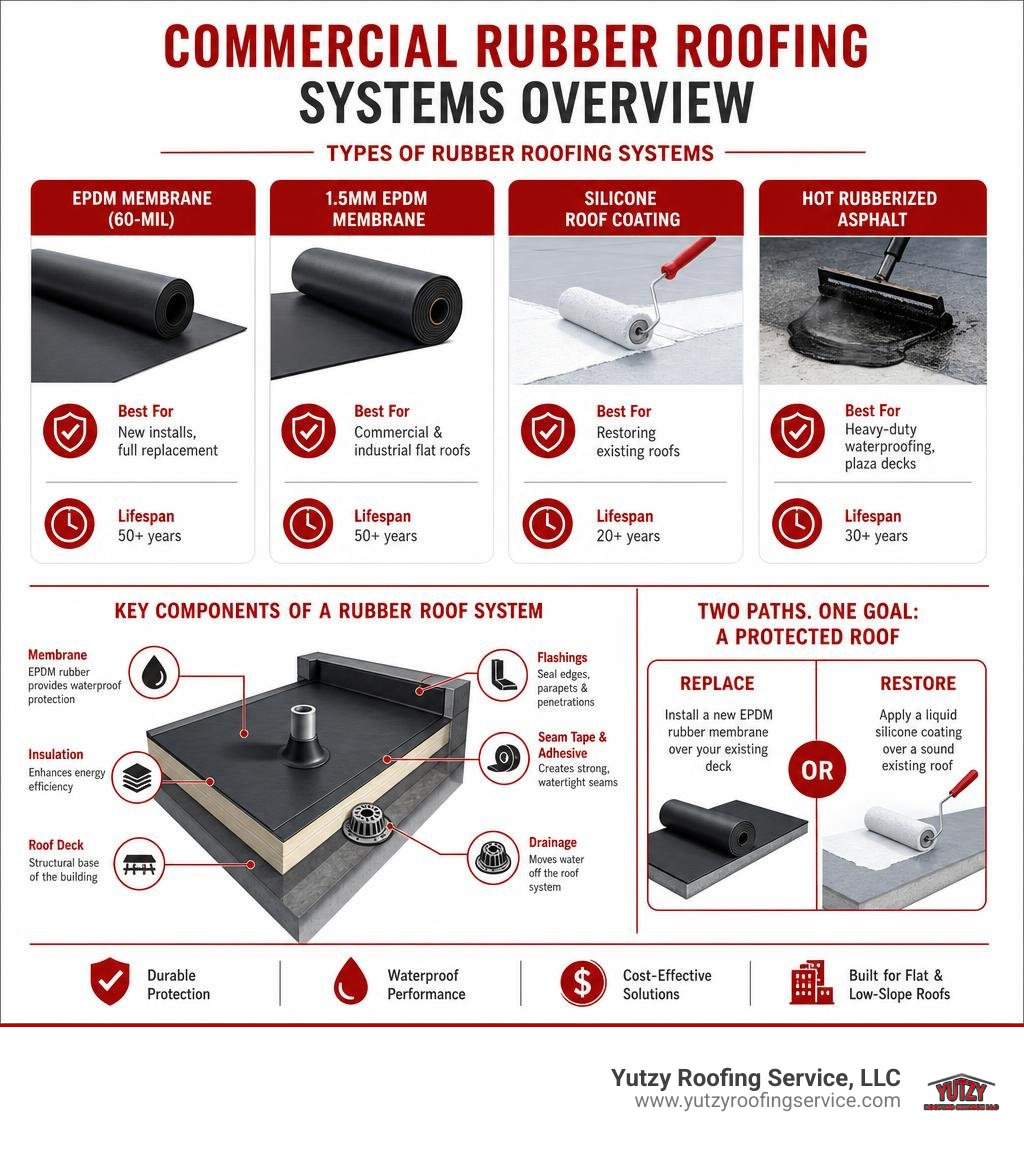
Commercial rubber roofing is one of the most durable and cost-effective waterproofing solutions available for flat and low-slope buildings today. If you’re evaluating your options, here’s a quick summary:
| System Type | Best For | Expected Lifespan |
|---|---|---|
| EPDM Membrane (60-mil) | New installs, full replacement | 50+ years |
| 1.5mm EPDM Membrane | Commercial & industrial flat roofs | 50+ years |
| Silicone Roof Coating | Restoring existing roofs | 20+ years |
| Hot Rubberized Asphalt | Heavy-duty waterproofing, plaza decks | 30+ years |
The core choice comes down to two paths:
- Replace — Install a new EPDM rubber membrane over your existing deck
- Restore — Apply a liquid silicone coating over a structurally sound existing roof
Restoration is almost always the more budget-friendly option. And for Wisconsin commercial properties, where roofs endure brutal freeze-thaw cycles and heavy snow loads, choosing the right rubber roofing system isn’t just a maintenance decision — it’s an asset protection decision.
Extreme winters crack and shrink inferior roofing materials. Standing water from spring snowmelt finds every weak seam. Summer heat drives thermal expansion that tears flashing loose. A properly specified rubber roofing system is engineered to handle all of it — with EPDM membranes remaining flexible at temperatures as low as -45°C and capable of stretching over 300% to absorb structural movement.
I’m Josh Yutzy, and at Yutzy Roofing Service, LLC, we’ve been specifying and installing commercial rubber roofing systems across Wisconsin, Missouri, and Kansas since 1995. In the sections below, we’ll walk you through every option — materials, costs, installation methods, and maintenance — so you can make a confident decision for your property.
Commercial rubber roofing terms to remember:
Types and Specifications of Commercial Rubber Roofing Systems
When commercial property owners talk about “rubber roofing,” they are usually referring to synthetic elastomer membranes or fluid-applied rubber compounds. Selecting the right technology depends on your building’s structural load capacity, roof slope, existing substrate condition, and operating environment.
Here is a breakdown of the primary commercial rubber roofing systems:
- EPDM (Ethylene Propylene Diene Monomer) Membrane: EPDM is a single-ply synthetic rubber membrane manufactured from ethylene, propylene, and a small amount of diene monomer. Over 1.5 billion m² of RubberGard EPDM membrane solutions have been installed globally since 1980. It is renowned for its exceptional UV resistance, cold-weather flexibility, and decades-long service history on low-slope commercial structures.
- Liquid-Applied Silicone Roof Coatings: High-solids, 100% silicone coatings create a monolithic, fluid-applied rubber membrane directly over existing roofing materials. Formulations like self-leveling silicone cure into a seamless, flexible shield that resists standing water without breaking down or chalking.
- Hot Rubberized Asphalt (HRA): Systems like Henry 790-11 Hot Rubberized Asphalt consist of refined asphalts, synthetic rubber polymers, and mineral stabilizers melted on-site and applied as a continuous hot fluid. This creates a 100% solids, fully bonded membrane ideal for plaza decks, green roofs, and heavy-duty commercial waterproofing.
EPDM Membrane Thickness: 45-Mil, 60-Mil, and 1.5mm Options
EPDM membrane performance and puncture resistance correlate directly with material thickness. Selecting the correct gauge is vital for high-traffic or extreme-weather regions like Madison, Wausau, and Green Bay:
- 45-Mil (approx. 1.14mm): Standard baseline membrane often specified for budget-conscious low-slope applications with zero foot traffic.
- 60-Mil (approx. 1.52mm): Commercial-grade industry standard evaluated against ASTM D4637 guidelines. Upgrading to a 60-mil thickness provides significantly greater puncture resistance and tear strength, making it ideal for facilities with regular rooftop HVAC servicing or extreme climate exposure.
- 1.5mm Heavy-Duty Membrane: A 1.5mm EPDM Rubber Roofing Membrane is roughly 30% thicker than standard 1.2mm membranes, delivering superior resistance against physical impacts, structural thermal shock, and uneven substrate contours. Discover more about the top benefits of installing EPDM rubber roofing on your business to see why thicker gauges consistently lower life-cycle repair expenses.
Commercial Rubber Roofing Attachment Methods: Adhered, Mechanical, and Ballasted
How an EPDM rubber membrane is attached to the roof deck determines its wind uplift rating and thermal efficiency:
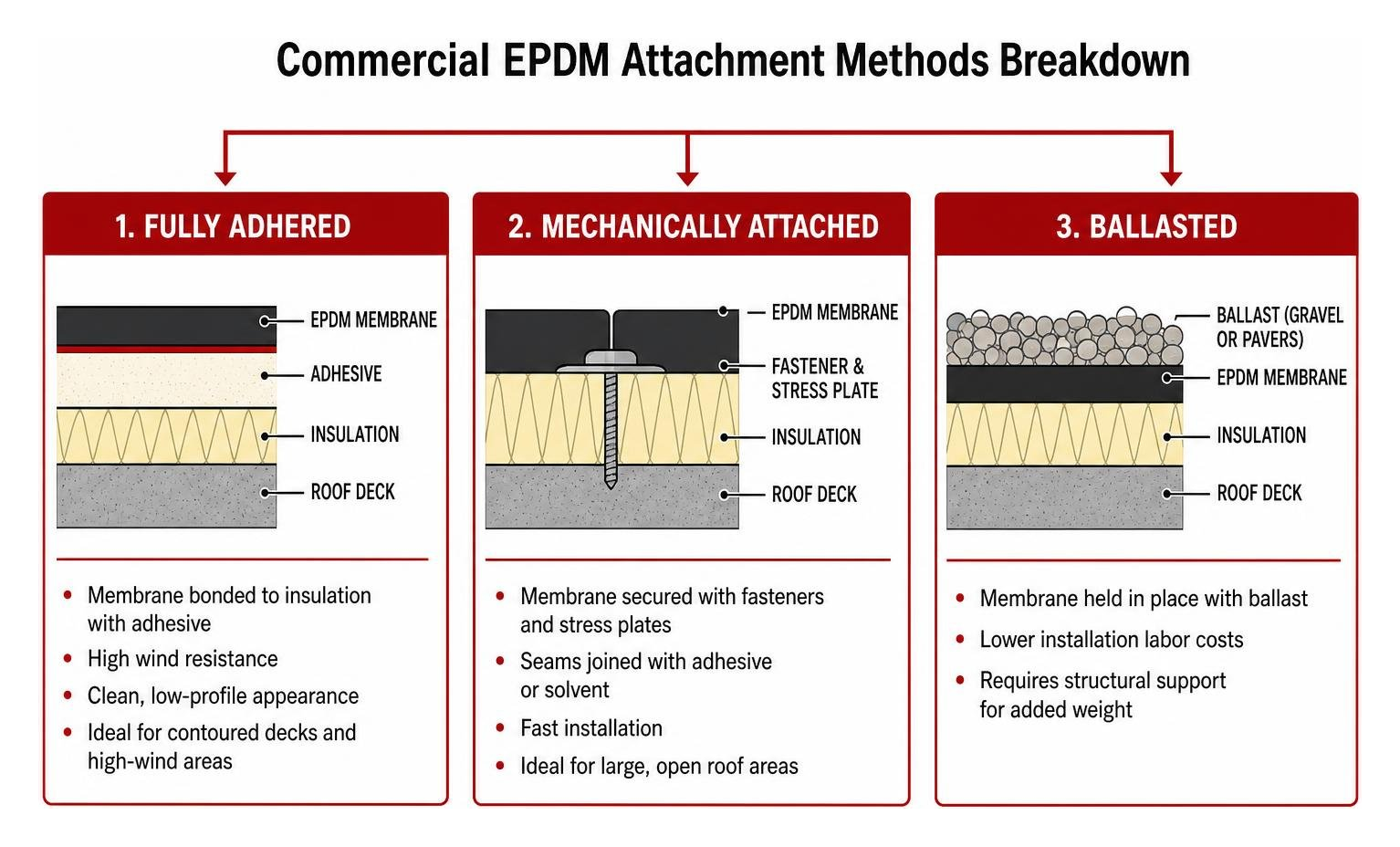
- Fully Adhered Systems: The membrane is continuously bonded directly to substrate insulation boards using specialized contact adhesives or solvent-free bonding agents. Fully adhered systems offer high wind resistance, clean aesthetic lines, and minimal stress concentration points, making them optimal for contoured decks or high-wind locations in Eau Claire and Appleton.
- Mechanically Attached Systems: EPDM sheets are laid loose over thermal insulation and secured at designated seam margins using mechanical fasteners and stress plates, followed by solvent-welded or adhesive-sealed overlapping seams. This installation method provides rapid coverage on large steel-deck warehouses and manufacturing plants.
- Ballasted Systems: Unbonded rubber sheets are unrolled over insulation and anchored in place using round river gravel or concrete pavers (typically 10 to 12 lbs per square foot). Ballasted designs lower installation labor costs but require verification that the facility’s load-bearing framing can support the heavy ballast weight.
Core Benefits and Performance Standards

Selecting commercial rubber roofing yields significant functional advantages over traditional asphaltic, built-up (BUR), or organic felt roofs. Modern single-ply rubber membranes and liquid elastomeric restoration coatings meet rigid commercial building standards (such as ASTM D4637 compliance and BBA certification), providing long-term structural security. Learn more about the long-term benefits of EPDM roofing.
Key performance metrics include:
- 50+ Year Service Life: Independent testing and real-world field evaluations confirm that properly maintained 1.5mm and 60-mil EPDM sheets remain fully functional for over five decades.
- 300%+ Elongation Capacity: Rubber membranes can stretch over three times their original dimension without tearing, absorbing building settling, structural vibrations, and severe thermal movement.
- Sub-Zero Flexibility (-45°C / -49°F): Unlike asphaltic materials that turn brittle and crack in deep sub-zero cold, synthetic rubber maintains elastomeric elasticity down to -45°C.
- Fire Safety Ratings: Commercial EPDM formulations incorporate Low-Slope Fire Retardant (LSFR) compounds, meeting Underwriters Laboratories (UL) Class A fire ratings for commercial building assemblies.
Performance Advantages of Commercial Rubber Roofing vs. Traditional Materials
Traditional multi-ply asphalt built-up roofing (BUR) and modified bitumen rely on heavy, rigid materials bonded with hot pitch or torches. Over time, UV radiation drives off the organic oils in asphalt, causing cracking, shrink-back, and seam degradation within 10 to 15 years.
In contrast, EPDM single-ply rubber is chemically inert and UV-stable without requiring granule surface protection. Because EPDM contains no volatile plasticizers to leach out over time, it retains its elasticity across operating temperatures ranging from -40°C up to +120°C. Read our guide on why EPDM rubber roofing is the stretch your budget needs to analyze long-term material lifecycle savings.
Liquid Silicone Roof Restoration vs. Commercial Rubber Roofing Membrane Replacement
When an existing flat roof reaches 15 to 20 years of age, facility owners often assume an expensive total tear-off and replacement is mandatory. However, if the underlying insulation remains dry and structurally sound, liquid-applied silicone restoration is a highly effective alternative.
A high-solids silicone system—such as Silicone Roof Coating Protection or Rub-R-Roof Silicone Coating—is fluid-applied over the existing membrane to form a seamless waterproof barrier.
Silicone’s distinct advantage is its resistance to standing or ponding water. While traditional acrylic coatings re-emulsify and break down under continuous ponding water, high-solids silicone maintains bond strength and watertight protection indefinitely. Explore our complete breakdown on rubber roof sealant vs coating: which one wins? to match your surface needs.
Cost Analysis and Commercial Roof Restoration Strategies

Commercial roof replacement carries hidden overhead costs beyond material delivery and labor: tear-off labor fees, municipal dumpster rentals, landfill tipping charges, and operational disruptions inside your facility during rainy tear-off windows.
Applying an elastomeric coating system allows property managers in areas like Fond Du Lac, Rochester, and Mankato to eliminate tear-off expenses while capturing substantial return on investment (ROI).
| Cost Factor | Complete EPDM Membrane Tear-Off & Replacement | Liquid Silicone Roof Restoration System |
|---|---|---|
| Material & Equipment | High (membranes, fasteners, insulation, adhesive) | Moderate (liquid silicone, primers, seam tape) |
| Tear-Off & Disposal | $1.50 – $3.00+ per sq. ft. | $0.00 (restores existing substrate) |
| Facility Interruption | High noise, open roof exposure risks | Minimal noise, zero structural penetration |
| Cool Roof Energy Impact | Standard dark EPDM absorbs solar heat | High reflectivity (SRI 106) cuts cooling load |
| Warranty Options | Up to 20-30 year manufacturer warranty | Up to 18-year renewable non-prorated warranty |
Restoration systems qualify as a maintenance tax deduction in many accounting scenarios rather than a capital improvement expenditure. Use the ultimate EPDM roofing cost calculator and price guide to evaluate your roof dimensions, or read about why choosing EPDM restorations is a smart investment for your business.
Long-Term Maintenance, Inspection, and Seam Repair
While commercial rubber roofing is exceptionally resilient, routine preventive maintenance is essential to maximize system longevity and protect your warranty.
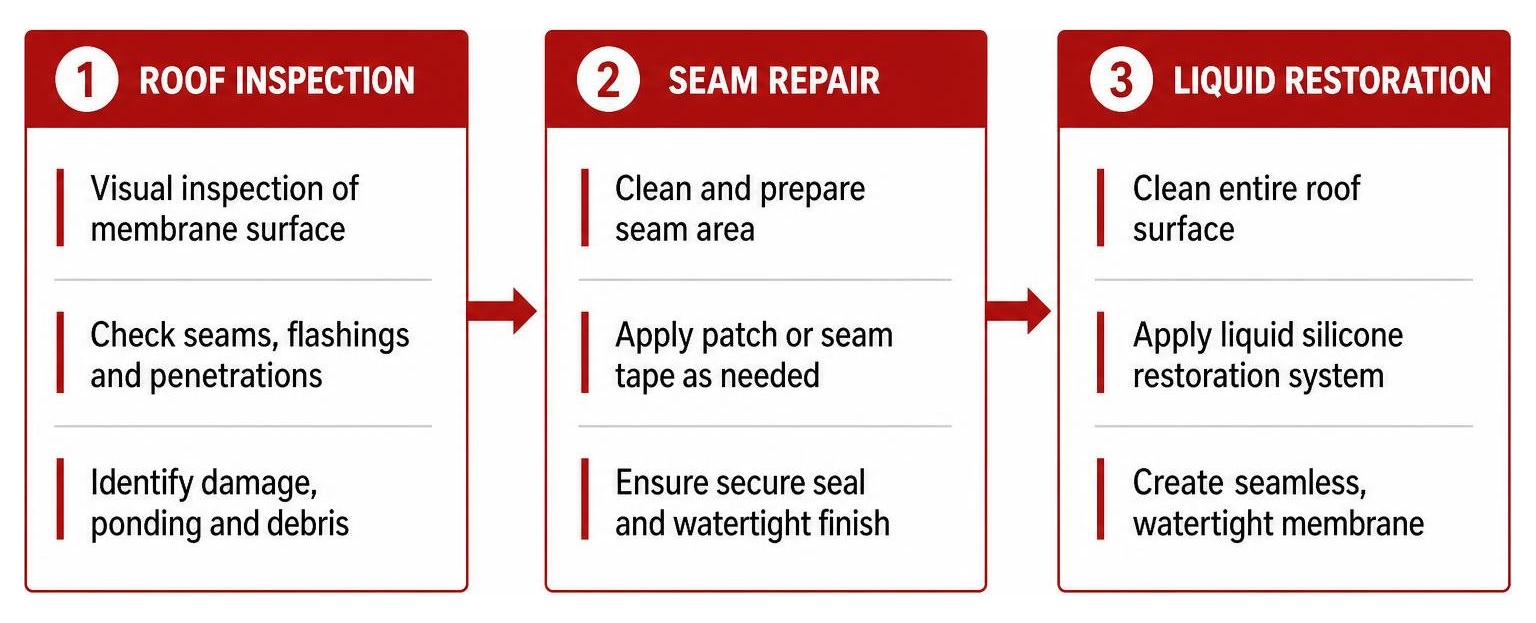
Essential maintenance practices include:
- Biannual Roof Inspections: Inspect roof surfaces twice a year (spring and autumn) and immediately following major hail or wind events.
- Debris Cleared from Drains & Scuppers: Ponding water caused by blocked scuppers or internal drains increases mechanical load and stress on roof penetrations.
- Monitoring Membrane Seams & Flashing: EPDM membrane sheets are joined using factory seam tapes or contact adhesives. Over 10 to 15 years, thermal stress can cause localized seam lifting. Consult our step-by-step guide on how to maintain a rubber roof membrane for details on routine care.
- Proactive Seam Sealing & Flashing Maintenance: If a seam shows signs of separation, clean the target area, apply appropriate primer, and bridge the joint with self-adhering EPDM cover strips. Review our tutorial on patching things up: a guide to EPDM flashing and seam repair and learn how to spot and stop EPDM seam failures before they flood your business.
Frequently Asked Questions About Commercial Rubber Roofing
How long does a commercial rubber roof system typically last?
A professionally installed 60-mil or 1.5mm EPDM rubber roof system has an expected service life exceeding 50 years. Liquid silicone roof coating restoration systems typically extend an existing roof’s life by 15 to 20+ years, and these coating systems can be re-applied at the end of their warranty term to renew protection indefinitely.
What is the difference between EPDM membranes and silicone roof coatings?
EPDM is a pre-manufactured single-ply rubber sheet unrolled, fastened, or adhered to the roof deck during construction or complete re-roofing. Silicone roof coatings are liquid-applied elastomeric formulations sprayed or rolled directly onto existing, structurally sound roof surfaces, curing into a seamless, custom-fitted waterproof membrane.
How do commercial rubber roofs handle ponding water and thermal shock?
High-solids silicone roof coatings are chemically inert to standing water, meaning they will not re-emulsify, soften, or peel under ponding conditions. EPDM rubber membranes handle thermal shock exceptionally well due to their >300% elongation capacity and continuous cold flexibility down to -45°C (-49°F), preventing thermal cracking during extreme temperature swings.
Conclusion: Protect Your Commercial Property Investment
Your commercial building’s roof is its single most critical defense against weather, water intrusion, and structural damage. Choosing a high-performance commercial rubber roofing system—whether through installing a heavy-duty EPDM single-ply membrane or applying a high-solids silicone restoration coating—delivers long-term waterproofing confidence and lower life-cycle costs.
At Yutzy Roofing Service, LLC, we specialize in high-performance commercial roof restoration, EPDM repair, spray foam coatings, and ongoing roof protection across Marshfield, Madison, Appleton, Green Bay, Wausau, Eau Claire, Fond Du Lac, Rochester, and Mankato. Backed by our renewable, non-prorated warranties for up to 18 years, we ensure your building stays completely protected year after year.
Ready to extend the life of your commercial roof and avoid unnecessary tear-off costs? Invest in professional EPDM restoration for your commercial roof with our expert team today!
