Key Types of Roof Sealant for Metal Roofs Compared
Commercial metal roofs endure punishing thermal cycles across the Upper Midwest. On an industrial warehouse in Fond Du Lac or an agricultural facility near Marshfield, roof surface temperatures can swing from sub-zero winter chills to over 140°F under blistering summer sun. Because metal panels expand and contract continuously, selecting the proper chemistry is critical. Rigid fillers or standard hardware-store caulks crack within a single season.
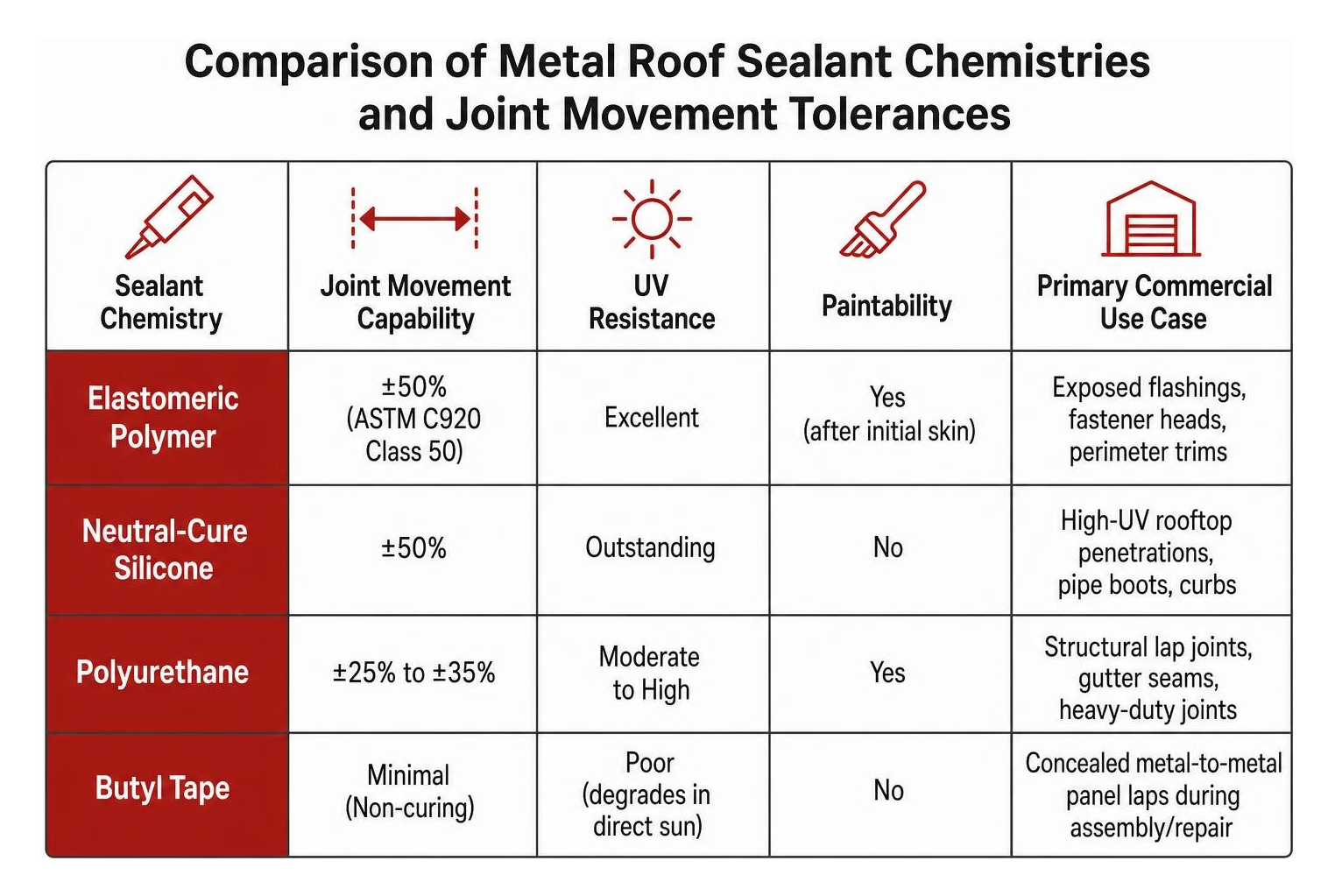
When choosing a sealant, commercial property managers and maintenance teams generally evaluate four primary formulations: advanced elastomeric polymers, neutral-cure silicones, polyurethanes, and concealed butyl tapes. Understanding how these chemistries behave under structural movement and environmental stress ensures your building remains leak-free. For a deeper breakdown of material choices, explore our metal roof sealant expert guide for 2026.
| Sealant Chemistry | Joint Movement Capability | UV Resistance | Paintability | Primary Commercial Use Case |
|---|---|---|---|---|
| Elastomeric Polymer | ±50% (ASTM C920 Class 50) | Excellent | Yes (after initial skin) | Exposed flashings, fastener heads, perimeter trims |
| Neutral-Cure Silicone | ±50% | Outstanding | No | High-UV rooftop penetrations, pipe boots, curbs |
| Polyurethane | ±25% to ±35% | Moderate to High | Yes | Structural lap joints, gutter seams, heavy-duty joints |
| Butyl Tape | Minimal (Non-curing) | Poor (degrades in direct sun) | No | Concealed metal-to-metal panel laps during assembly/repair |
Advanced polymer formulas, like those detailed in manufacturer technical information sheets, combine the UV stability of silicone with the durability and paintability of polyurethane. Premium elastomeric formulations, such as Titebond WeatherMaster, provide low-VOC compliance (under 50 g/L) while meeting strict ASTM C920 Class 50 standards. For complex industrial environments, neutral-cure formulas like MetaLink High Performance Metal Roof Sealant deliver exceptional cross-linked bonding across challenging substrates without releasing corrosive acids during the curing process.
Evaluating Roof Sealant for Metal Roofs by Movement Capability
Thermal expansion generates relentless shear force along metal panel seams and perimeter flashings. In engineering terms, if a joint expands by 1/8-inch in summer and contracts by 1/8-inch in winter, the sealant must stretch and compress without splitting down the center (cohesive failure) or peeling off the metal substrate (adhesive failure).
To withstand these forces, modern commercial sealants are tested under ASTM C920 Class 50 specifications, validating their ability to handle ±50% joint movement. Advanced polymer formulas maintain an elongation rate well above 500%, allowing them to stretch like a rubber band when structural panels shift under thermal shock. When evaluating products from commercial caulks & sealants lines, always confirm the movement rating matches the exposure profile of your commercial facility.
Substrate Compatibility: Galvanized, Aluminum, and PVDF Coatings
Metal roofing assemblies utilize diverse finishes, each reacting differently to chemical adhesives:
- Galvanized & Galvalume Steel: Requires non-acidic, neutral-cure formulations to prevent corrosive reactions with the protective zinc-aluminum coating.
- Factory-Applied PVDF (Kynar 500®): These high-performance fluoropolymer paint finishes resist staining, which also makes them difficult for standard caulks to grip. Premium oxime silicones and elastomeric polymers bond securely to PVDF without requiring aggressive chemical etching.
- Anodized & Bare Aluminum: Prone to rapid thermal expansion; demands high-tack sealants that retain flexibility at extreme low temperatures.
- Copper Accents & Valley Flashings: Certain acetic-cure silicones cause immediate oxidation on copper; only neutral-cure or specialized hybrid polymers should be used.
Using the wrong adhesive can cause chemical debonding or accelerate panel corrosion. For a full breakdown of regulatory and substrate requirements, review our proven metal roof caulk guide.
Surface Preparation for Commercial Metal Roof Restoration
Even the highest-rated commercial sealant will fail if applied over dirt, chalking factory paint, industrial grease, or loose rust scale. Proper surface preparation accounts for roughly 80% of long-term repair performance.
Before applying any restoration materials to a commercial roof in areas like Green Bay or Rochester, we follow a systematic cleaning and prep routine:
- High-Pressure Washing: Wash panels at 3,000 to 4,000 PSI using a dedicated biodegradable cleaner to strip away environmental oxidation, airborne soot, biological growth, and chalking residue.
- Mechanical De-Scaling: Target areas with active corrosion using wire wheel brushes or abrasive blasting to remove loose rust down to sound metal.
- Rust Treatment & Priming: Treat tightly adhered, stable surface rust with a rust-inhibiting primer to neutralize further oxidation and create an optimal bonding profile for fluid-applied membranes.
- Adhesion Field Testing: On aged factory finishes or previously coated surfaces, perform cross-hatch adhesion patch tests to ensure the new sealant system achieves full mechanical and chemical bonding.
Following structured maintenance protocols preserves panel integrity and avoids unexpected leaks. For detailed operational advice, read about our recommended preventative metal roof maintenance practices and explore our complete guide to commercial metal roof restoration.
Step-by-Step Application for Critical Roof Penetrations and Seams
Water entry on commercial metal roofs rarely happens through the center of a steel panel. Leaks concentrate at rooftop penetrations, HVAC curbs, exhaust stacks, rake flashings, and horizontal lap joints where water can slip beneath loose laps.
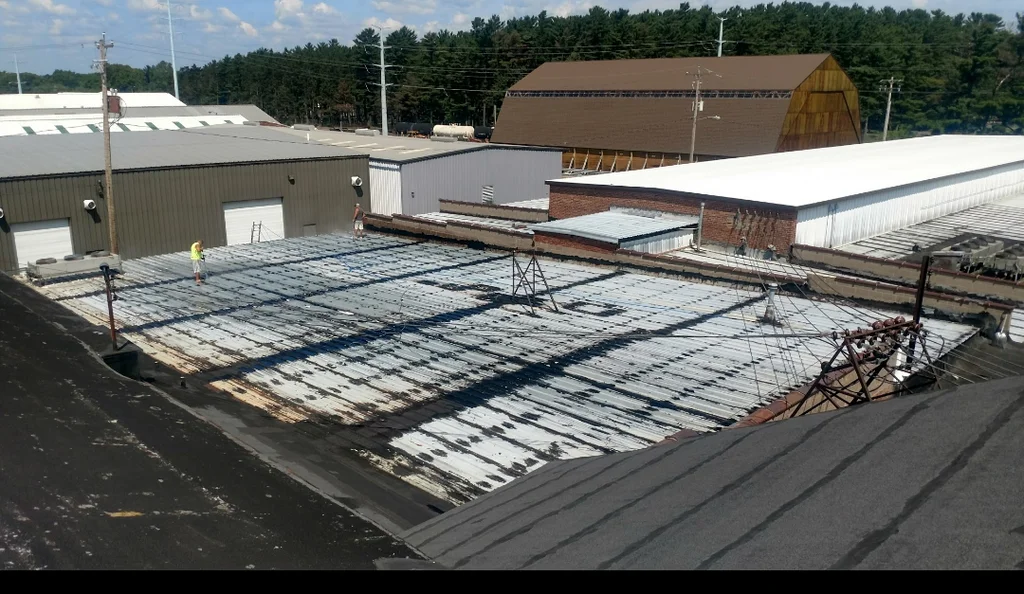
Sealing these complex junctions requires proper material layering:
- Pipe Boots & Exhaust Stacks: Clean the base flange, apply a continuous 3/8-inch bead of hybrid elastomeric polymer between the metal deck and the flexible boot, secure with mechanical fasteners, and encapsulate the perimeter bead.
- HVAC Equipment Curbs: Install rigid metal counter-flashings backed by high-grade sealant, tooling the exposed edge at a 45-degree angle to shed standing water away from the curb wall.
- Expansion Joints & Transitions: Bridge structural gaps with flexible membrane banding embedded into a two-course sealant application to absorb building vibration without tearing.
How to Apply Roof Sealant for Metal Roofs Around Fasteners and Seams
Loose or backing-out screws are among the most frequent maintenance issues on commercial metal roofs. Over years of thermal cycling, the neoprene washers under screw heads dry out, crack, and allow water to channel down the screw threads directly into the building insulation.
When sealing horizontal and vertical panel seams, combining techniques yields the strongest defense. Applying liquid polymer along panel laps, or embedding high-tensile fabric between coats, creates a permanent seal. For deep lap joints, integrating mastic tape and liquid sealants delivers an airtight, multi-layered moisture barrier that withstands severe weather.
Curing Conditions, Temperature Limits, and Recoat Windows
Weather windows across Wisconsin and Minnesota are often tight. Commercial roofers need sealants that perform reliably even during sudden temperature drops in early spring or late autumn:
- Application Temperatures: Premium elastomeric polymers like Titebond WeatherMaster Metal Roof Sealant can be applied in temperatures as low as 0°F (-18°C), provided the metal substrate is entirely dry and free of frost or ice.
- Tack-Free & Tooling Windows: Tooling times generally range from 10 to 15 minutes for a standard 1/4-inch bead. Depending on ambient relative humidity and temperature, tack-free skins form between 15 and 90 minutes.
- Full Cure Profile: Most moisture-curing polymers achieve full structural cure within 24 to 48 hours. Ensure no heavy rain or freezing moisture occurs during the initial cure window.
For comprehensive specifications on tooling and weather limitations, consult our weather-resistant roofing caulk guidelines.
Frequently Asked Questions About Metal Roof Sealants
How long does a commercial metal roof sealant last before recoating?
A high-performance elastomeric or neutral-cure silicone sealant installed on a commercial facility typically delivers a reliable service life of 10 to 15 years before requiring maintenance recoating. Durability depends on UV exposure, joint movement frequency, and local weather severity across areas like Appleton or Wausau. To maximize system longevity, review our metal roof sealant performance guide.
Can sealant be applied directly over surface rust on metal panels?
Sealant should never be placed over loose, flaking rust scale. However, light, tightly bound surface rust can be successfully sealed if you first clean the area, remove loose debris with a wire brush, and apply a dedicated rust-inhibiting metal primer. Specialty direct-to-metal elastomeric coatings with built-in rust inhibitors can also be applied directly over stable light rust, neutralizing oxidation while restoring water tightness.
What is the difference between elastomeric caulk and monolithic roof coatings?
Elastomeric caulk is a thick, highly viscous compound dispensed from cartridges or sausages to seal localized gaps, fastener heads, flashing joints, and penetrations. Fluid-applied monolithic roof coatings are liquid-applied elastomeric or silicone systems rolled or sprayed over the entire metal roof assembly. Combining localized caulk reinforcement at seams with a full fluid-applied top coat creates a seamless, durable membrane across the whole building. Learn more in our comprehensive metal roof sealant guide.
Conclusion
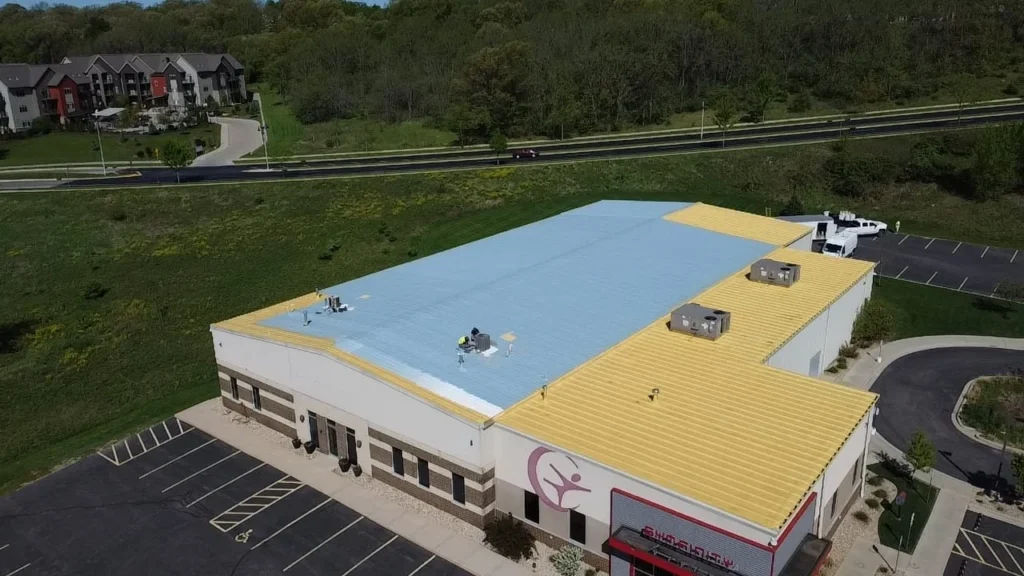
Protecting a commercial metal roof from leaks, fastener failures, and thermal stress does not require an expensive, disruptive roof tear-off. By selecting high-performance elastomeric polymers, oxime silicones, and proven multi-course seam reinforcement systems, building owners can extend roof service life by decades while cutting maintenance costs.
At Yutzy Roofing Service, LLC, we specialize in high-durability commercial roof restorations, elastomeric coatings, and complete metal roof waterproofing across Wisconsin and Minnesota—including Madison, Wausau, Appleton, and Eau Claire. Our commercial restoration systems are backed by non-prorated, renewable warranties for lasting peace of mind.
To determine the best solution for your commercial facility, explore our guide on choosing the best caulk for commercial metal roofs or contact our team today for a comprehensive commercial roof evaluation.
