

Top High-Temperature Formulations Tested for Commercial Metal Flashing and Penetrations
For commercial metal flashing and penetrations, the top formulations of heat resistant caulk for metal are high-temperature neutral-cure RTV silicones rated up to 600°F for dynamic joints and inorganic refractory putties for static high-heat joints. Leading industrial formulations include LOCTITE SI 596, GE Metal Silicone 2, RUTLAND 600°F RTV, and Würth Furnace Putty 1000.
Why Commercial Metal Systems Require Heat Resistant Caulk for Metal
Industrial metal roofing profiles, boiler exhaust stacks, factory flues, and commercial HVAC penetrations operate under punishing environmental stress. During peak production cycles, industrial exhaust systems channel extreme thermal energy through metal curb assemblies and roof penetrations. When standard architectural caulks encounter this level of thermal shock, they rapidly dry out, shrink, lose elasticity, and peel away from the substrate.

Commercial systems require specialized formulations designed to accommodate dynamic thermal expansion and contraction. Metal panels and heavy-gauge ducts expand significantly under heat. If a sealant lacks sufficient elongation, the thermal cycling pulls the bond line apart, leaving the facility vulnerable to moisture ingress and structural degradation.
Chemical compatibility is equally critical. For steel, galvanized surfaces, and coated panels, contractors specify neutral-cure chemistries rather than standard acetoxy formulas to prevent corrosive degradation over time, as highlighted in technical references like the Metal Silicone 2 Sealant technical specifications. Selecting the correct chemistry is a cornerstone of our commercial metal roof sealant guide, ensuring industrial ducting and smoke conduits remain weather-tight across seasonal shifts.
Key Chemistry Types: RTV Silicone vs. Inorganic Refractory Putty
Understanding the core chemistries behind heat-resistant compounds is essential when specifying sealants for commercial facilities.
- Room Temperature Vulcanizing (RTV) Silicones: These elastomeric polymers cure upon contact with atmospheric moisture, forming a permanently flexible rubber matrix. High-temperature RTV formulations—such as LOCTITE SI 596 Industrial Sealant—often incorporate iron oxide additives to enhance thermal stability up to 600°F (316°C). RTV silicones provide exceptional joint movement capability, meeting ASTM C920 Class 25 or Class 35 standards, making them the primary choice for dynamic metal joints that expand and contract.
- Inorganic Refractory Putties and Water-Glass Cements: Formulated from sodium silicates and mineral fillers, these solvent-free compounds endure extreme environments up to 1,832°F (1,000°C) or higher. However, cured refractory compounds become rigid with virtually zero elongation. They excel at static, enclosed furnace and boiler joints, but will crack if applied to exterior flashing joints subject to thermal movement.
Contractors must balance thermal thresholds against dynamic joint movement, following standards outlined in metal roof sealant engineering guidelines.
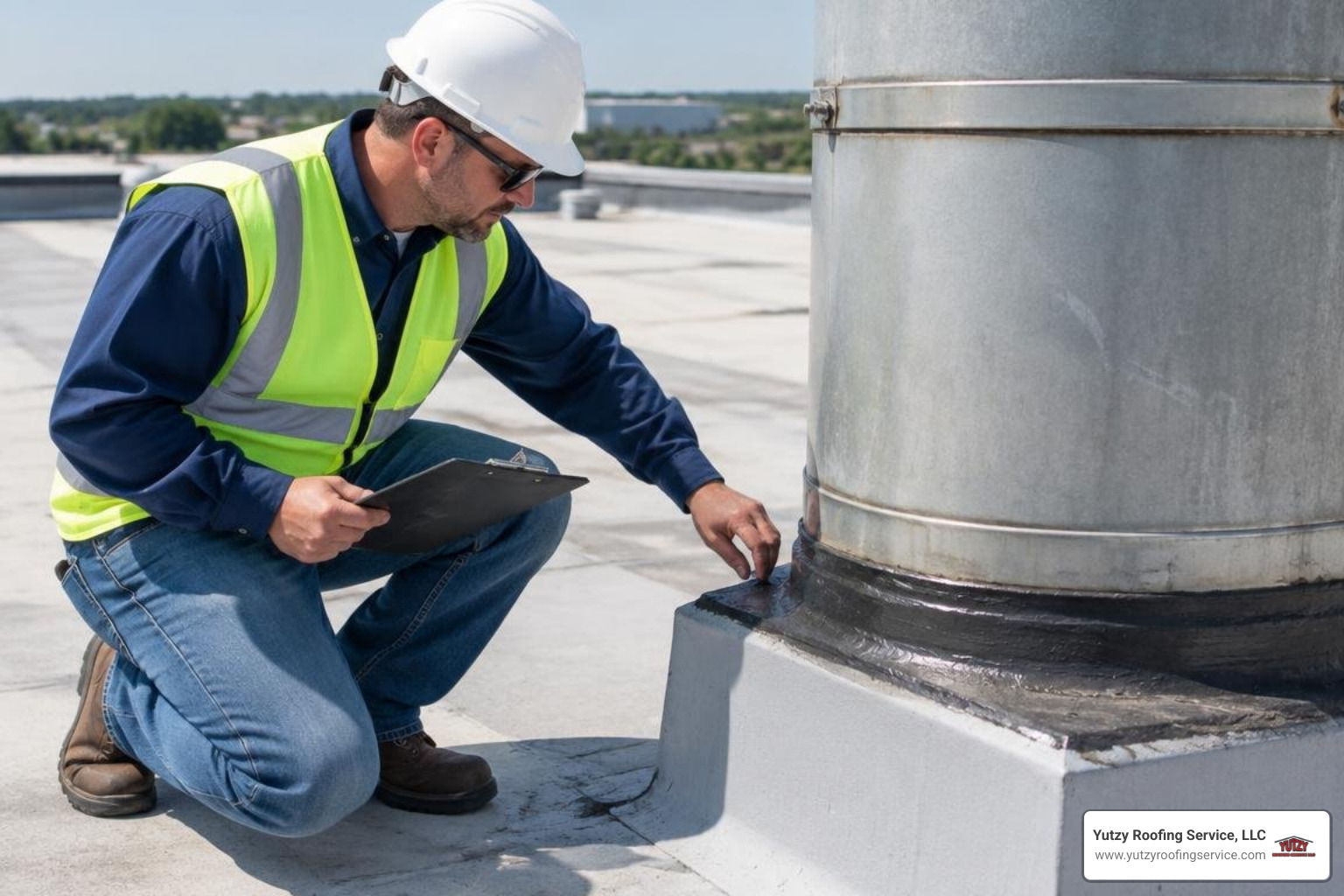
Commercial flashing and penetration assemblies demand high bond strength across diverse substrates, including galvanized steel, Galvalume, anodized aluminum, and stainless steel flues. In our field assessments, the top high-temperature formulations are evaluated on chemical stability, adhesion reliability, UV resistance, and joint movement.
For comprehensive assessments of system-level durability, facility managers regularly consult our metal roof sealant expert guide.
Evaluating the Top Formulations of Heat Resistant Caulk for Metal
Several high-temperature compounds stand out for commercial and industrial metal maintenance:
- LOCTITE SI 596: A heavy-duty, red RTV silicone engineered for industrial boilers, furnaces, and ventilation ducting. It resists continuous exposure up to 600°F (316°C), offering strong thixotropic stability and reliable adhesion.
- GE Metal Silicone 2: A specialized neutral-cure silicone delivering service capabilities from -60°F to +400°F (-51°C to 204°C). It achieves a 30-minute rain-ready cure, joint movement capability of ±25% (ASTM C719), and non-corrosive performance on metal.
- RUTLAND 600°F RTV High Heat Silicone: Formulated to remain flexible up to 550°F continuous and 600°F intermittent exposure. It can be applied in temperatures as low as 30°F, delivering approximately 65 linear feet per 10.3 oz cartridge at a 3/16-inch bead.
- Red Devil Extreme Temperature HVAC/R: An industrial-grade, USDA-authorized silicone meeting ASTM C920 specifications, designed for extreme thermal ducting and commercial heating elements.
- Soudal Gasketseal: A high-performance elastomeric sealant resisting temperatures from -60°C to +285°C (-76°F to +545°F), featuring an elongation at break of roughly 700% as detailed in the Gasketseal technical documentation.
- Würth Furnace Putty 1000: A silicone-free, water-glass sealing compound designed for extreme static service up to 1,000°C (1,832°F).
- Vitcas Heat Resistant Silicone: A specialized moisture-curing formulation rated to 300°C (572°F) for smoke ducts and exhaust penetrations, featuring high resistance to UV and weathering.
- Osburn OA11305 High Temperature Silver Silicone: Rated to 600°F (315°C), this compound provides a metallic finish that integrates cleanly with bare metal flashings and flues.
| Product Name | Base Polymer | Continuous Temp Rating | Intermittent Temp Rating | Cure Speed | Movement Capability |
|---|---|---|---|---|---|
| LOCTITE SI 596 | Acetoxy Silicone | 500°F (260°C) | 600°F (316°C) | 24 hrs full cure | Moderate / High Elasticity |
| GE Metal Silicone 2 | Neutral Silicone | 400°F (204°C) | 400°F (204°C) | 30 min rain-ready / 24 hrs | ±25% (ASTM C719) |
| RUTLAND 600°F RTV | RTV Silicone | 550°F (288°C) | 600°F (316°C) | 20 min tack / 24 hrs | High Elasticity |
| Soudal Gasketseal | Polysiloxane | 545°F (285°C) | 545°F (285°C) | 2 mm per 24 hrs | ±700% Elongation |
| Würth Putty 1000 | Sodium Silicate | 1,832°F (1,000°C) | 1,832°F (1,000°C) | 1 mm per 24 hrs (rigid) | Zero (Rigid joint only) |
| Vitcas High Temp | Silicone | 572°F (300°C) | 572°F (300°C) | 24 hrs ambient | High Elasticity |
Temperature Range Thresholds and Expansion Movement Ratings
Selecting high-temperature sealants involves balancing peak service temperatures with substrate compatibility and movement characteristics:
- Galvanized Steel and Zinc-Coated Metals: Require neutral-cure RTV silicones to prevent acid etching and premature oxidation.
- Stainless Steel Exhaust Ducts and Stacks: Demand high-tensile RTV silicones rated between 500°F and 600°F, engineered with high shear resistance to absorb vibration from exhaust fans.
- Bare Aluminum Flashings: Benefit from neutral-cure silicones with Class 25 or Class 35 movement ratings to handle aluminum’s rapid rate of thermal expansion.
- Cast Iron Boiler Cleanouts and Rigid Flanges: Suited for inorganic silicates and furnace cements where zero movement occurs and temperatures exceed 1,000°F.
Professional Specification and Application Standards for Thermal-Stress Joints
Achieving a durable seal on commercial metal penetrations requires rigorous installation procedures. Even premium elastomeric compounds will fail prematurely if surface preparation or joint design is compromised.
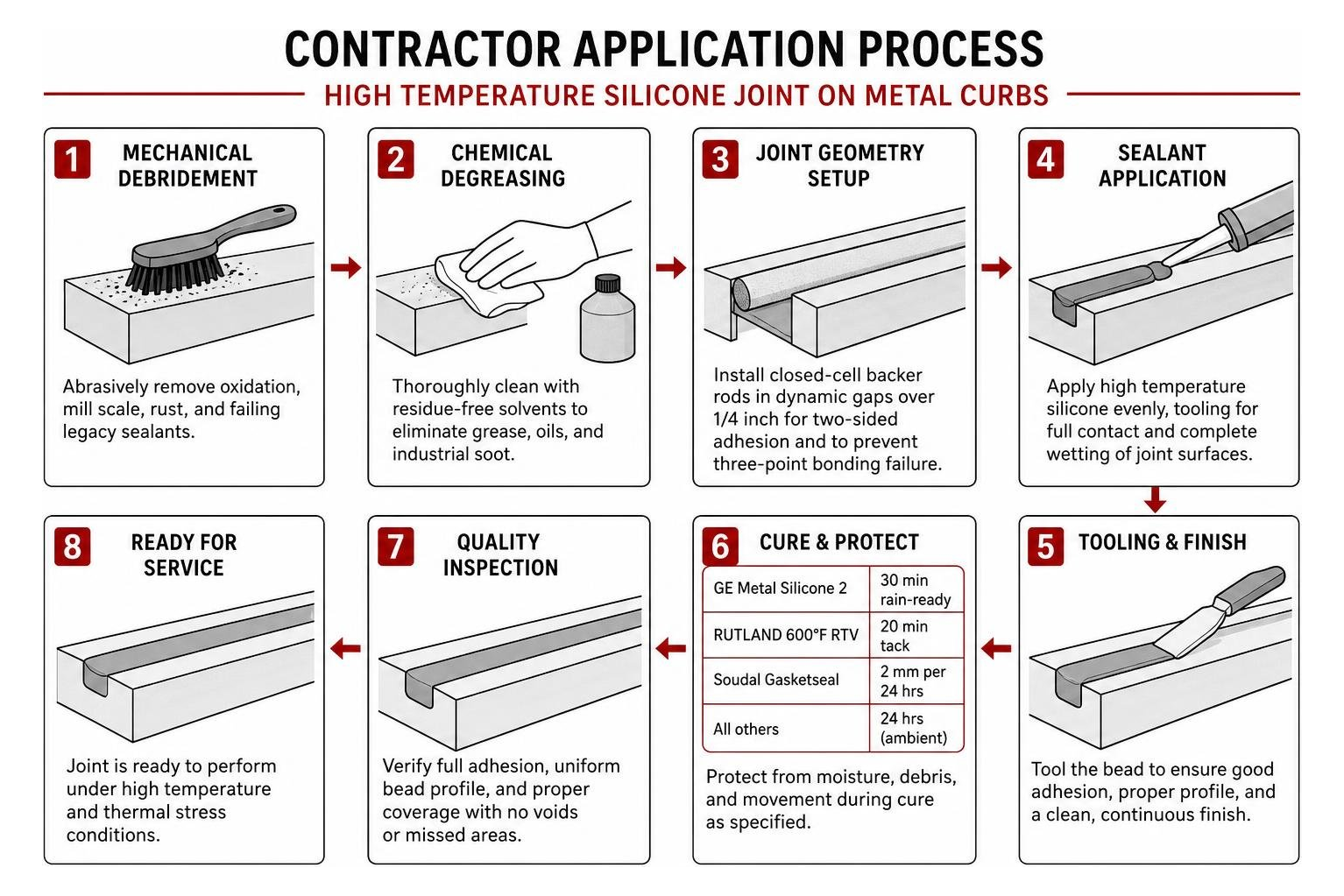
Professional restoration crews follow precise quality-control protocols:
- Mechanical Debridement: Technicians mechanically abrade the metal surface to remove oxidation, mill scale, rust, and failing legacy sealants.
- Chemical Degreasing: Surfaces receive thorough solvent cleaning with residue-free agents to eliminate grease, oils, and industrial soot.
- Joint Geometry Setup: Closed-cell backer rods are installed in dynamic expansion gaps exceeding 1/4 inch to ensure proper two-sided adhesion and prevent three-point bonding failure.
- Controlled Extrusion: Sealants are applied under consistent mechanical pressure to eliminate air voids and ensure wet-out against both bonding surfaces.
- Precision Tooling: The bead is tooled immediately before initial skinning occurs (often within 8 to 20 minutes) to create an hourglass cross-section that accommodates movement.
- Full Cure Verification: Ambient relative humidity and temperature are tracked to ensure complete deep-section curing (typically 24 to 48 hours) prior to high-heat cycling.
Why Commercial Facility Managers Rely on Certified Contractors for Thermal Sealing
Thermal penetrations represent one of the most failure-prone details on commercial metal roof assemblies. An improper seal can cause persistent leaks, void manufacturer warranties, or create non-compliance issues with local commercial building and fire barrier codes.
Commercial building managers across Wisconsin and southern Minnesota trust our certified team at Yutzy Roofing Service, LLC to handle high-temperature penetration repairs and comprehensive roof restorations. We engineer complete restoration systems supported by non-prorated, renewable warranties of up to 18 years.
For professional assessments on high-temperature flashings and commercial metal roof systems, explore our guide on choosing the best caulk for metal roofs or contact our team to schedule an on-site commercial roof evaluation.
