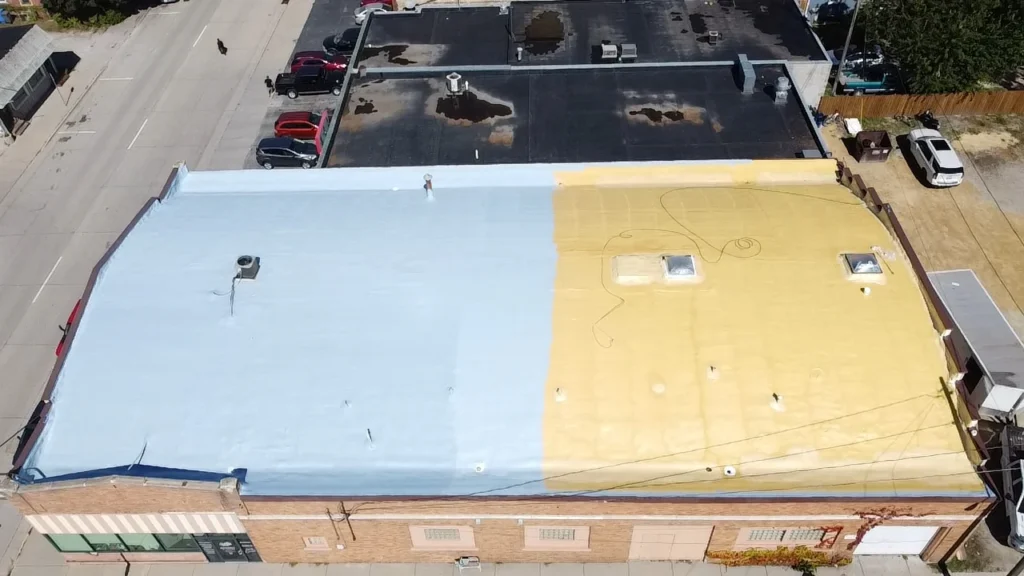
When Your Flat Roof Starts to Fail: What to Know About Tar and Gravel Coating
Choosing the right tar and gravel coating is one of the most important decisions a commercial property owner can make when an aging built-up roof starts showing wear. Here is a quick answer to what most building owners need to know:
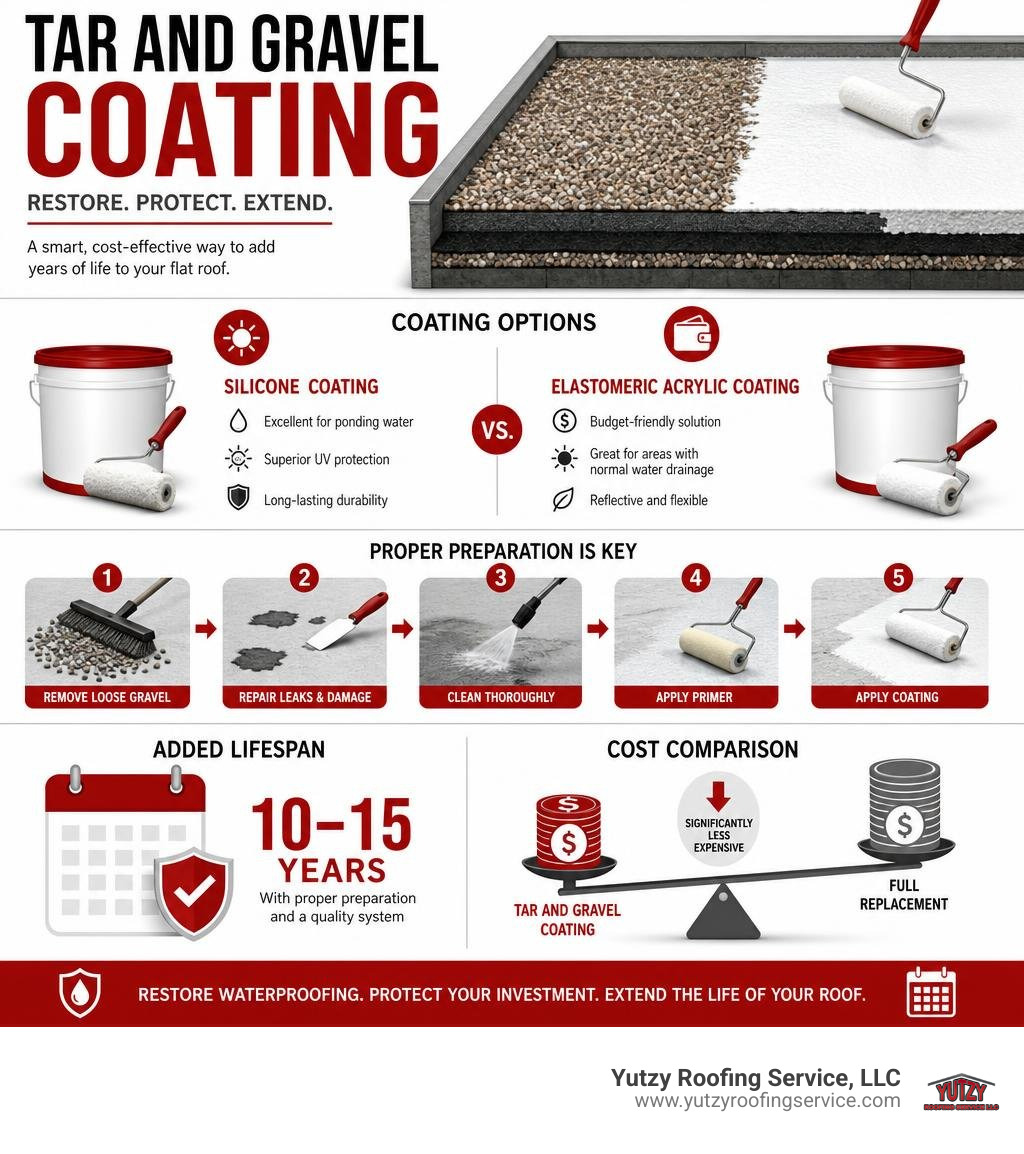
Quick Answer: Tar and Gravel Coating at a Glance
| Question | Answer |
|---|---|
| What is it? | A liquid coating applied over an existing built-up roof (BUR) to restore waterproofing and UV protection |
| Best coating types | Silicone (ponding water, UV) or elastomeric acrylic (budget-friendly, light exposure) |
| Can it fix active leaks? | No — leaks must be patched first; coating is a restoration and protection layer |
| Gravel removal required? | Yes — loose gravel must be removed before any coating is applied |
| Expected lifespan added | 10 to 15 years with proper preparation and a quality system |
| Cost vs. replacement | Significantly less expensive than a full tear-off and re-roof |
Wisconsin’s freeze-thaw cycles, heavy snow loads, and intense summer UV exposure hit flat commercial roofs hard. A built-up roof that looked fine five years ago can develop bald spots, cracked plies, and active leaks faster than most property owners expect. The good news is that a full tear-off is often not your only option.
This guide walks you through everything — from gravel removal and leak repair to choosing between silicone and elastomeric systems — so you can make a confident, cost-effective decision for your building.
I’m Josh Yutzy, and my family’s roofing company has been restoring and maintaining commercial tar and gravel coating systems across Wisconsin since 1995. Over nearly three decades, we’ve seen what works, what fails, and what saves property owners the most money in the long run.
Tar and gravel coating definitions:
Understanding Built-Up Roofs and the Need for a Tar and Gravel Coating
To understand why a coating is so beneficial, we first have to look at how these roofs are built and why they eventually begin to fail. For decades, built-up roofing (BUR) has been the workhorse of the commercial roofing industry. It is a time-tested design, but like all asphalt-based systems, it has a finite lifespan.
What is a Built-Up Roof (BUR)?
A built-up roof is a multi-ply system constructed by alternating layers of roofing felt or fiberglass plies with liquid asphalt (bitumen). This layering process creates a thick, durable, and highly water-resistant membrane. To protect these sensitive asphalt plies from the elements, a final flood coat of hot asphalt is applied, and a heavy layer of gravel or aggregate is immediately embedded into the surface.
This aggregate surfacing serves a critical purpose: it shields the underlying asphalt from the sun’s destructive ultraviolet (UV) rays and provides essential ballast. To dive deeper into the mechanics of these systems, check out our guide on roof tar and gravel.
Why Apply a Tar and Gravel Coating to an Aging Roof?
As a built-up roof ages, the asphalt naturally begins to dry out and lose its flexibility. Wind, rain, and heavy Wisconsin winter snows gradually displace the protective gravel. When this happens, “bald spots” develop.
Without the gravel ballast to shield it, the exposed asphalt quickly degrades under UV radiation. It cracks, alligator-skins, and eventually allows water to penetrate the underlying felt plies. If you catch this deterioration early enough, applying a high-quality tar and gravel coating can completely restore the roof’s waterproofing capabilities.
By sealing the surface with a seamless, monolithic membrane, you stop UV degradation in its tracks, prevent future bald spots, and eliminate the need for an expensive tear-off. For more information on identifying these early warning signs, read our article on tar roof systems and their common vulnerabilities.
The Critical Challenges of Preparing a Gravel-Surfaced Roof
Ask any experienced commercial roofing contractor, and they will tell you the same thing: the success of any roof coating project is 90% preparation and 10% application. This is especially true when dealing with gravel-surfaced roofs. You cannot simply spray a liquid membrane over a bed of rocks and hope for the best.
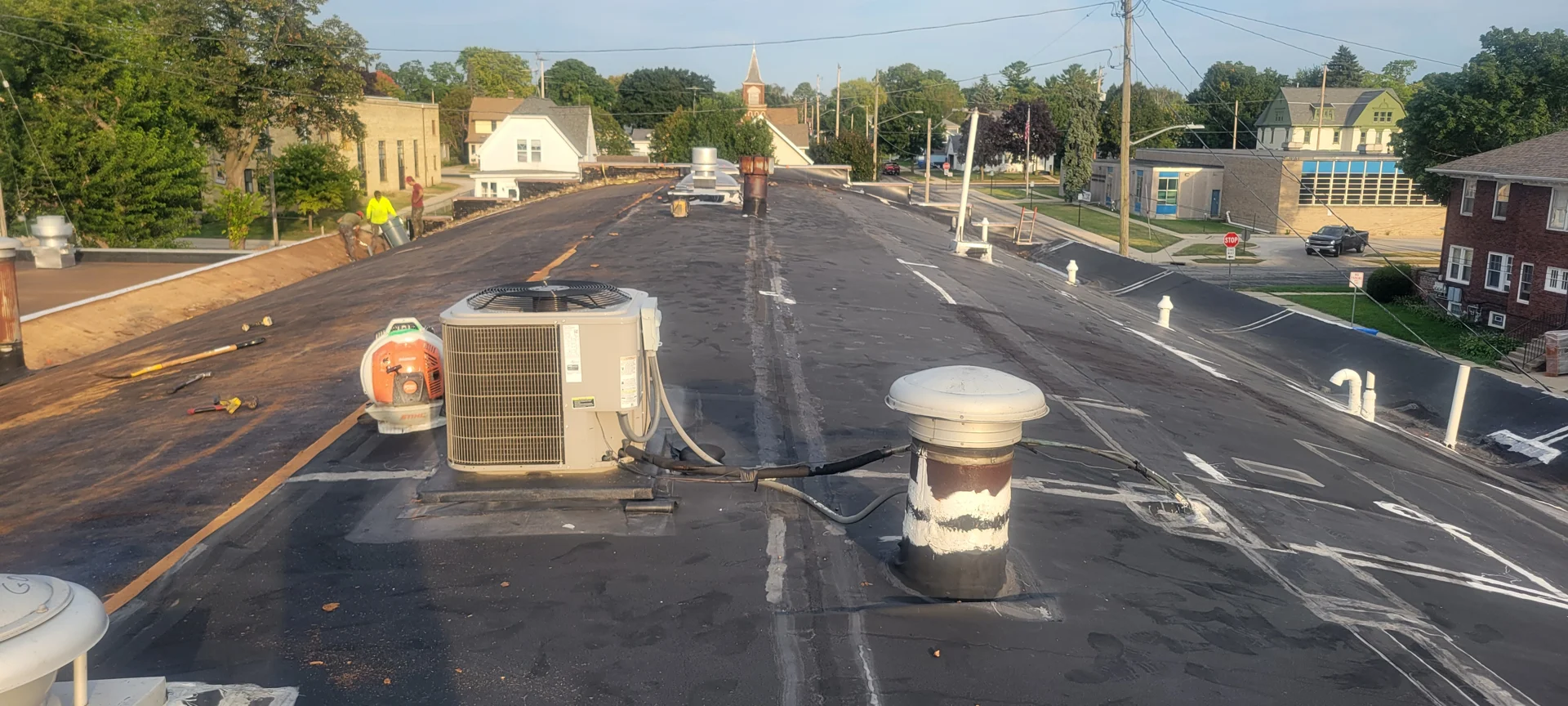
The Difficulty of Loose and Embedded Gravel Removal
The single biggest hurdle in coating an existing built-up roof is removing the gravel. This is a multi-step, labor-intensive process:
- Power Sweeping and Vacuuming: First, we must remove all loose, unembedded gravel. This requires heavy-duty commercial vacuuming equipment, power brooms, and air blowers. On a typical commercial project, this process can easily result in the removal of several tons of loose aggregate.
- Spudding the Embedded Gravel: Once the loose gravel is gone, we are left with the embedded gravel — the pebbles that are firmly stuck in the top flood coat of asphalt. To create a surface smooth enough for a coating to adhere to, we must “spud” the roof. Spudding involves using mechanical scraping machines or hand tools to shear off the protruding rocks.
- Protecting the Plies: This is where the risk lies. If a contractor is too aggressive during the spudding process, they can easily puncture or tear the underlying waterproofing plies. It requires a skilled hand and specialized equipment to remove the rock without destroying the roof.
To understand the logistics of this process without losing your sanity, check out our guide on built-up roof maintenance WI and our practical tips for Fixing Your Flat Roof Without Getting Buried in Gravel.
Repairing Active Leaks Before Coating Application
A roof coating is a protective, weathering membrane — it is not a magic eraser for active structural leaks. Before a single drop of coating is applied, the roof must be completely dry, and all existing leaks must be professionally patched.
We typically use heavy-duty mastic patching compounds or fiber-reinforced asphalt emulsions to seal cracks, splits, and damaged flashings around penetrations. However, there is a critical rule that cannot be ignored: curing and off-gassing.
Asphalt emulsions and patch repairs must cure and set for at least 30 days before a top coat is applied. If you apply a silicone or elastomeric coating over fresh, uncured asphalt repairs, the solvents off-gassing from the asphalt will trap moisture, destroy the coating’s bond, and cause immediate blistering and failure. Planning ahead is vital. Learn more about managing these repair timelines in A Complete Guide to Maintaining an Asphalt and Gravel Roof Without Losing Your Mind.
Comparing Coating Materials: Silicone vs. Elastomeric and Alternatives
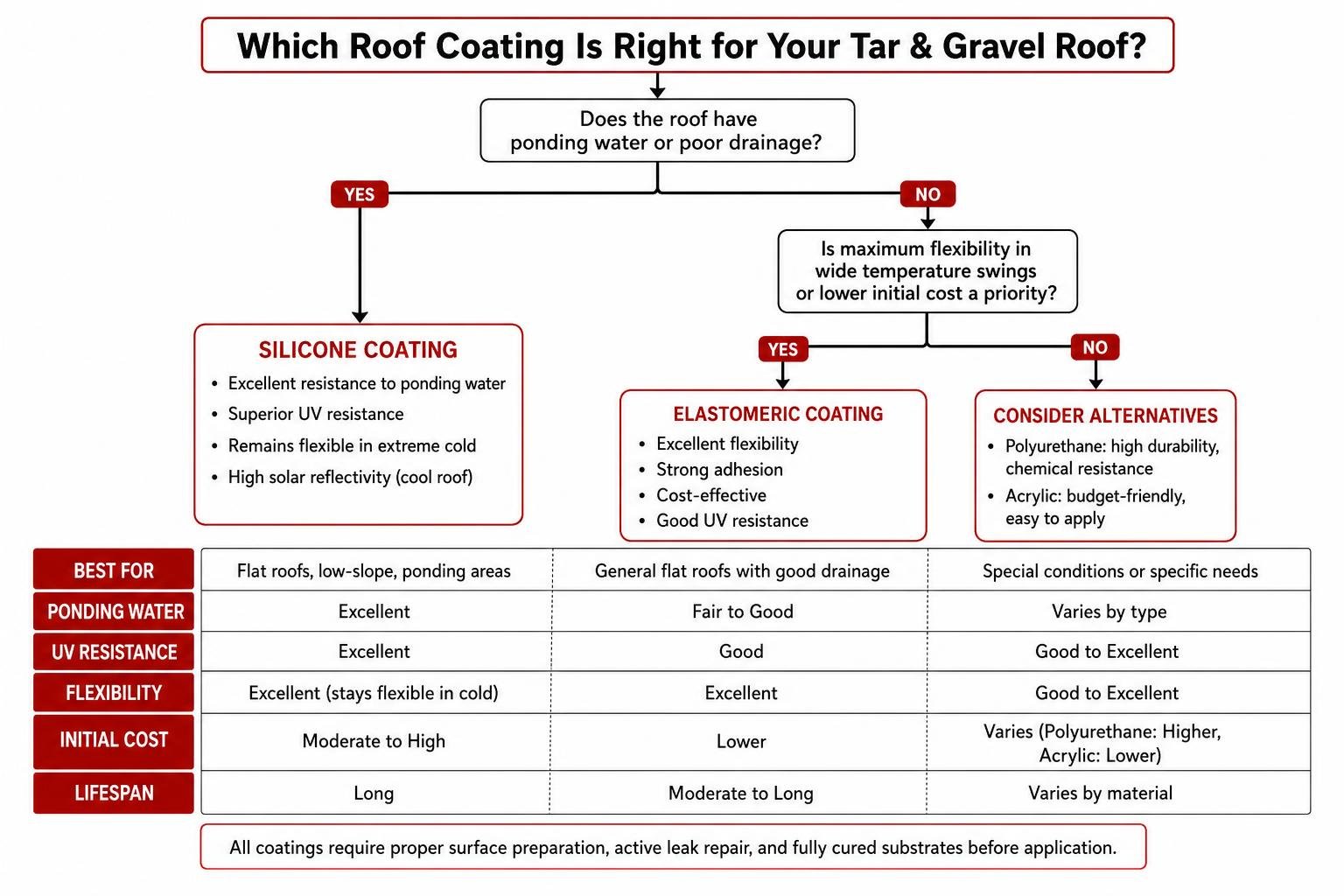
Selecting the right chemistry for your tar and gravel coating is crucial. Each material has distinct physical properties, benefits, and limitations.
Silicone Coatings: The Ultimate UV and Ponding Water Solution
For flat or very low-slope commercial roofs, silicone is widely considered the gold standard.
- Pros: Silicone is highly hydrophobic. It does not break down under ponding water, making it perfect for roofs with poor drainage or low spots. It offers exceptional UV resistance, remains flexible in extreme cold, and provides high solar reflectivity (acting as a “cool roof” that lowers cooling costs).
- Cons: Silicone is more expensive upfront than acrylic options. Its surface can also be slick when wet, and it attracts dirt more easily over time, which can slightly reduce its reflectivity if not washed periodically.
Elastomeric Acrylic Coatings: Cost-Effective but Limited
Elastomeric acrylic coatings are water-based systems that offer a highly flexible, protective barrier at a lower price point.
- Pros: They are highly cost-effective, easy to apply, and provide excellent UV protection and reflectivity when newly applied. They also cure to a less tacky finish than silicone, meaning they stay cleaner longer.
- Cons: Because they are water-based, acrylic coatings are highly vulnerable to ponding water. If water stands on an acrylic coating for more than 48 to 72 hours, the coating will re-emulsify (soften and wash away). Additionally, they carry a high wash-off risk during application; unexpected rain before the coating has fully cured can wash your investment straight into the gutters.
Industrial Alternatives: Coal Tar Epoxy and Asphalt Emulsions
In heavy industrial environments, specialized coatings are sometimes used to protect surfaces from chemical exposure.
Products like TarGuard are high-build, two-component polyamide coal tar epoxies. Boasting a high volume solids of 74% ± 2% and a VOC content of less than 250 g/L unreduced, these coatings offer incredible chemical and moisture resistance. However, they are highly rigid, making them better suited for steel and concrete structures rather than flexible commercial roofs.
Similarly, thermoplastic coal tar emulsions must pass strict fuel-resistance tests in accordance with ASTM D5727 and have a high softening point of over 212°F (100°C). While excellent for pavement or specialized industrial containment, they lack the extreme elongation and thermal movement capabilities required for large, low-slope commercial roofs in the Upper Midwest.
The Multi-Layer Restoration Process: Base Coats, Top Coats, and Bleed Blockers
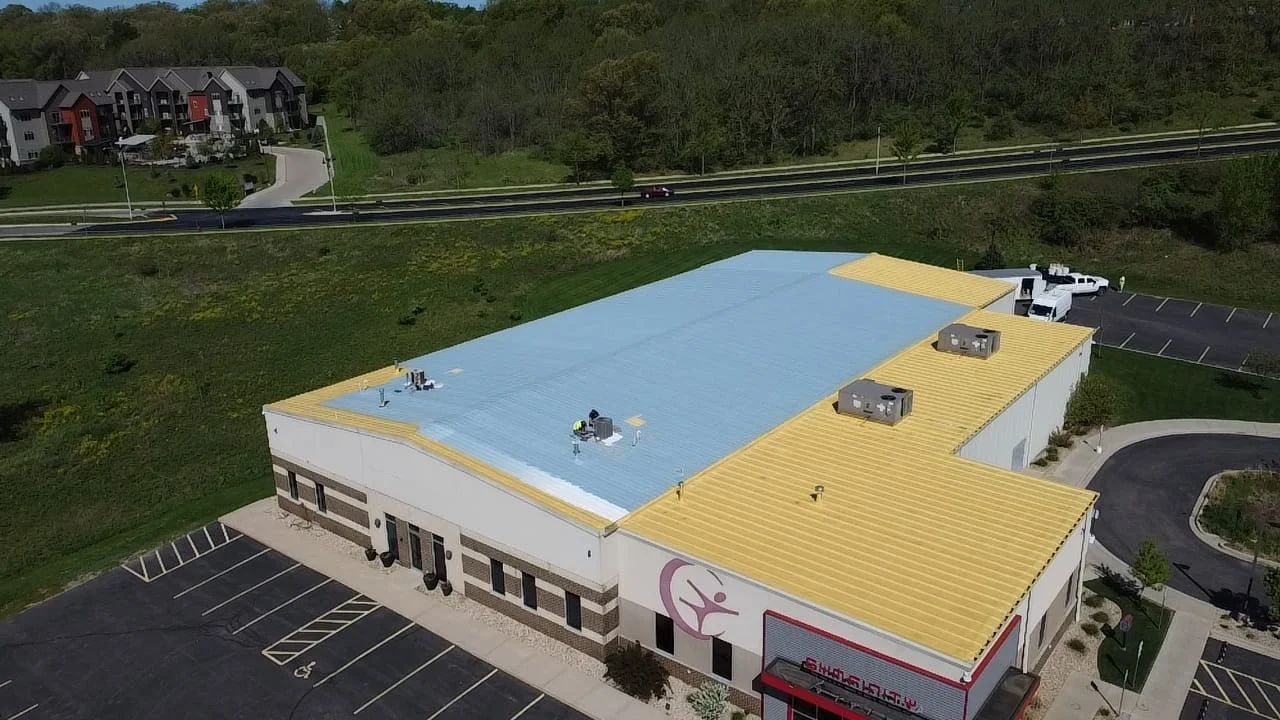
Once the roof is clean, dry, and patched, we can begin the multi-layer application process.
Why a High-Build Base Coat is Essential for Rough Substrates
Because spudding leaves behind embedded pebbles and a highly textured, uneven surface, you cannot apply a thin top coat directly to the roof. You need a high-build base coat to fill in the voids and create a smooth, level substrate.
Advanced polyurethane-based primers or high-solids base coats (such as Ecodur) are applied using squeegees and back rollers at a heavy depth of 50 to 60 mils. This thick layer encapsulates the remaining aggregate, seals any micro-fissures in the old asphalt, and creates a seamless, monolithic barrier.
Preventing Asphalt Bleed-Through with Specialized Primers
If you apply a white, highly reflective silicone top coat directly over an asphalt roof, a phenomenon known as “asphalt leaching” or bleed-through will occur. The natural oils in the asphalt will migrate upward, staining your bright white roof a dull yellow or brown and ruining its cool-roof reflectivity.
To prevent this, we must apply a specialized bleed-blocking primer. A high-performance primer acts as a physical barrier that locks the asphalt oils in place. For example, Ecodur is highly valued in the industry because it acts as an exceptional bleed blocker, becoming tack-free in just 30 to 40 minutes and fully curing within 24 hours. Once the primer is cured, we apply a final silicone top coat (typically averaging 24 mils) to provide long-term UV protection and weatherability.
Lifespan, Cost Analysis, and Industry Standards
Investing in a roof restoration is a financial decision that should be backed by clear numbers and recognized industry standards.
Coating vs. Full Roof Replacement Cost Breakdown
A full commercial roof tear-off is incredibly expensive. You must pay for extensive demolition labor, landfill disposal fees, and the cost of entirely new insulation and membrane materials.
A professional tar and gravel coating restoration typically costs a fraction of a full replacement. Because we are preserving the existing roof structure, there are no landfill fees and minimal structural disruption. This process instantly adds 10 to 15 years of reliable service life to your roof. Furthermore, because these coatings are classified as maintenance rather than capital expenditures, they can often be fully tax-deducted in the first year. For a deep dive into these economics, read The Price of Protection: A Complete Hot Tar Roofing Cost Breakdown.
Key ASTM Standards for Tar and Gravel Coating Systems
To ensure you are getting a high-quality installation, the materials and practices used should conform to established industry standards:
- ASTM D6945/D6945M-03(2023) – Emulsified Refined Coal Tar Specification : This standard governs the physical properties of emulsified refined coal tar coatings, specifying that normal aggregate loadings for Type I materials should range from 0.360 to 0.600 kg/L (3 to 5 lb/gal).
- ASTM D6948/D6948M-03(2023) – Refined Coal Tar Application Standard : This standard outlines the correct application practices for refined coal tar mixtures, ensuring proper surface preparation and coverage rates are maintained.
By adhering to these rigorous ASTM guidelines, we guarantee that the restoration system applied to your building will perform exactly as engineered.
Frequently Asked Questions
Can you apply a roof coating directly over loose gravel?
Absolutely not. Applying a liquid coating directly over loose gravel is a guaranteed recipe for immediate system failure. The coating will adhere to the loose rocks rather than the actual roof membrane. When the wind blows or foot traffic occurs, the rocks will shift, tearing the coating and exposing the vulnerable asphalt plies beneath. Complete removal of all loose debris is mandatory.
How long does a coated built-up roof last?
A professionally applied, high-solids silicone or elastomeric coating system will typically extend the lifespan of an existing built-up roof by 10 to 15 years. The best part? These systems are renewable. At the end of that 15-year cycle, the roof can simply be cleaned and top-coated again, extending its life even further without ever requiring a tear-off.
Can a roof coating fix active commercial roof leaks?
No. Roof coatings are designed to protect and preserve a structurally sound, dry roof membrane. They are not structural patches. Any active leaks, wet insulation, or damaged plies must be professionally repaired and allowed to dry completely before the coating process begins.
Conclusion
Restoring an aging built-up roof doesn’t have to mean facing the massive disruption and expense of a complete tear-off. By choosing the right tar and gravel coating system, you can protect your commercial property, lower your energy bills, and secure your building for the future.
At Yutzy Roofing Service, LLC, we specialize in advanced commercial roof restoration, spray foam coatings, and comprehensive maintenance. We are proud to serve commercial property owners across Wisconsin and Minnesota — including Marshfield, Appleton, Eau Claire, Fond Du Lac, Green Bay, Madison, Wausau, Mankato, and Rochester.
We stand behind our work with an industry-leading, up to 18-year non-prorated renewable warranty, giving you complete peace of mind.
Ready to protect your commercial roof without getting buried in replacement costs? Contact us today at our Marshfield head office (9106 Woehrle Lane, Marshfield, WI 54449) for a professional assessment, and read our comprehensive guide on How to Maintain a Tar and Gravel Roof to keep your system in peak condition.
