How to Approach Modified Bitumen Roof Repair
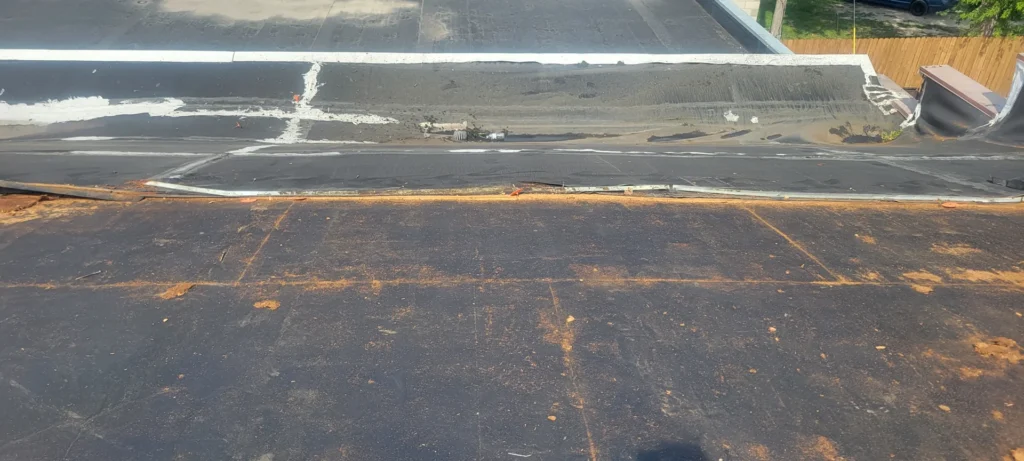
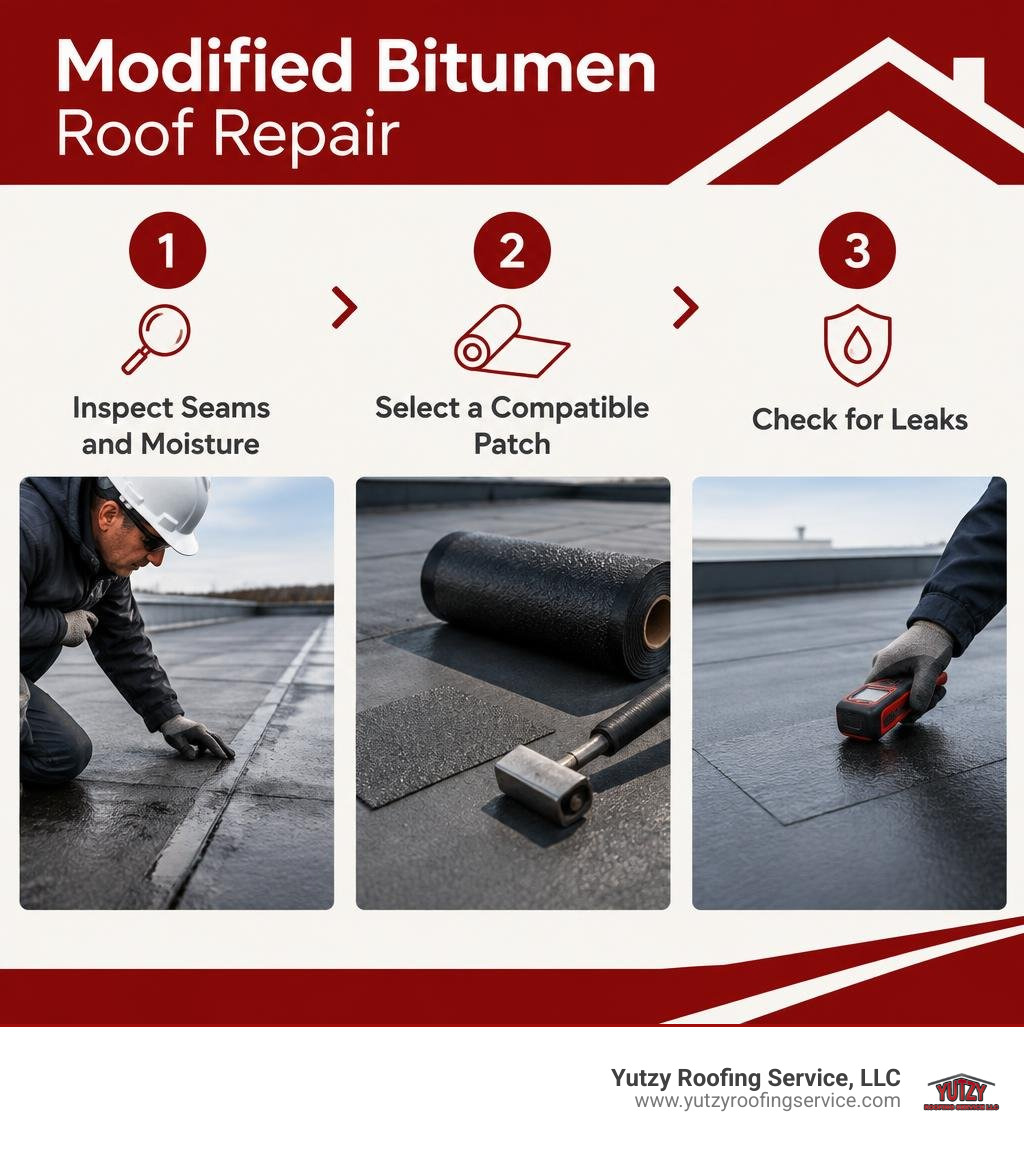
Modified bitumen roof repair starts with finding the leak’s source, not just covering the wet spot. A commercial roofer should check seams, punctures, blisters, and trapped moisture, then clean and dry the repair area. If the surrounding membrane is sound, a compatible heat-fused patch may seal the damage. Where an open flame is unsafe, a reinforced cold-process patch may be an option. Widespread moisture or loose membrane calls for a broader assessment.
Wisconsin’s temperature swings can stress seams, while standing water can keep pressure on a weak repair. Fixing the damaged membrane and the cause of the leak gives the repair a better chance to last.
I’m Josh Yutzy of Yutzy Roofing Service, a family roofing business that has served Wisconsin since 1995. Our commercial roof restoration and maintenance experience shapes how I approach modified bitumen roof repair: diagnose the problem first, then choose the right fix.
Modified bitumen roof repair word list:
Professional Modified Bitumen Roof Repair Methods and Best Practices
Commercial modified bitumen systems are engineered to withstand severe weather, but constant exposure to the elements eventually causes wear. On a hot summer afternoon in Madison or Green Bay, a dark roof surface can easily reach 150 degrees Fahrenheit. When a sudden thunderstorm rolls in, that temperature drops rapidly, creating severe thermal shock. Over time, these dynamic forces cause lap seams to pull apart, materials to crack, and unbonded areas to blister.
Addressing these issues requires precise technical knowledge. Executing a successful flat commercial roof repair depends entirely on identifying the specific chemical formulation of your membrane. Modified bitumen generally falls into two distinct categories:
- APP (Atactic Polypropylene): A “plasticized” asphalt blend. APP membranes require open-flame heat welding to achieve a proper thermal bond.
- SBS (Styrene-Butadiene-Styrene): A “rubberized” asphalt blend that offers exceptional cold-weather elasticity. SBS can be heat-welded, installed with hot asphalt, or repaired using cold-applied polymer mastics.
Working with open flames on commercial facilities presents severe safety challenges. Professional crews must maintain strict fire safety protocols, including keeping a fully charged Class B/C fire extinguisher (with a minimum 10-lb ABC rating) within arm’s reach at all times. In flame-restricted environments—such as combustible wood decks, chemical processing facilities, or occupied hospitals—contractors utilize cold-process alternatives.
| Feature | Heat-Fused Torch-On Repair | Cold-Process Three-Course Patch |
|---|---|---|
| Primary Mechanism | Thermal liquefaction and molecular fusion | Chemical adhesion with fabric reinforcement |
| Membrane Compatibility | APP and SBS modified bitumen | Primarily SBS, smooth-surfaced, or primed caps |
| Open Flame Required? | Yes (propane torch at 350–400°C) | No (cold-applied adhesive) |
| Typical Lifespan | 10 to 15 years | 5 to 10 years |
| Best Application | Severe punctures, structural laps, end splits | Sensitive structures, wood decks, fast patching |
Diagnosing Membrane Deficiencies for Modified Bitumen Roof Repair
Before applying any materials, a professional roofing contractor conducts a comprehensive diagnostic survey. Water rarely travels in a straight line; moisture entering a seam can migrate dozens of feet across the insulation before appearing inside your facility.
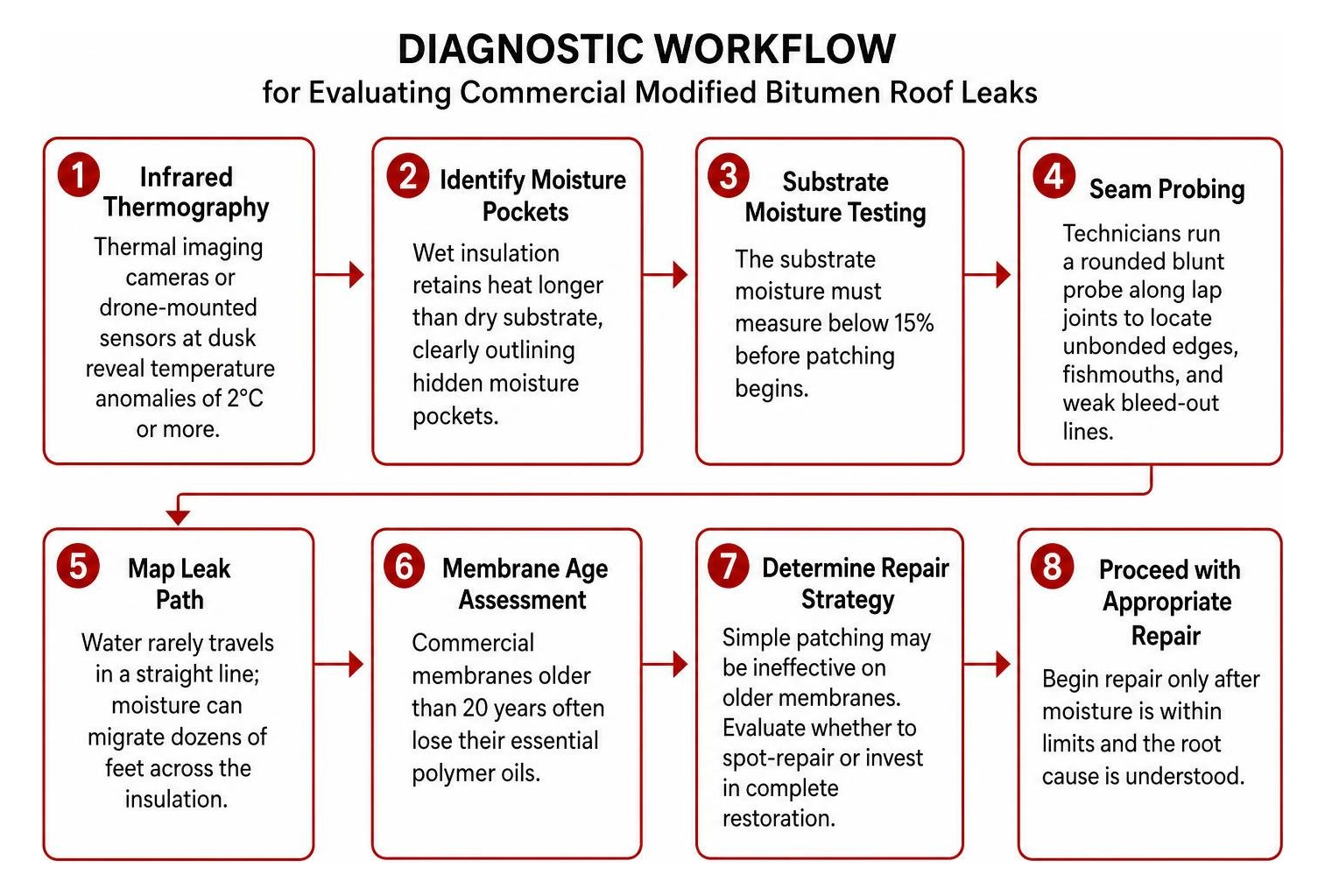
Commercial roofers rely on non-destructive moisture detection tools to assess the roof’s subsurface condition:
- Infrared Thermography: Using thermal imaging cameras or drone-mounted sensors at dusk reveals temperature anomalies of 2°C or more. Wet insulation retains heat longer than dry substrate, clearly outlining hidden moisture pockets.
- Substrate Moisture Testing: Solvent-based adhesives and heat-welded patches will not adhere to damp materials. The substrate moisture must measure below 15% before patching begins.
- Seam Probing: Technicians run a rounded blunt probe along lap joints to locate unbonded edges, fishmouths, and weak bleed-out lines.
- Membrane Age Assessment: Commercial membranes older than 20 years often lose their essential polymer oils, making simple patching ineffective. In these cases, understanding key commercial roof repair considerations helps facility managers decide whether to spot-repair or invest in complete restoration.
Step-by-Step Heat-Fused Torch-On Membrane Restoration
When performed by skilled commercial roofers, a heat-fused patch creates a permanent, monolithic repair that can last 10 to 15 years—often matching or outlasting the remaining service life of the roof. Professional technicians adhere to strict installation guidelines, such as those detailed in the IKO commercial roofing technical manual.
- Surface Preparation and Granule Scraping: Technicians clean the damaged area using a residue-free solvent. For granule-surfaced cap sheets, the roofer gently heats the surface with a torch and embeds or scrapes away the loose granules with a heated trowel to expose the raw bitumen compound.
- Precision Patch Cutting: A matching membrane patch is measured and cut with rounded corners to prevent edge curling from wind uplift. The patch must extend at least 4 to 6 inches (100 to 150 mm) beyond the damaged zone in all directions. If repairing a base ply defect, base patches extend a minimum of 6 inches past the deficiency.
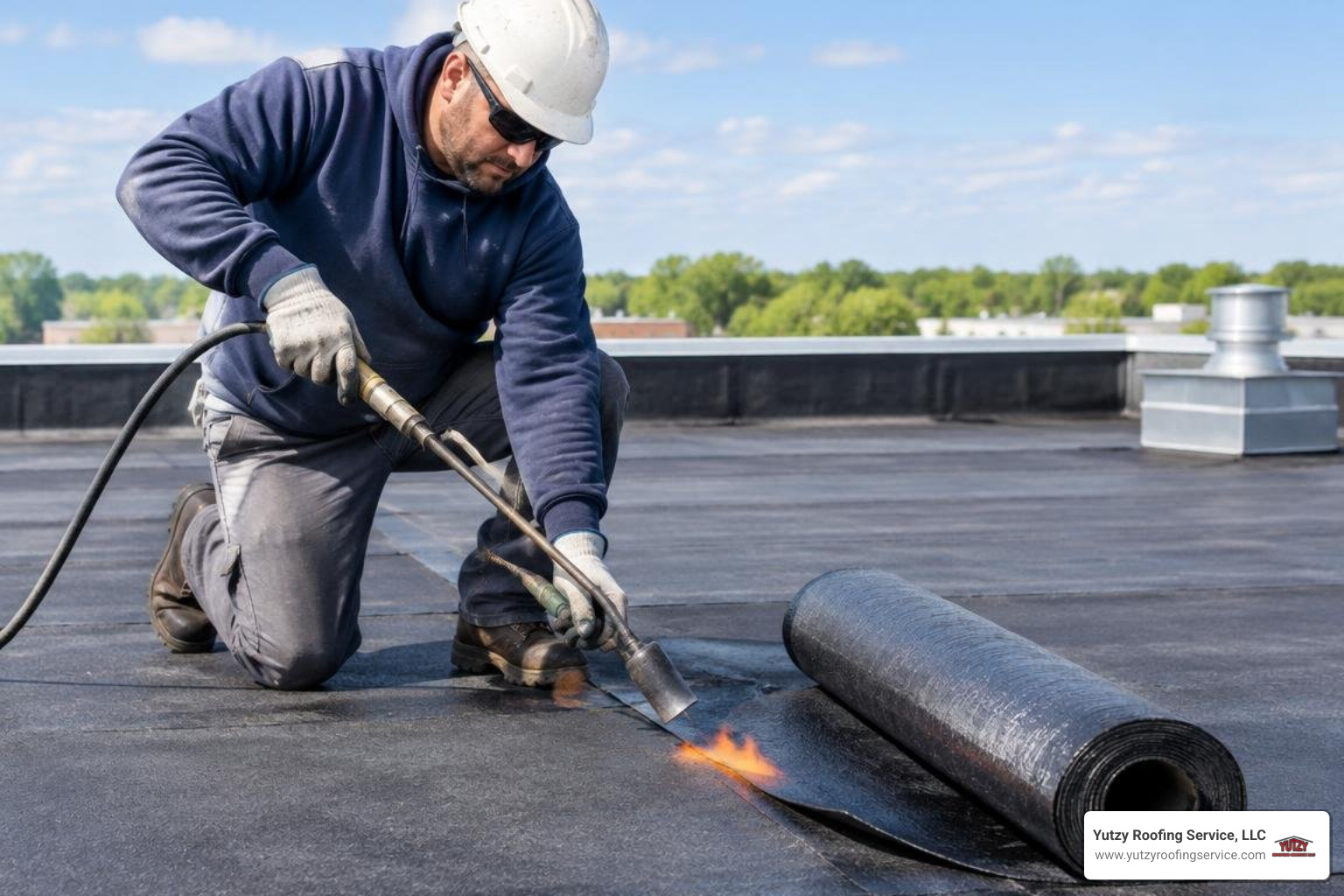
- Controlled Thermal Application: The technician directs a propane torch at the underside of the patch and the prepared substrate, maintaining a steady sweep. The flame creates an optimal melt zone at 350°C to 400°C, causing the bitumen backing to turn into a shiny, molten consistency.
- Compression and Rolling: The roofer positions the heated patch and immediately rolls it with a heavy 6-inch hand roller or weighted seam roller. This expels trapped air pockets and forces the molten bitumen to fuse completely with the underlying ply.
- Sealing the Perimeter: The technician dresses the edges by smoothing a 1/4-inch to 3/8-inch continuous bead of compound bleed-out along the perimeter, tapping loose granules into the exposed asphalt to maintain consistent UV protection.
Cold-Process Three-Course Patching for Commercial Applications
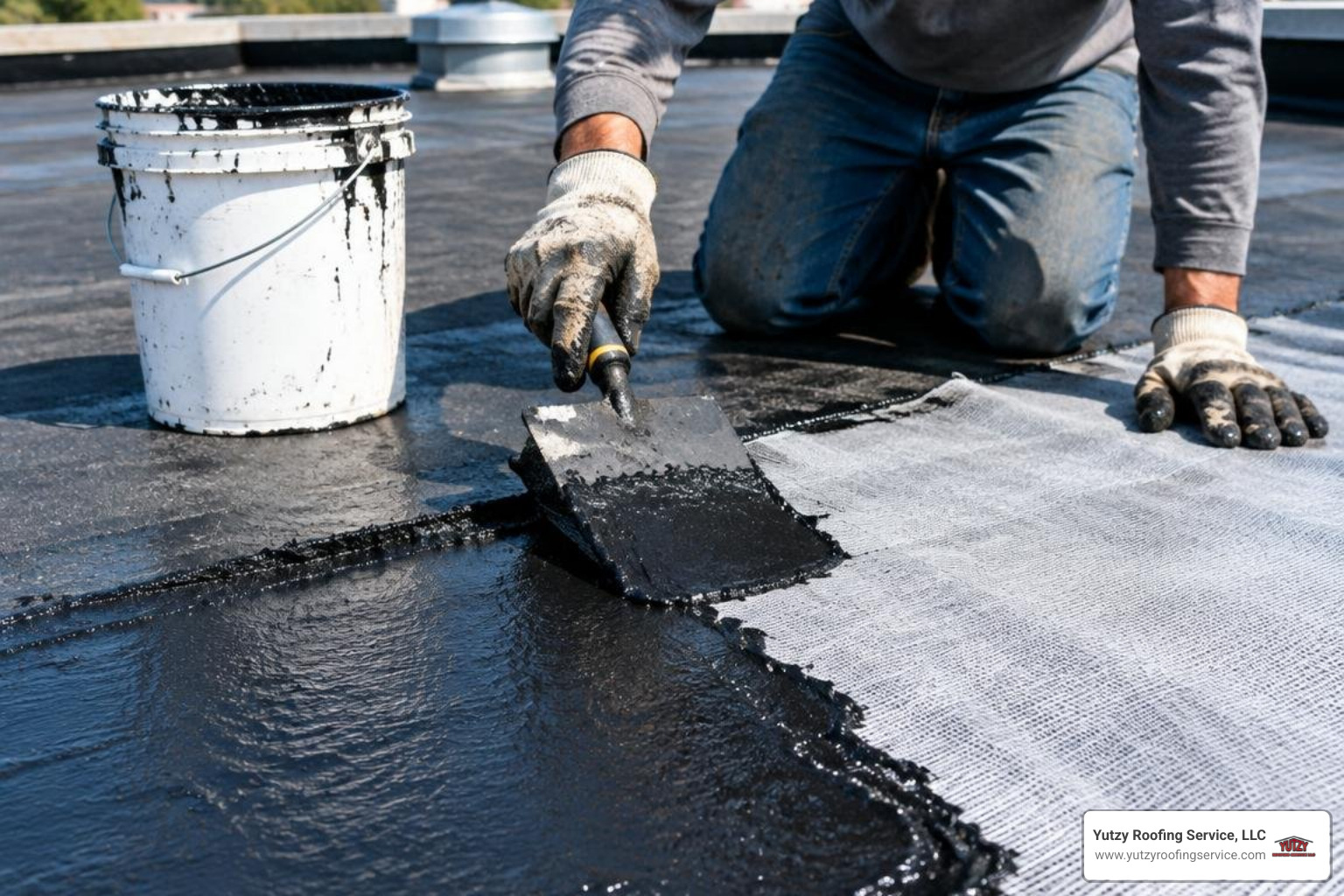
For buildings where open flames are prohibited—such as schools, manufacturing plants housing volatile chemicals, or facilities with combustible wood substrates—contractors utilize the cold-process three-course method.
This technique relies on high-grade, SBS-polymer-modified roofing mastic reinforced with a heavy-duty polyester or fiberglass mesh. The mesh acts like structural rebar within concrete, providing the tensile strength necessary to resist thermal movement and building expansion:
- Layer 1 (Foundation Mastic): The contractor trowels a uniform 1/8-inch layer of modified bitumen mastic over the cleaned area, extending 4 to 6 inches beyond the crack or puncture.
- Layer 2 (Reinforcing Mesh): A layer of elastomeric polyester fabric is embedded directly into the wet mastic. The roofer brushes the fabric flat to eliminate wrinkles, bridges, or voids.
- Layer 3 (Encapsulation Coat): A second 1/8-inch layer of mastic is troweled over the mesh, completely feathering the edges into the surrounding roof surface to lock out moisture.
Addressing Bleed-Out Failures and Lifting Lap Seams
A major cause of water intrusion in modified bitumen systems is improper seam installation. During original construction, a proper heat weld produces a consistent 1/4-inch to 3/8-inch bead of molten asphalt that squeezes out along the lap edge—known as “bleed-out.”
When bleed-out is missing or incomplete, the seams remain vulnerable to water infiltration and thermal separation, as highlighted in the AskARoofer technical discussion on seam bleed-out.
To repair unbonded seams or “fishmouths” (open wrinkles along a lap), commercial technicians slide a heated, round-nose trowel into the open joint to soften the internal compound, pressing the layers firmly together. If the factory compound has degraded, roofers install a dedicated, heat-welded modified bitumen cover strip extending a minimum of 4 inches across the seam to re-establish a durable seal.
Preventive Maintenance, Water Testing, and Commercial Restoration
Completing the physical patch is only half the battle. A durable roofing strategy includes verifying repair integrity and protecting the roof against future weathering.
Executing Flood Testing and Thermal Moisture Verification
To guarantee that a commercial repair is completely watertight before signing off on a project, professional roofing crews perform controlled water testing:
- Calibrated Flow Testing: A technician introduces water directly above the repaired area using a calibrated hose flowing at 2 to 3 gallons per minute for a minimum of 10 to 15 minutes.
- Simulated Head Pressure: On flat decks with localized drainage paths, temporary isolation dams are placed around the patch to verify performance under standing water.
- Thermal Verification: Following the water test, an infrared scan is conducted across the ceiling assembly inside the building to ensure zero moisture has passed through the roof deck.
Long-Term Protection and Modified Bitumen Roof Repair Strategies
Commercial modified bitumen systems in Wisconsin face demanding weather conditions, from heavy winter snow loads to intense summer sun. Implementing preventative measures safeguards your facility against premature failure:
- Mitigate Ponding Water: Water that sits on a flat commercial roof for longer than 48 hours after rain is classified as ponding. Standing water exerts continuous hydrostatic pressure on lap joints and accelerates asphalt breakdown. Clearing internal drains and keeping scuppers free of debris is essential.
- Apply Protective Coatings: Modified bitumen membranes degrade when exposed to prolonged ultraviolet radiation. Applying high-performance reflective coatings can reflect up to 70% of UV rays, dramatically reducing rooftop thermal expansion. Reviewing our resource on choosing roof coating options helps building owners select the right protective chemistry for their property.
- Schedule Semiannual Inspections: Routine spring and fall inspections catch hairline seam splits, loose flashing collars, and localized blistering before water penetrates the underlying insulation board.
When an aging roof exhibits widespread alligatoring, multiple leaking seams, or generalized wear, spot patching is often only a temporary fix. Choosing complete commercial flat roof restoration solutions allows building owners to renew the entire roof surface seamlessly without the disruption and landfill costs of a full tear-off.
At Yutzy Roofing Service, we help commercial property owners across Wisconsin—including Madison, Appleton, and Wausau—protect their investments with advanced roof restoration, spray foam coatings, and up to 18-year non-prorated renewable warranties. Contact our team today to schedule an expert commercial roof evaluation.
