Finding the Right Aluminum-Colored Silicone Caulk
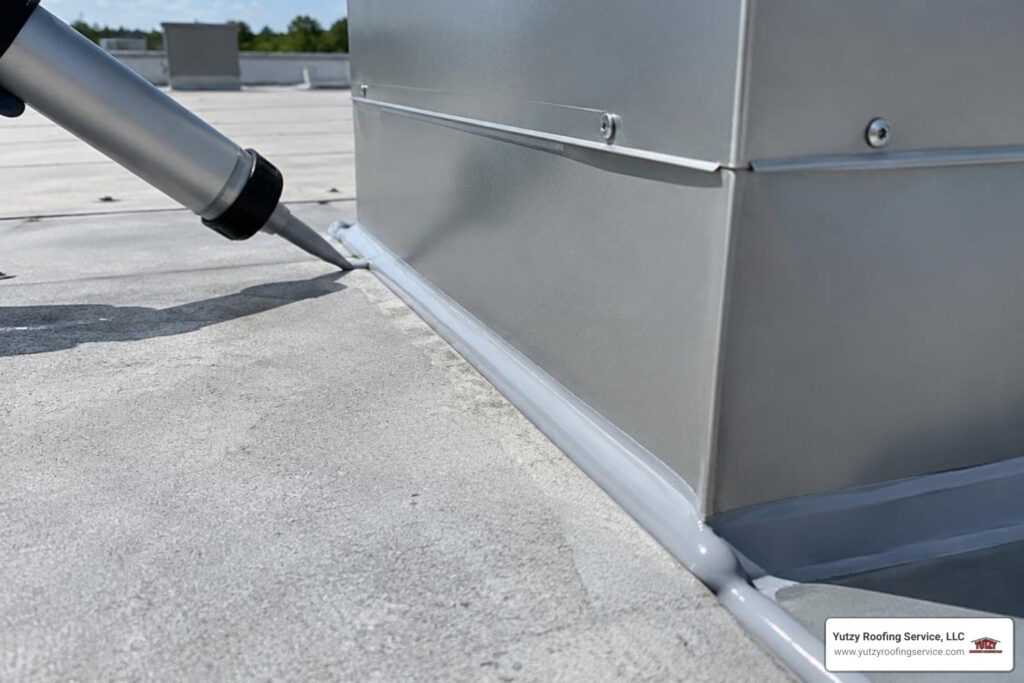
Buy pre-colored rather than trying to tint it. Aluminum colored silicone caulk comes in a gray or silver-toned finish for sealing joints around metal flashing, gutters, and other exterior details. Standard silicone is not paintable, so check a cured color sample before choosing it. For a commercial roof leak, color is only one factor: a roofing contractor should confirm that the sealant suits the existing metal, joint movement, and repair.
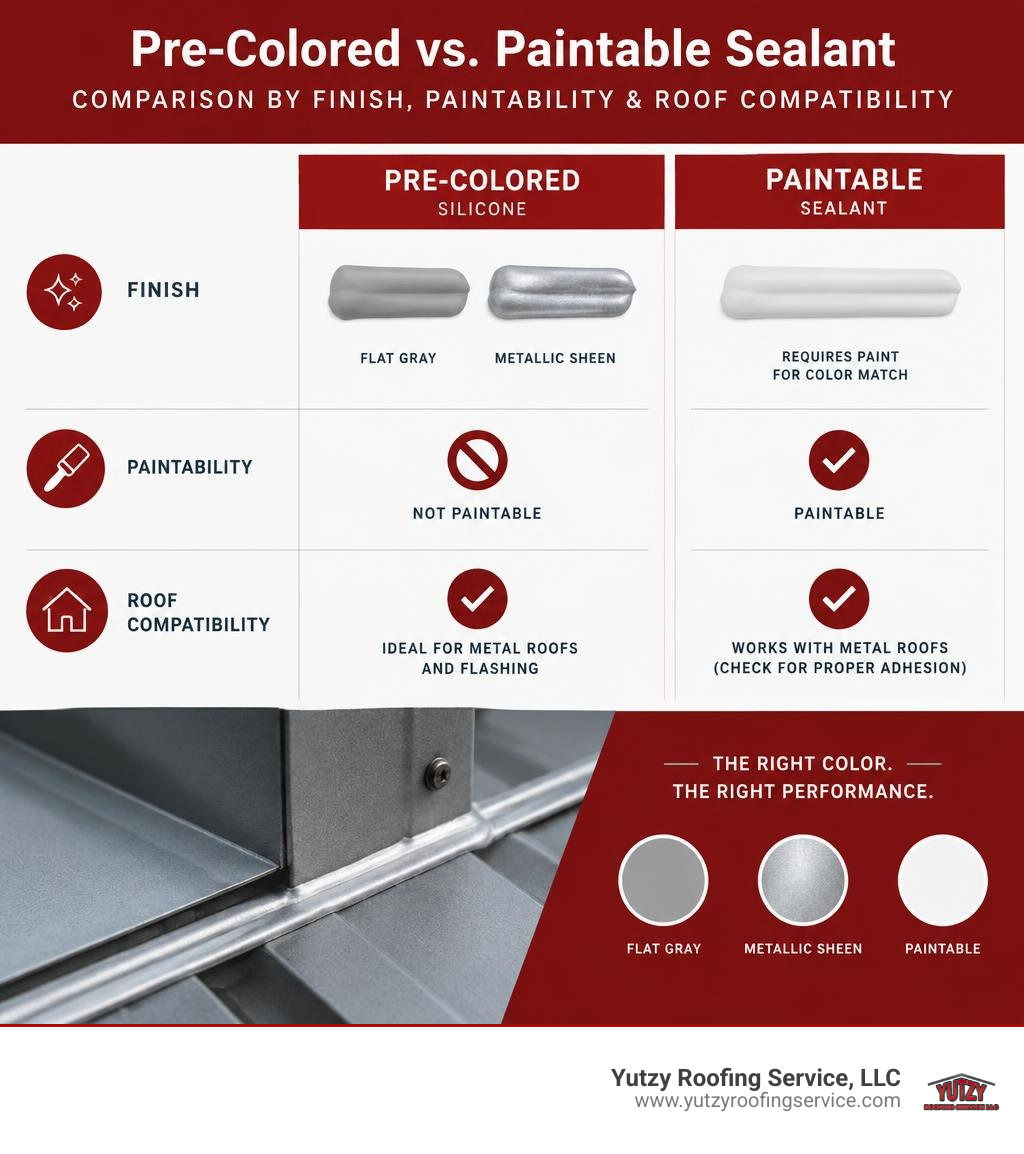
Some products look like flat gray; others have a slight metallic sheen. This guide compares those finishes with paintable options and explains when a roof joint calls for a more specialized sealant.
I’m Josh Yutzy of Yutzy Roofing Service. Our family’s Wisconsin roofing work since 1995 shapes how I assess aluminum colored silicone caulk for existing metal roof repairs.
Basic aluminum colored silicone caulk vocab:
Aluminum colored silicone caulk: product roundup and selection guide
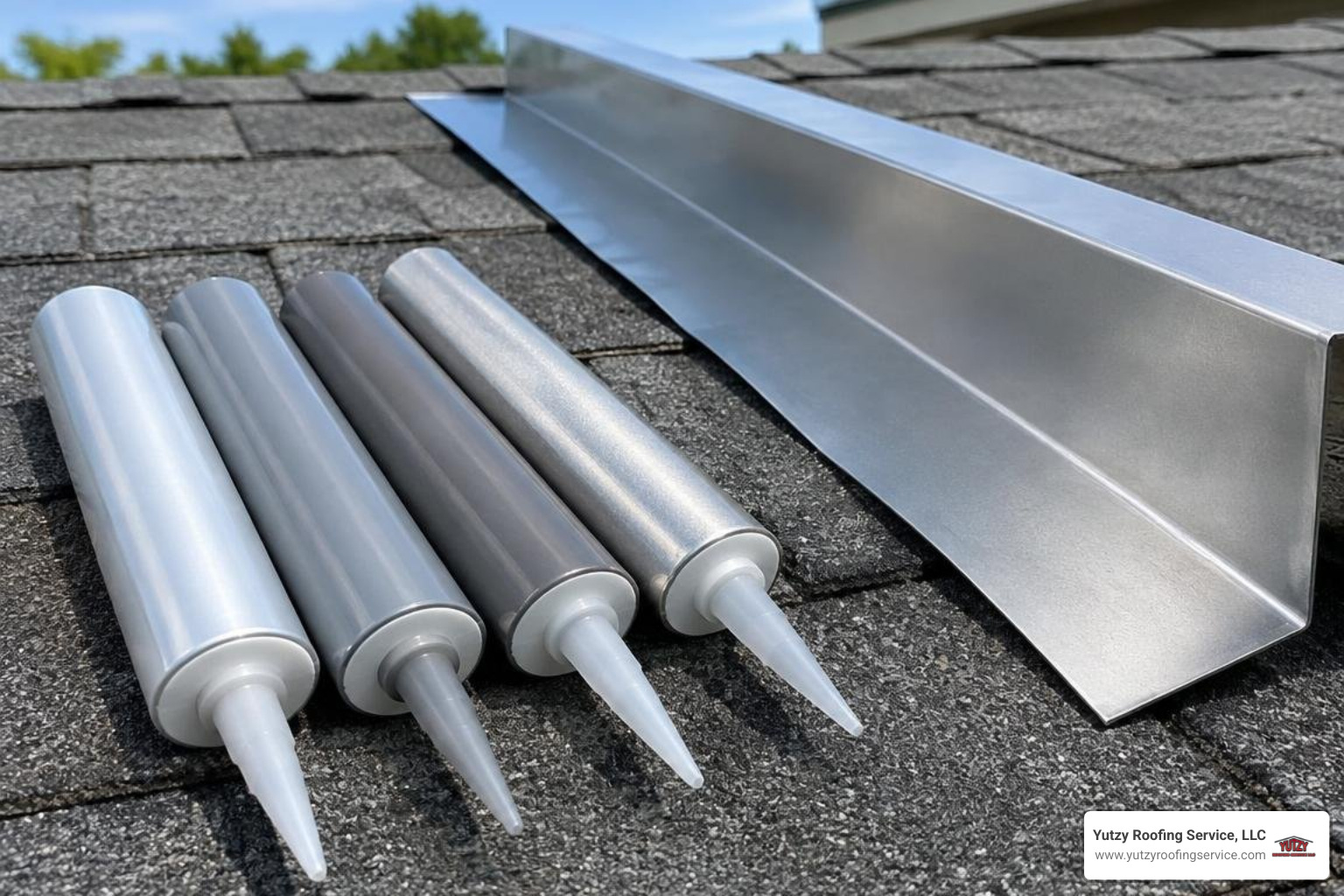
Aluminum-colored silicone is a moisture-curing sealant sold in a gray or silver-toned color. It forms a flexible, water-resistant bead and is commonly sold for sealing around windows, doors, siding, flashing, and other metal details. “Aluminum” describes the color, not necessarily a shiny metallic finish: some cured beads look flat and opaque, while others have a subtle metallic-like sheen.
Products differ in cure chemistry, movement rating, adhesion, and temperature limits. A color match does not mean a product is suitable for every roof assembly, so check its technical data and the existing roof material before specifying it.
Aluminum-colored silicone caulk: tinting versus pre-colored
Silicone sealant is generally not paintable. Conventional paint may not bond to its cured surface, so adding tint or planning to paint over a bead is not a reliable way to match a roof. Pre-colored silicone avoids that problem, but the shade may still differ from the surrounding metal. Compare a cured sample against the actual surface; lighting and the finish of the metal can change how close the match appears.
| Option | Advantages | Limitations |
|---|---|---|
| Pre-colored silicone | Flexible and water-resistant; color is built into the product | Not paintable; gray or aluminum shades can vary in sheen and tone |
| Paintable sealant | Can be painted after curing if the product allows it | Check its movement, weather, and substrate ratings; it may not perform like silicone in every exposure |
For example, aluminum-colored window, door, and siding sealant is a 100% silicone product rated Class 25. Retail pricing varies, but research listings put it near $10 per 9.8-ounce tube, with some stores selling it in a 12-pack. Other examples include White Lightning Window and Door Silicone Ultra, listed around $119 for 12 tubes, and SILA-SEAL acetoxy silicone, listed around $90 for a 12-pack. Prices and availability can change.
How to choose aluminum colored silicone caulk by chemistry and use
Acetoxy silicone cures with an acetic-acid byproduct, which gives it a vinegar-like odor. It can work well on suitable clean, non-sensitive surfaces, but the acid cure may be inappropriate around some metals or finishes. Neutral-cure silicone releases a non-acidic byproduct and is often the better starting point for aluminum, anodized metal, and sensitive assemblies. Even then, confirm compatibility with the specific coating and sealant manufacturer.
| Factor | Acetoxy cure | Neutral cure |
|---|---|---|
| Cure byproduct | Acetic acid; noticeable odor | Non-acidic byproduct; usually lower odor |
| Metal use | Verify compatibility, especially with sensitive finishes | Often preferred around aluminum and other sensitive metals |
| Example movement rating | Common products include Class 25 | Some products are Class 50 |
| Typical consideration | Often faster or lower-cost, depending on product | May cost more or cure more slowly |
Class 25 indicates a product tested to accommodate movement of 25% of the joint width; Class 50 indicates 50%. These ratings do not replace proper joint design or prove that a sealant is suitable for a particular roof. For a product example, see the neutral-cure aluminum sealant specifications. Its listed movement rating is Class 50, while DAP’s aluminum window, door, and siding silicone is Class 25.
Where aluminum silicone works—and where it fails
Depending on the product, silicone can adhere to clean metal, glass, ceramic, porcelain, and some painted surfaces. Some formulations also list certain plastics, rubber, or non-oily wood. Adhesion varies, so product-specific instructions matter. Mill-finish aluminum can carry rolling oil or handling residue that interferes with bonding, even when it looks clean.
Do not assume one tube suits every substrate. Some silicones are unsuitable for porous materials, oily or solvent-releasing surfaces, corroded metal, prolonged immersion, or structural glazing. Aquarium use also requires a product explicitly designed and labeled for that purpose; general-purpose silicone is not automatically aquarium-safe. Vinyl and coated surfaces need a compatibility check as well.
Silicone may be used around windows, doors, siding, and some gutters when the product allows it. Roof seams are a different decision: sealant must match the roof metal, coating, joint movement, and repair system. A general-purpose window-and-door bead is not automatically a metal-roof repair material. Our overview of sealants in metal roof repairs explains why product compatibility matters.
Acrylic latex is typically paintable and useful where a painted finish is needed, but it is not interchangeable with silicone for every exterior joint. Polyurethane products may offer strong adhesion and movement capability, but their paintability and weathering characteristics depend on the formulation. A contractor should choose by exposure, substrate, and repair requirements, not color alone.
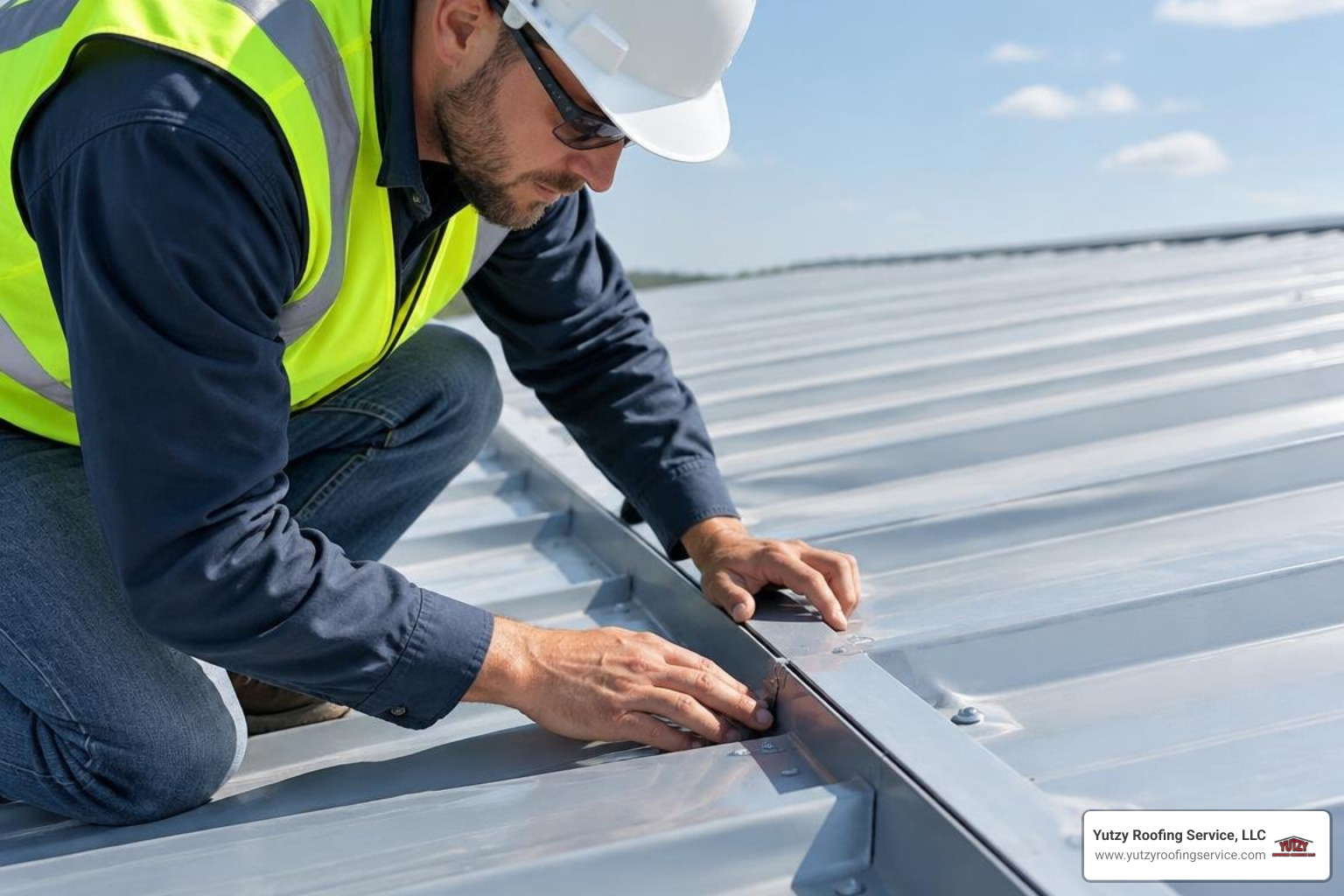
Professional assessment of sealant application, cure time, and movement
Before specifying a sealant, we assess the condition of the metal, existing coatings, joint dimensions, and any old sealant. Oil, corrosion, loose coatings, or residue can undermine adhesion. A contractor also considers whether the joint is designed to move and whether a new bead can bond to the materials on both sides.
Application and cure details vary by product. Some silicone products become tack-free in about 10 to 20 minutes, while others allow only a short tooling window. Cure may take about 24 hours for a specified thin layer under stated conditions, but thicker beads, low temperatures, and dry air can extend the timeline. “Rain-ready” is not the same as fully cured: for example, DAP lists a 12-hour rain-ready time, while White Lightning lists a 3-hour water-ready time. Follow the specific product data rather than assuming one timing applies to all tubes.
Products also have different application and service temperature ranges. One listed aluminum silicone specifies application from -35°F to 140°F and a continuous service limit of 350°F; other products have different limits. UV exposure and Wisconsin freeze-thaw cycles add to the demands on an exterior joint. We also account for ventilation where a curing product has a noticeable odor. For more on assessment and material compatibility, see our practical guide to sealing metal surfaces.
Choosing the right sealant for metal roofing
For an existing commercial roof, the right product depends on the metal, coating, seam design, previous repairs, and the condition of the surrounding assembly. Gutters, flashing, and roof seams can require different products, even when they are close together. Applying a new bead over an incompatible or failing material may conceal a problem without resolving it.
We assess the roof and identify whether a targeted repair, maintenance, or broader restoration is appropriate. Yutzy Roofing Service provides commercial roofing restoration, metal roof restoration, EPDM repairs, spray foam coatings, and maintenance in Wisconsin communities including Madison, Appleton, and Wausau. Eligible restoration projects may qualify for an up-to-18-year non-prorated renewable warranty; coverage depends on the project and warranty terms.
Choosing a pre-colored bead can improve the appearance of a repair, but color cannot compensate for poor adhesion or the wrong sealant chemistry. Our metal-roof sealant selection guidance can help frame the decision. For a commercial roof, a professional assessment helps ensure the chosen repair material suits the existing system and its movement.
