Low Slope Roof Repair Starts With the Source of the Leak
Effective low slope roof repair starts with finding where water enters, not just where it drips indoors. A roofing professional should check drains, seams, flashing, and the roof surface for damage, then look for wet insulation beneath it. The right fix may be a targeted repair or restoration, but covering trapped moisture can make the problem worse.
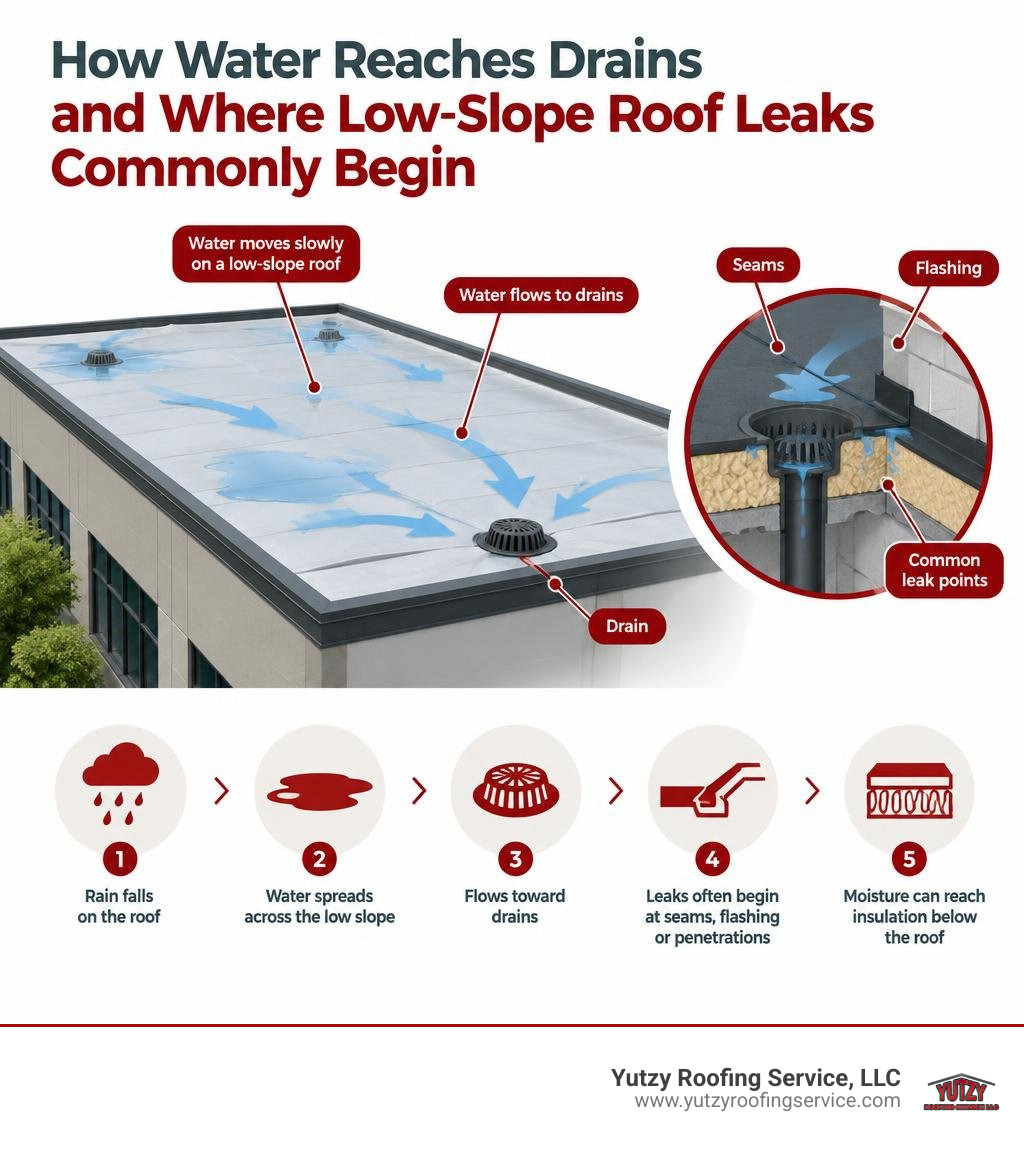
A low-slope roof has a gentle pitch, so water moves slowly toward its drains. In Wisconsin, clogged drains and standing water can become bigger problems during freeze-thaw cycles. Finding the cause early helps protect the roof and the business below it.
I’m Josh Yutzy of Yutzy Roofing Service, LLC, a family-owned company that has served Wisconsin since 1995. My experience with commercial roofing informs this guide to low slope roof repair and how to choose a lasting fix.
Low slope roof repair terminology:
Low Slope Roof Repair: Why Roofs Leak and When Restoration Makes Sense
Common causes of low-slope roof leaks
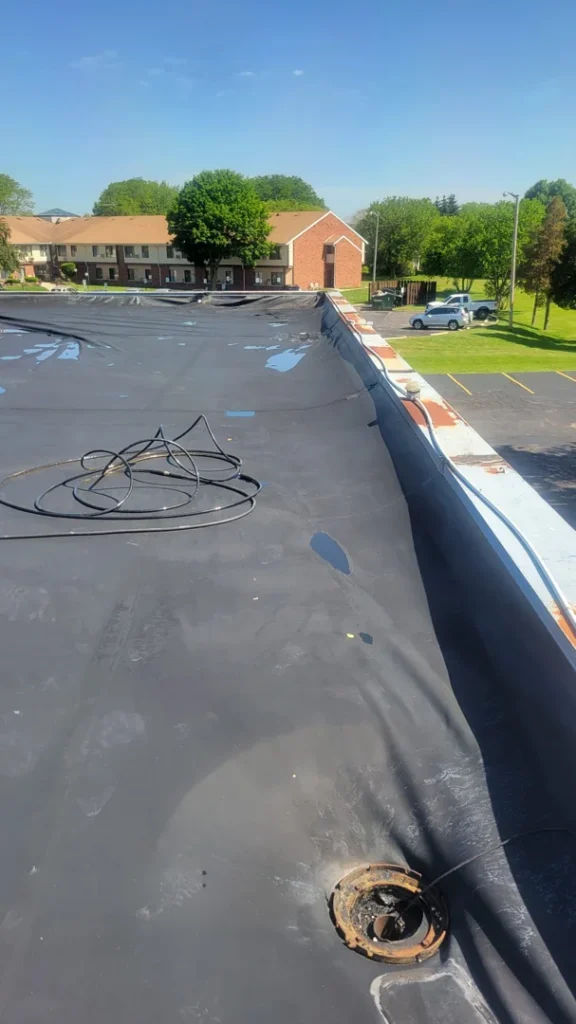
A low-slope roof is designed to drain, not to stay underwater. A minimum slope of about 1/4 inch per foot is commonly recommended, although building conditions and product warranties can set different requirements. When drains clog or the roof sags, water may pond. Standing water adds stress, accelerates deterioration in some roofing materials, and can freeze and expand during Wisconsin winters.
Leaks also commonly start at seams, flashing, and penetrations rather than in the middle of an intact membrane. Age, foot traffic, dropped tools, wind uplift, and rooftop equipment can loosen or puncture roofing. Sealant around vents, pipes, and other details can also crack or pull away. If insulation becomes wet, it may hide the entry point and spread damage beyond the visible stain.
Indoor water marks are useful clues, but they do not always show where water entered. A professional may need to trace the leak across the roof and assess the assembly beneath it. Our guide to flat-roof leak causes and diagnosis explains why leak location and source can differ. For a wider view of routine problems, see common commercial roof repairs.

Low-slope roof repair vs. restoration: how to decide
A targeted repair may be appropriate when damage is limited, the surrounding membrane remains sound, and the insulation and deck are dry and stable. A repair may also address a specific issue, such as a failed seam or flashing, without treating the whole roof.
Restoration can make sense when the existing roof is broadly serviceable but needs a compatible protective system. It is not a cure for wet insulation, a failing deck, or widespread membrane deterioration. A contractor should assess the roof’s condition, drainage, repair history, and any hidden moisture before recommending it. Moisture surveys and test cuts can help confirm what is happening below the surface.
A professionally installed low-slope roof may last 20 to 30 years, depending on its system, weather exposure, and maintenance. A recover or restoration may extend service life by roughly five to ten years, but it is not equivalent to installing a new roof. If leaks recur across the roof, repairs keep accumulating, or the deck is damaged, more extensive work may be needed. Our comparison of commercial roof repair options covers factors in that decision. Restoration guidance for low-slope roofs also emphasizes drainage, dry materials, and compatibility before covering an existing roof.
Materials used in low-slope roof repair
The right repair material depends on the existing roof system. A patch or coating that does not bond to the membrane may peel away, even if it appears to seal the leak at first. EPDM repairs require compatible materials and careful attention to seams and flashing. Coatings must suit the existing surface and be applied to a properly prepared roof.
Spray polyurethane foam can be used as part of a roofing system, while coatings may protect a suitable surface and help restore it. Metal roof restoration addresses issues such as deteriorated seams, fasteners, and protective surfaces. These approaches are not interchangeable: a professional should evaluate the roof and confirm that the selected material is compatible. For more on lasting commercial roof repair options, consider both the roof’s current condition and the repair method.

How to Get Durable Low-Slope Roof Repair
How professionals diagnose and repair a low-slope roof
A professional assessment starts with the interior clues and the roof above them. The contractor checks the membrane, seams, flashing, drains, penetrations, and rooftop equipment, then considers whether moisture has reached the insulation or deck. Depending on the roof, a moisture survey or test cut may be needed to check concealed conditions.
Once the cause and extent are understood, the repair plan should identify any preparation needed and use materials suited to the existing system. Work may involve repairing a seam, patching a damaged area, replacing failed flashing, or applying a compatible coating. If the substrate is wet or unsound, covering it can trap the problem instead of solving it.
A quality check confirms that the repair is secure and that drainage details have not been overlooked. If weather or access delays permanent work, a contractor may recommend temporary protection while arranging the full repair. The NRCA low-slope membrane roof repair manual covers repair practices across several membrane and roof systems. Our overview of commercial roof leak repair solutions discusses common professional approaches.
Repair costs, contractor qualifications, safety, and code requirements
There is no single price for a low-slope repair. Cost depends on the roof’s size and access, the system and materials, how much damage is present, and whether drainage work or removal of wet insulation is necessary. Hidden damage can change the scope once the roof is investigated. Ask for a written estimate that explains the work, materials, exclusions, and any warranty terms. Our guide to commercial roof repair planning outlines useful questions to raise.
Choose a contractor with commercial low-slope experience and ask for references, proof of insurance, applicable licensing, and details about workmanship coverage. The scope should explain how the contractor will address the leak source, not just the visible stain. Manufacturer instructions matter because incompatible materials or incorrect application can affect performance and warranty coverage.
Local building codes and permits may affect repair and restoration options. Requirements can involve drainage, slope, fire ratings, wind uplift, roof layers, and structural load capacity. Existing conditions beneath the membrane can also make a proposed repair impractical. A technical review of code and repair-scope considerations describes why codes, feasibility, and roof condition need to be considered together.
Roof work carries fall and other job-site hazards, even when the roof looks nearly flat. Professional crews use appropriate fall protection, access controls, and weather limits, and follow safety requirements for the work. Roof work should not be treated as a do-it-yourself task.
Maintenance that helps a repaired roof last
Regular maintenance helps catch small issues before water reaches the building interior. FEMA recommends roof inspections at least twice a year and after high-wind events. For commercial roofs in Wisconsin, inspections should also consider seasonal debris, snow and ice, and whether drains remain clear.
A maintenance visit should check for ponding, membrane damage, open seams, deteriorated flashing, and changes around rooftop equipment. Prompt attention to new leaks matters: water can damage insulation, the deck, and interior finishes. Keep records of inspections and repairs, and follow any maintenance conditions tied to the roof’s warranty.
At Yutzy Roofing Service, LLC, we provide commercial roofing restoration, spray foam coatings, metal roof restoration, EPDM repairs, and maintenance in Wisconsin communities including Madison, Appleton, and Wausau. Warranty coverage varies by system and scope; ask whether a project qualifies for our up to 18-year non-prorated renewable warranty and review its terms. Our guide to commercial roof maintenance and leak prevention covers preventive care. If a leak has affected the interior, our professional guidance for interior roof repairs can help you understand the next steps.
