
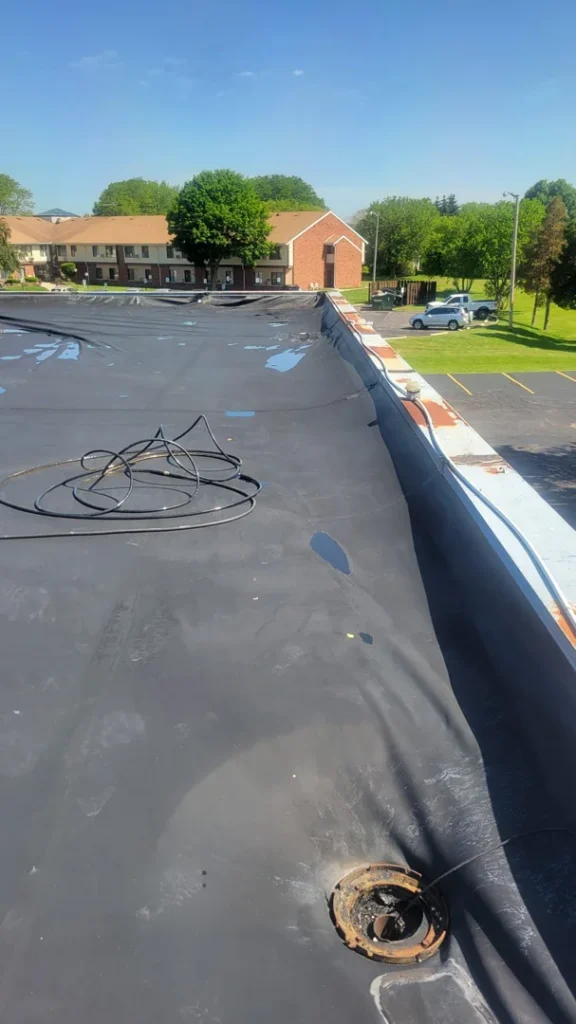
Emergency Roof Tarp Cost: A Fast 2026 Estimate
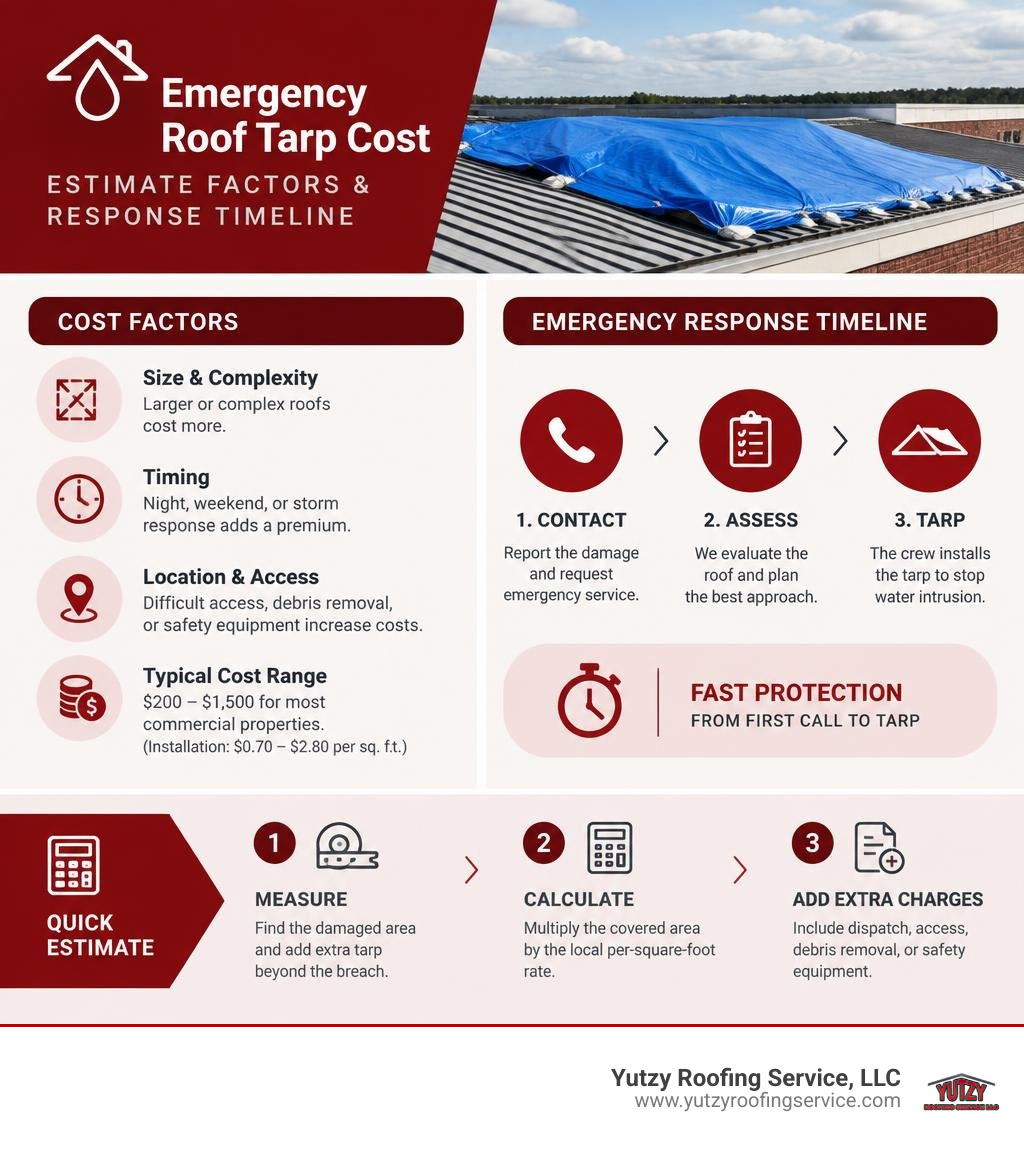
For most commercial properties, an emergency roof tarp cost falls between $200 and $1,500, though large, complex, or after-hours jobs can cost more. Professional installation typically runs $0.70 to $2.80 per square foot. Expect a 30% to 50% premium when a crew must respond at night, on a weekend, or during a major storm.
To get a quick estimate:
- Measure the damaged area, then include enough tarp to extend beyond the breach.
- Multiply the covered area by the local per-square-foot rate.
- Add likely charges for emergency dispatch, difficult access, debris removal, or safety equipment.
A tarp is not a permanent repair, but it can limit water intrusion while you arrange an inspection and insurance documentation. For a leaking commercial roof, fast mitigation is often far less expensive than cleanup, damaged inventory, or business interruption. According to the Federal Emergency Management Agency, temporary roof protection is a recognized step in reducing post-storm property losses.
I am Josh Yutzy of Yutzy Roofing Service, LLC, a family roofing business serving Wisconsin since 1995. Our experience with emergency roof tarp cost helps commercial property owners weigh immediate protection against the full cost of lasting repairs.
Simple emergency roof tarp cost glossary:
Understanding Emergency Roof Tarp Cost: 2026 Price Breakdown
When severe weather tears through Wisconsin, commercial building managers cannot afford to wait around while rainwater cascades into production floors or storage warehouses. Overall, professional roof tarping spans from $150 on the lowest end for minor spot-covers up to $3,300 for massive structural breaches, with a national median hovering near $450. For commercial properties facing storm-related punctures or membrane tears, average emergency interventions generally run between $200 and $1,500.
Labor accounts for roughly 60% to 70% of the final invoice. Standard roofing labor rates range from $45 to $75 per hour during normal business hours, but high-urgency callouts increase labor charges to $75 to $150 per hour.
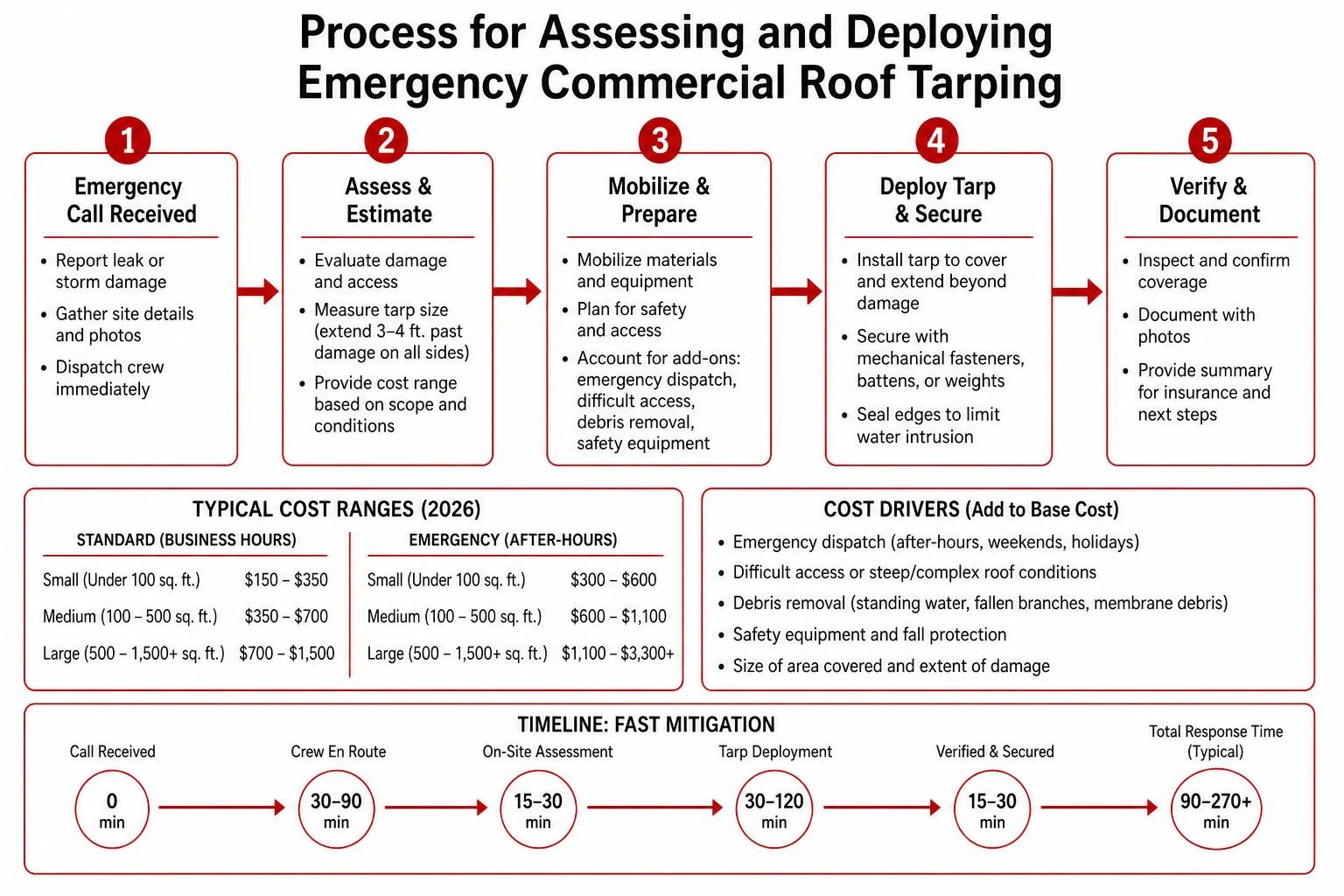
| Project Scope & Service Level | Typical Square Footage | Cost Range (2026 Rates) | Key Characteristics |
|---|---|---|---|
| Small Commercial Breach (Standard) | Under 100 sq. ft. | $150 – $350 | Localized puncture, scheduled business hours, simple ladder access |
| Medium Facility Section (Standard) | 100 – 500 sq. ft. | $350 – $700 | Flashing failure, seam tear, basic mechanical fastening |
| Large Facility Coverage (Standard) | 500 – 1,500+ sq. ft. | $700 – $1,500 | Multiple rupture zones, membrane blow-off, extensive anchoring |
| Small Emergency Breach (After-Hours) | Under 100 sq. ft. | $300 – $600 | Night/weekend dispatch, active rainfall, rapid containment |
| Medium Emergency Section (After-Hours) | 100 – 500 sq. ft. | $600 – $1,100 | Active leak mitigation, hazardous conditions, structural battening |
| Large Emergency Coverage (After-Hours) | 500 – 1,500+ sq. ft. | $1,100 – $3,300+ | Severe storm damage, parapet integration, hazard rigging |
Estimating Emergency Roof Tarp Cost Per Square Foot
Calculating an accurate estimate requires understanding square-foot pricing models. Standard scheduled tarp installations run between $0.70 and $2.00 per square foot, whereas immediate emergency deployments climb to $1.00 to $2.80 per square foot due to the urgency and risk involved.
The most critical mistake building owners make when estimating coverage is measuring only the physical hole in the roof deck. A proper weather barrier must extend at least 3 to 4 feet beyond the damage perimeter in every direction. If a commercial low-slope roof has an 8×8 foot puncture (64 square feet), technicians cannot simply stretch an 8×8 tarp over the deck. To establish a true watershed, the crew must install at least a 16×16 foot tarp (256 square feet), which significantly alters the total square footage calculation.
Standard vs. Rush Services: How Urgency Influences Emergency Roof Tarp Cost
Urgency commands a premium because mobilizing a crew at 2:00 AM in torrential rain requires specialized logistics and hazard pay. Commercial emergency dispatch fees typically add an immediate $100 to $300 call-out charge ($200 to $500 for complex after-hours logistics), with additional holiday or weekend surcharges ranging from $150 to $300.
Overall, an urgent dispatch increases base costs by 30% to 50%. During wide-scale severe weather outbreaks across areas like Madison, Appleton, or Wausau, local service providers prioritize active water intrusion emergencies to prevent thousands of dollars in interior equipment damage.
Key Factors That Influence Commercial Roof Tarping Expenses
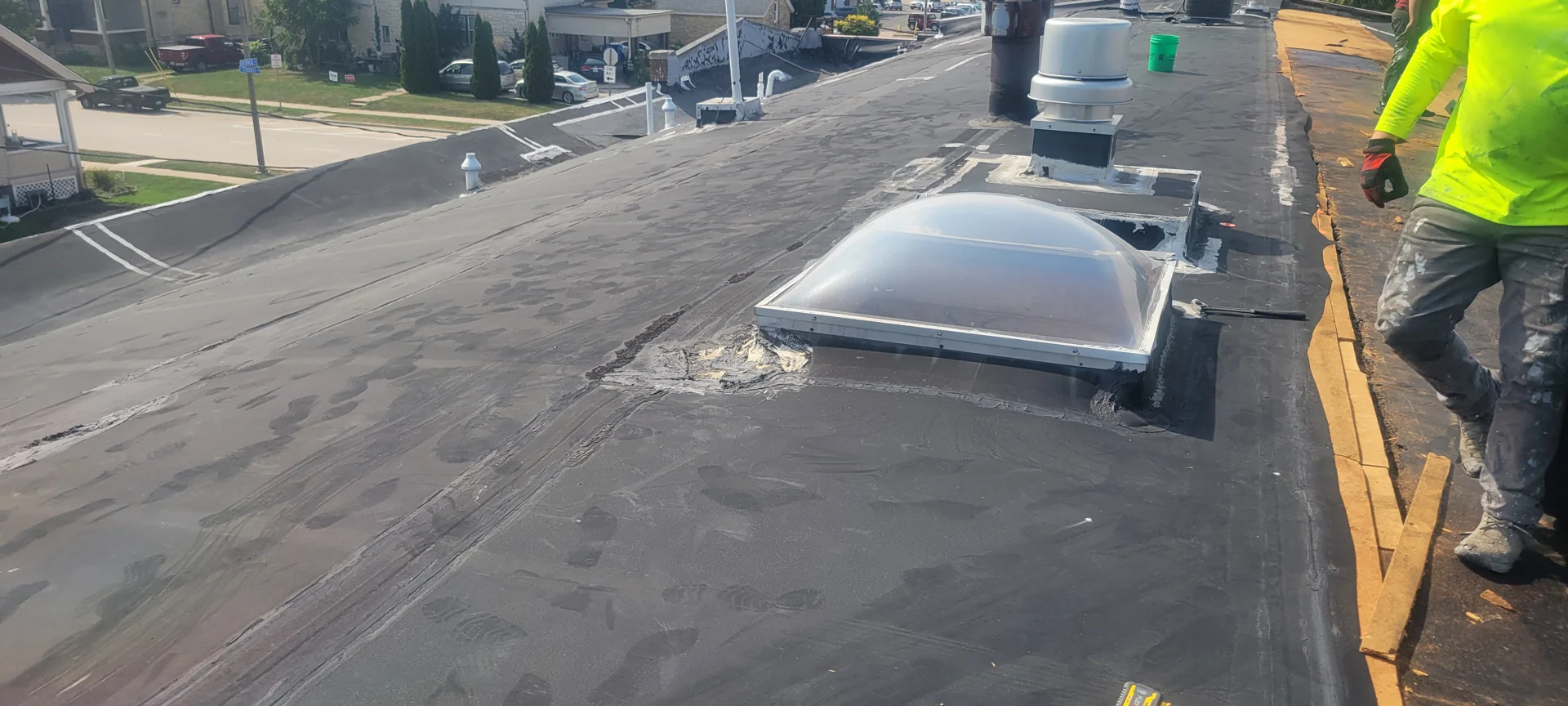
Beyond simple square footage, several structural and environmental variables dictate the overall investment needed to protect your facility. Understanding clear emergency roof repair signs allows property managers to call before secondary structural framing starts rotting from prolonged exposure.
Roof Pitch, Accessibility, and Structural Damage Severity
A low-slope or flat commercial facility with clear perimeter roof hatch access is far faster and safer to tarp than a multi-story industrial complex with high parapet walls or steep decorative architectural sections.
Key architectural challenges include:
- Multi-Story Heights: Accessing roofs requiring 40-foot extension ladders or boom lifts increases setup time and equipment fees.
- Drainage Obstacles: Flat commercial systems rely on interior drains, scuppers, and crickets. Tarping over an active drainage path requires strategic water channeling so ponds do not form on top of the tarp.
- Decking Punctures: If a falling tree limb has cracked structural metal or wood decking beneath the membrane, workers cannot walk freely. Crews must install temporary safety planking or tie-off points, adding safety harness rigging costs.
Heavy-Duty Tarp Materials, Fastening Methods, and Labor Rates
Hardware store utility tarps (typically 6-mil blue polyethylene) are intended for short-term ground cover and will shred in high winds within days. Professional commercial mitigation requires durable materials and robust anchoring.
- Material Grades: Commercial contractors use 10-mil to 25-mil heavy-duty woven poly tarps or heavy vinyl laminates (10 oz. to 18 oz.) equipped with UV inhibitors. Premium heavy-duty materials cost slightly more ($100 to $400 in materials) but survive strong wind gusts and sun exposure.
- Fastening Systems: Sandbags alone fail during moderate windstorms. Pros anchor protective membranes using the “sandwich batten method”—screwing 2×4 lumber strips through the tarp perimeter into structural decking or parapets.
- Perimeter Seals: High-grade emergency roof sealants and adhesive roofing mastic are applied along the upper edges of the tarp to prevent wind-driven rain from sneaking beneath the barrier.
Professional Installation, Longevity, and Critical Add-On Costs

A commercial tarp is a temporary shield, not a complete roof system. While material costs for a DIY tarp setup might only run $50 to $150 at a local hardware retailer, the true cost of an amateur attempt often appears in missed leaks, torn membranes, or workplace falls. Following standard emergency roof covering tips helps maintenance crews understand safe procedures, but major damage demands professional deployment.
What Professional Tarp Installation Entails vs. DIY Hazards
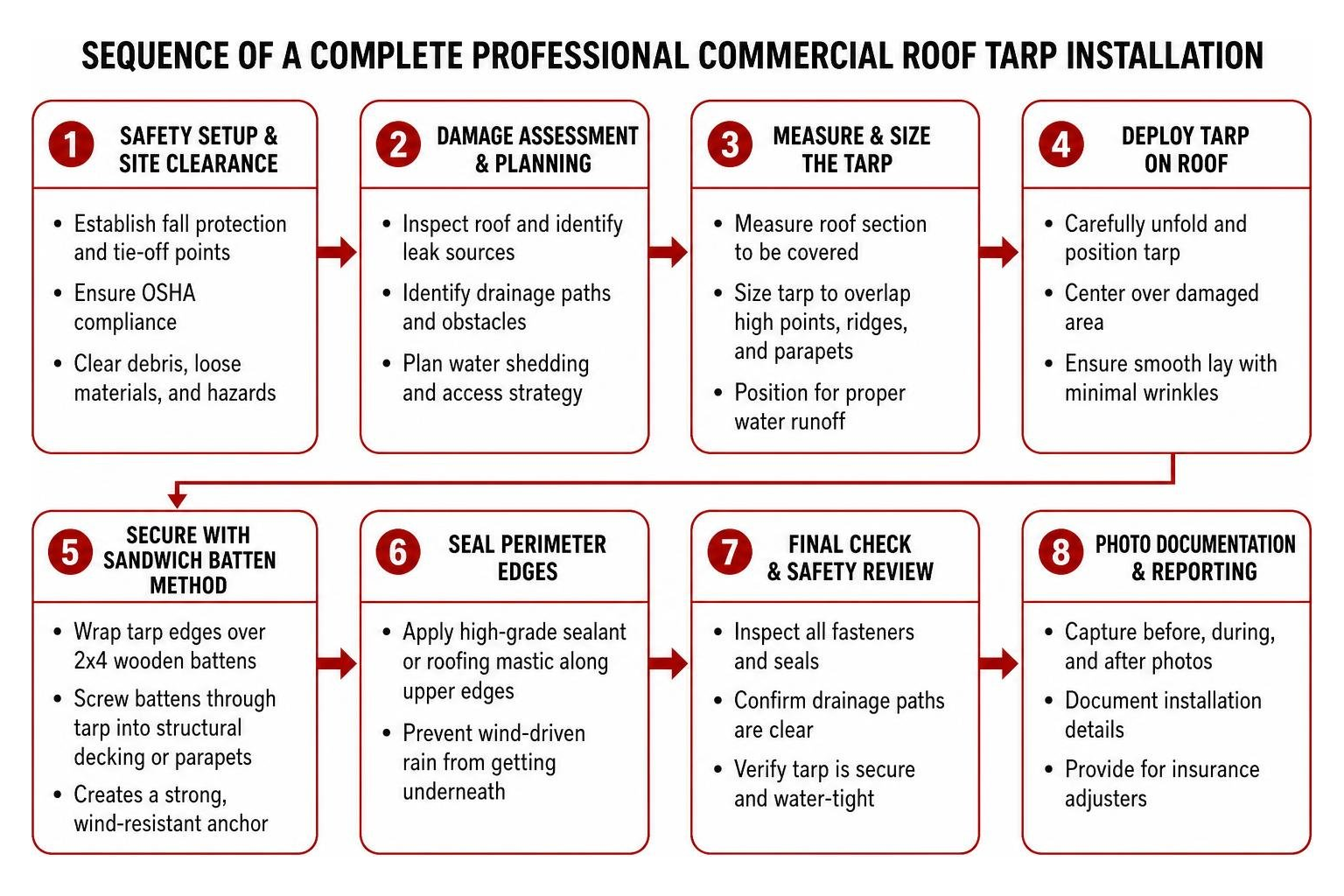
Commercial roofing presents serious fall risks. OSHA compliance requires specific harness tie-offs, safety monitors, and specialized footwear on wet membranes. When our crews arrive on-site, a proper installation entails:
- Safety Clearances & Debris Removal: Clearing broken tree limbs, loose ballast, and shattered roofing materials.
- Watershed Sizing: Sizing the heavy-duty membrane to overlap high points, ridges, or parapets so water naturally sheds over the tarp.
- Sandwich Batten Securing: Wrapping tarp margins around wooden battens before screwing them down, creating an airtight, tear-resistant anchor.
- Photo Documentation: Capturing high-resolution before, during, and after images for commercial insurance adjusters.
Safe Tarp Lifespan and Essential Post-Storm Add-Ons
A standard professional tarp installation provides reliable water protection for 30 to 90 days. Heavy-duty vinyl tarps with UV stabilizers can last upwards of 6 months to a year, but long-term reliance is risky. Sun exposure gradually degrades the poly fibers, and continuous temperature swings can loosen fasteners.
Property owners must also budget for related disaster recovery services:
- Debris & Tree Removal: $500 – $2,000 depending on crane requirements and limb weight.
- Plywood Deck Board-Up: $150 – $400 for structural reinforcement over broken decking prior to membrane placement.
- Interior Moisture Mitigation: $1,400 – $5,000+ for commercial dehumidifiers and air movers if water penetrated interior spaces.
Once the storm clears and your building is protected, transitioning promptly to comprehensive storm damage roof repair prevents underlying mold development and permanently restores your facility.
Navigating Insurance Claims and Choosing an Emergency Contractor
Commercial property policies generally include a strict “Duty to Mitigate” clause. Under this requirement, the building owner must take all reasonable, immediate steps to stop active water intrusion and protect interior inventory. Failing to install a temporary barrier after a storm can give an insurer grounds to deny coverage for secondary interior rot or ruined equipment.
Insurance Coverage and Duty to Mitigate Damage
Most commercial insurance policies reimburse reasonable emergency mitigation expenses as part of a covered storm damage claim. Keep these steps in mind to ensure smooth processing:
- Document Immediately: Photograph all visible exterior ruptures and interior water collection points before the tarp is fastened down.
- Demand Itemized Invoicing: Ensure your contractor provides an itemized bill separating emergency tarp labor, call-out surcharges, and material fees from any future permanent restoration work.
- Verify Covered Perils: Confirm the underlying cause of damage (such as wind shear, hail impact, or fallen branches) is covered under your commercial policy.
When you need rapid response in Wisconsin, our dedicated emergency roof repair services provide full documentation support to streamline adjuster approvals.
How to Select a Qualified Emergency Roofer
After severe weather events, out-of-state “storm chasers” often flood commercial industrial parks offering fast tarping. Unfortunately, these fly-by-night crews frequently nail tarps incorrectly, puncture intact roofing membranes, demand total cash payment upfront, and disappear before permanent repairs begin.
When hiring an emergency roofer, verify that the company:
- Holds active commercial roofing licenses and comprehensive general liability insurance.
- Uses non-destructive or code-compliant fastening techniques.
- Maintains a permanent physical presence in your region.
- Has the expertise to handle subsequent commercial restoration—such as membrane restoration, liquid-applied coatings, spray foam systems, and EPDM repair—backed by multi-year warranties.
Frequently Asked Questions About Roof Tarping
How long can an emergency tarp safely stay on a roof?
A standard heavy-duty poly roof tarp is designed to stay in place for 30 to 90 days. While specialized heavy vinyl or shrink-wrap materials can endure several months, tarps are strictly temporary stopgaps. Ultraviolet (UV) radiation from sunlight breaks down the polyethylene weave, and seasonal temperature shifts cause wooden battens to loosen over time. Permanent commercial repairs should be scheduled as soon as insurance scopes are finalized.
Will commercial insurance cover the cost of emergency roof tarping?
Yes, in the vast majority of cases where the damage stems from a covered peril (such as wind, hail, or falling objects). Emergency tarping is classified as a mandatory damage-mitigation expense. Insurers expect property owners to minimize losses immediately, and they typically reimburse emergency tarping costs when accompanied by timestamped photos and detailed contractor receipts.
Can facility maintenance staff safely install a temporary tarp?
While on-site maintenance personnel can safely secure small breaches on accessible, flat, single-story facilities in dry daylight conditions, attempting DIY repairs on wet roofs or during active windstorms creates extreme fall risks. Improperly nailed tarps also cause additional punctures in intact commercial membranes and often tear away during subsequent storms, voiding insurance claims for secondary interior water damage.
Conclusion
Securing your building immediately after a severe storm is the single most effective way to prevent a minor puncture from turning into catastrophic structural damage, inventory loss, and business downtime. While an emergency roof tarp represents an upfront cost of $200 to $1,500 for most typical breaches, it protects thousands of dollars in commercial assets beneath the deck.
At Yutzy Roofing Service, LLC, we have helped commercial facility managers throughout Wisconsin and neighboring areas—including Marshfield, Wausau, Appleton, Green Bay, Madison, Eau Claire, and Fond Du Lac—protect their investments for over three decades. When disaster strikes your commercial flat, EPDM, or industrial roof, depend on experienced professionals to stop the leak fast and transition your property smoothly into long-term commercial restoration. Visit Yutzy Roofing Service today to schedule a comprehensive roof assessment and secure lasting protection for your facility.
