
Choosing a Roof Coating for Metal Roofs
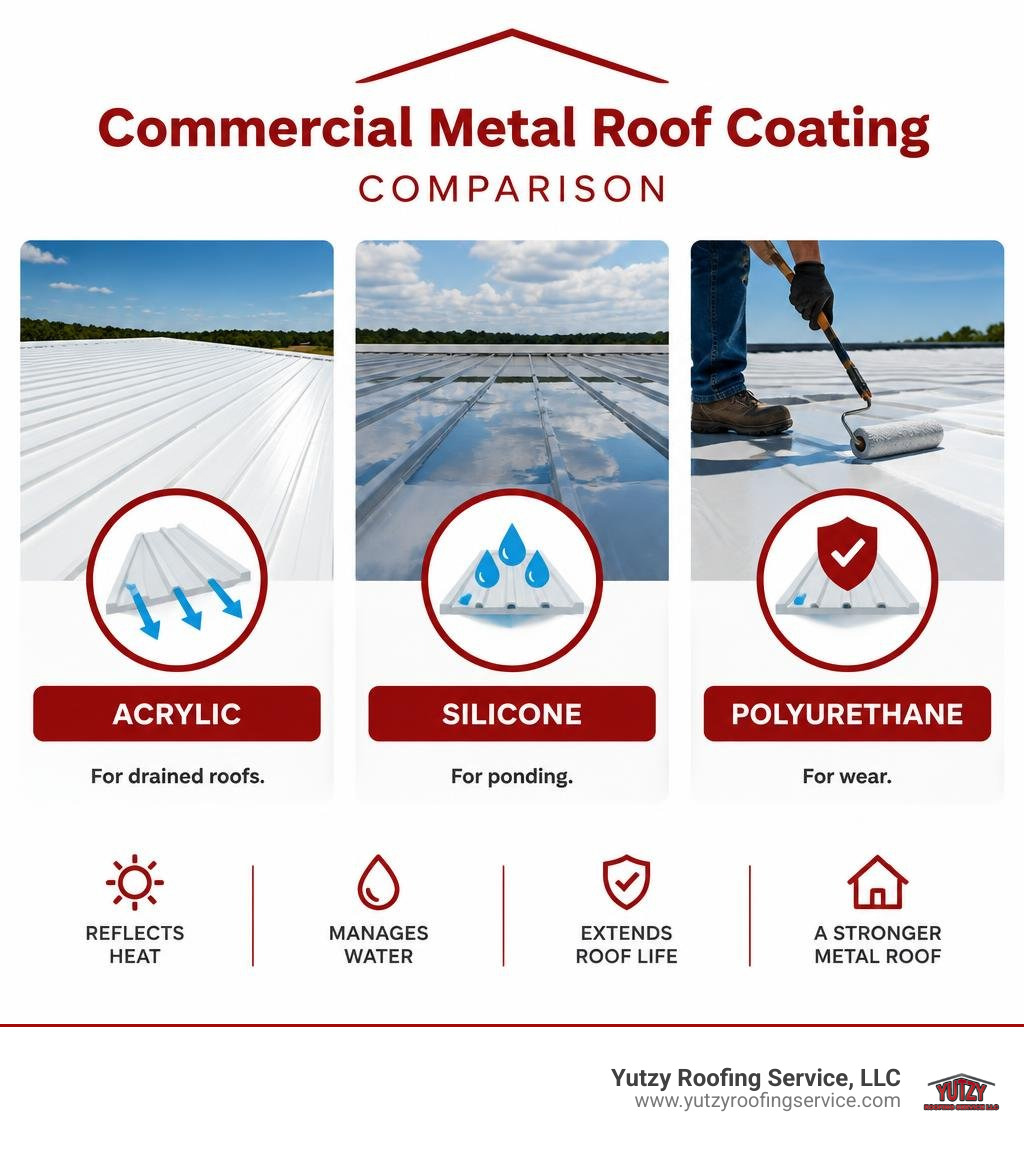
The best roof coating for metal roofs depends on the roof’s condition and where water collects. Reflective acrylic is a strong choice for a sound roof that drains well. Silicone may suit areas prone to standing water, while polyurethane can offer greater resistance to wear. Elastomeric describes flexible coatings, not one separate formula. Factory finishes such as PVDF and SMP are different from the coatings used to restore an existing roof.
For a leaking commercial roof, the product is only part of the fix. A roofing contractor should check rust, loose fasteners, seams, drainage, and the existing finish before choosing a coating system. That matters in Wisconsin, where roofs face hot summers and freezing winters.
I’m Josh Yutzy, part of a family roofing business that has served Wisconsin since 1995. My work in commercial roof restoration shapes how I assess a roof coating for metal roofs: as one part of a repair plan, not a substitute for it.
Easy roof coating for metal roofs word list:
Comprehensive Comparison of Roof Coating for Metal Roofs
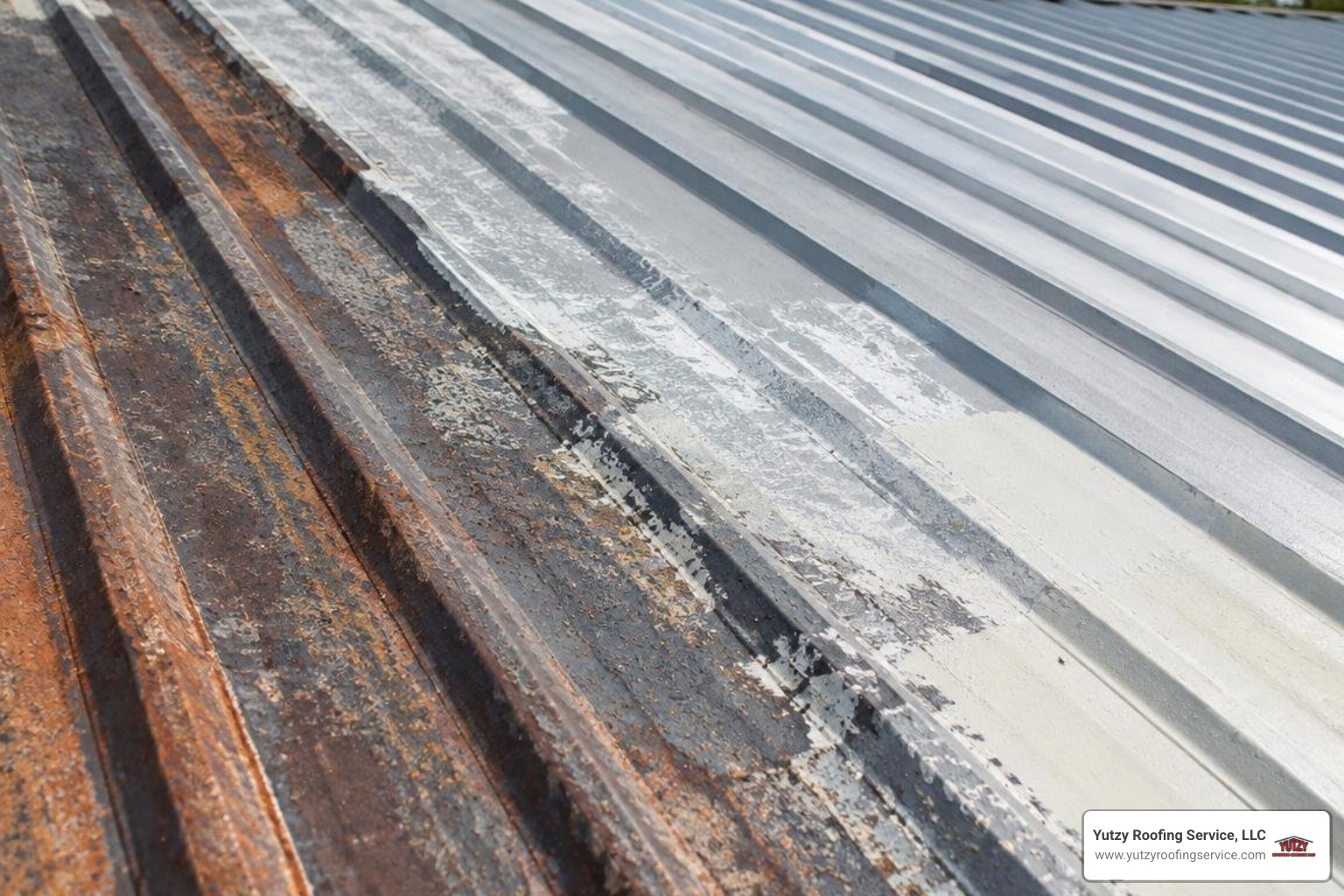
Selecting an industrial liquid-applied system requires understanding how distinct chemical formulations behave over time. Commercial metal structures undergo dramatic thermal shock throughout the seasons, expanding during blistering summer days and contracting rapidly during subzero winter nights. Without high physical elasticity and tensile strength, a rigid paint layer will crack, leading directly to moisture ingress and structural corrosion.
| Coating Chemistry | Key Physical Properties | Best Substrate Application | Recoat Interval |
|---|---|---|---|
| 100% Acrylic Elastomer | High UV reflection, 239% elongation, 278 psi tensile strength | Weathered Galvalume, galvanized steel, positive-slope profiles | 7–10 Years |
| High-Solids Silicone | Resists permanent ponding, stable chemical bonds, lower tear strength | Low-slope profiles, gutters, water-collection zones | 10–15 Years |
| Aromatic / Aliphatic Polyurethane | Exceptional impact and foot-traffic resistance, rigid adhesion | High-wear walkways, industrial roof decks | 10–15 Years |
| Hybrid Elastomers | Flexible water-based formula, high SRI (up to 110), fast cleanup | Multi-substrate transitions, pre-finished metal panels | 8–12 Years |
Comparing Acrylic, Silicone, and Elastomeric Roof Coating for Metal Roofs
When comparing field-applied coatings, acrylic elastomers represent one of the most cost-effective and dependable choices for buildings with adequate slope. High-grade reflective acrylic roof coating options deliver solar reflectance figures around 86% and thermal emittance values reaching 88%. Premium 100% acrylic formulas, like Superior Coat, provide an elongation rating of 239% and a tensile strength of 278 psi under ASTM D2370 testing. They remain fully pliable across a severe service temperature range from -40°F up to 200°F, effortlessly surviving Midwest freeze-thaw cycles.
For facilities plagued by low-slope dead valleys or persistent ponding water, silicone technologies deliver an impermeable barrier. Exploring durable silicone and acrylic elastomeric systems helps facility managers weigh the advantages: pure silicones resist pooling moisture without softening or blistering, offering recoat intervals between 10 and 15 years.
Modern advances have also introduced hybrid elastomeric formulations that combine the breathability and UV stability of water-based polymers with enhanced moisture resistance. Systems engineered to meet ASTM D6083 standards and high-reflectivity hybrid coatings feature a Solar Reflectance Index (SRI) as high as 110. Single-component sealers like ColorShield, with an estimated coverage of 160 square feet per gallon on metal, provide specialized multi-surface sealing when combined with proper base coats.
Matching the Right Roof Coating for Metal Roofs by Substrate Material
Every metal panel profile interacts differently with liquid coatings. Applying a formula without accounting for chemical bonding leads to delamination:
- Galvalume (Aluminum-Zinc Alloy): Highly durable against atmospheric rust, but needs an acrylic elastomeric or specialized DTM (Direct-to-Metal) topcoat to maintain surface integrity once the factory finish begins oxidizing.
- Galvanized Steel (G60 / G100): G100 contains 66% more protective zinc than G60, yet both eventually expose raw steel to oxidation. Rusted areas require targeted rust-inhibiting primers before applying elastomeric layers.
- Aluminum: Naturally forms a protective oxide layer that resists corrosion, but requires etching cleaners or dedicated base primers for reliable mechanical adhesion.
- Copper and Zinc: Rarely coated unless aged, requiring specialized non-acidic, solvent-compatible primers to ensure chemical bonding without staining adjacent facade panels.
Selecting appropriate commercial metal roof sealant and waterproofing solutions prevents galvanic reactions and reinforces sustainable building enclosure practices that maximize the operating life of your commercial structure.
Factory-Applied PVDF and SMP Systems vs. Field-Applied Coatings
Original commercial metal roofs usually feature factory-baked coil coatings:
- Silicone-Modified Polyester (SMP): Standard commercial metal finishes typically backed by a 10 to 20-year warranty. Over decades of severe sun exposure, SMP finishes lose their gloss, chalk under UV rays, and fade noticeably.
- Polyvinylidene Fluoride (PVDF / Kynar 500): A premium fluoropolymer resin finish that delivers outstanding color retention and chalk resistance across extended periods.
When these factory finishes eventually degrade, full panel replacement is rarely necessary. Applying field-restoration acrylic cooling coatings for commercial facilities creates a seamless, monolithic liquid membrane over the old factory finish. This seals existing fastener penetrations, protects against future chalking, and reduces interior cooling demands.
Restoring Commercial Metal Roofs with Professional Coating Systems

Restoring an aging commercial metal roof is an engineered process requiring precision equipment and industrial-grade compounds. Unlike simple cosmetic touch-ups, professional restoration stabilizes the entire building envelope against moisture intrusion and structural movement.
Commercial Surface Preparation and Rust Treatment Protocols
Coating adhesion is only as dependable as the surface beneath it. An experienced commercial contractor follows strict industrial preparation protocols:
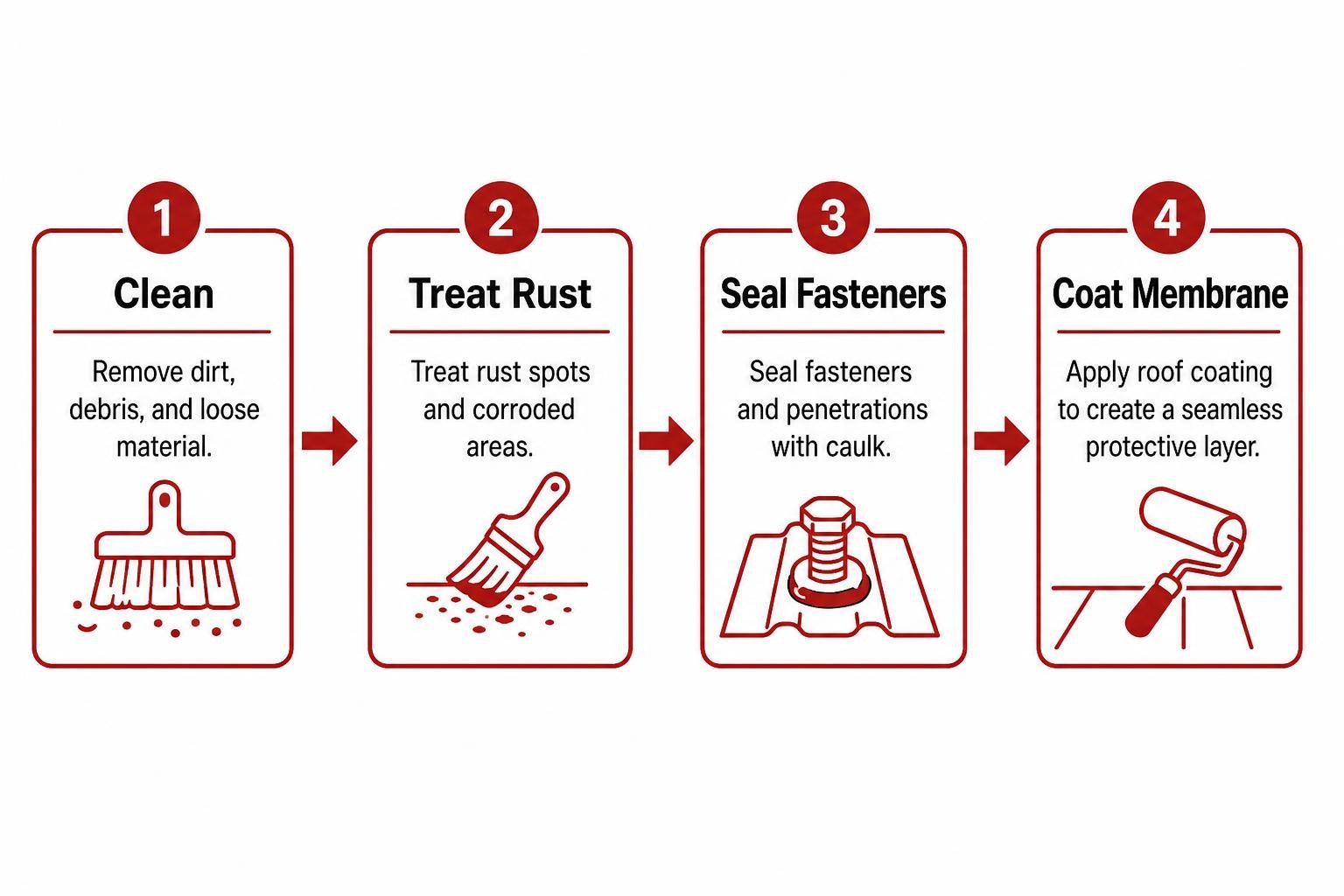
- Industrial Pressure Washing: The entire roof deck must be cleaned at 2,500 to 3,500 psi using specialized biodegradable degreasers to eliminate chalk, oil, atmospheric soot, and biological growth.
- Rust Conversion and Priming: Light surface oxidation is treated with rust-inhibitive primers that chemically arrest iron oxide formation. Heavy scale must be mechanically ground down to bare substrate.
- Fastener Torque and Replacement: Every metal roof contains thousands of mechanical fasteners. Damaged or stripped screws must be replaced with oversized commercial fasteners, and backed-out screws re-torqued.
- Three-Course Seam Sealing: Roof panel overlaps, flashings, and curb penetrations undergo our three-course reinforcement method: a heavy layer of elastomeric mastic, an embedded stitch-bonded geo-textile membrane, and a saturating top layer of mastic.
Implementing proper waterproofing metal roof structures to prevent damage ensures moving horizontal and vertical lap seams stay watertight when temperature swings strain the metal joints.
Professional Application Methods and Coverage Estimation
Achieving a durable dry film thickness requires high-pressure commercial airless spray rigs operating between 1,500 and 2,000 psi with specialized spray tips ranging from 0.015 to 0.019 inches. Formulations such as direct-to-metal paints average a spray coverage of 350 to 400 square feet per gallon per coat, drying to the touch in approximately 1 hour and permitting a recoat within 2 to 4 hours at 70°F and 50% relative humidity.
Professional estimators calculate material quantities using a simple baseline:
For corrugated or standing-seam profiles, professional contractors add 15% to 25% to the flat square footage to account for panel ribs, seam profiles, and overspray.
Application must occur within clear environmental thresholds: ambient temperatures above 50°F, relative humidity below 80%, and zero forecast precipitation for 24 hours. At Yutzy Roofing Service, we apply heavy-duty liquid membranes backed by our renewable, non-prorated warranties for up to 18 years across Wisconsin commercial properties in Madison, Appleton, Wausau, and surrounding areas. Regular commercial metal roof caulk and sealant inspections keep your facilities leak-free, protected against the elements, and running efficiently year after year.
