The Best Way to Seal a Metal Roof Starts With the Leak
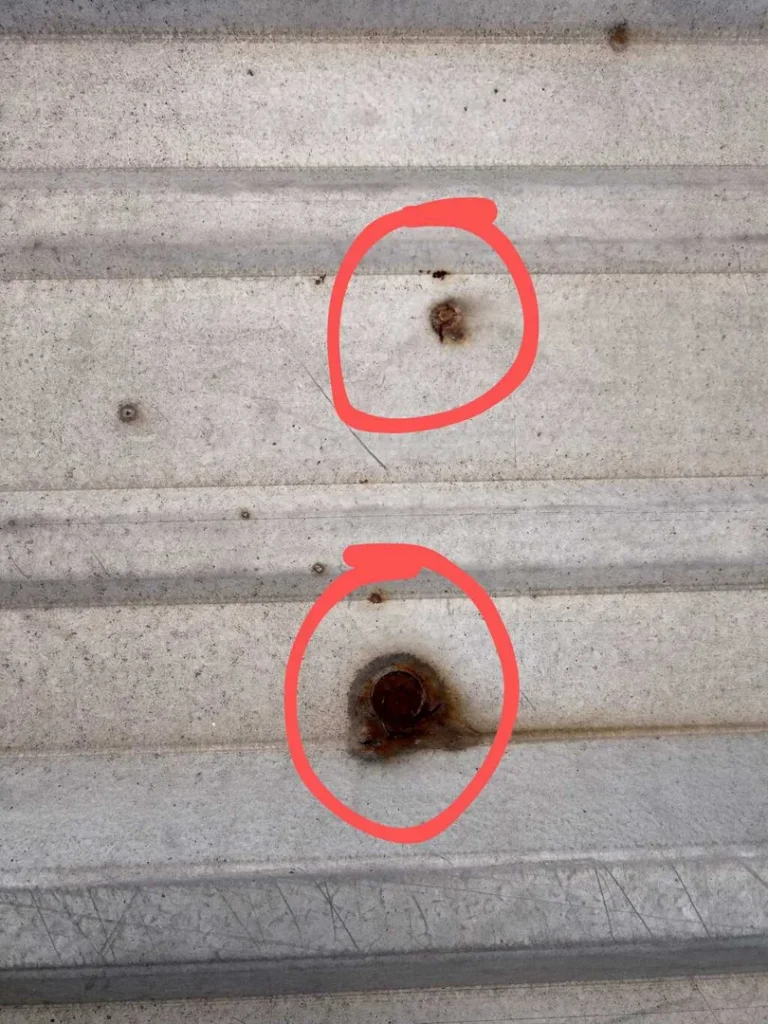
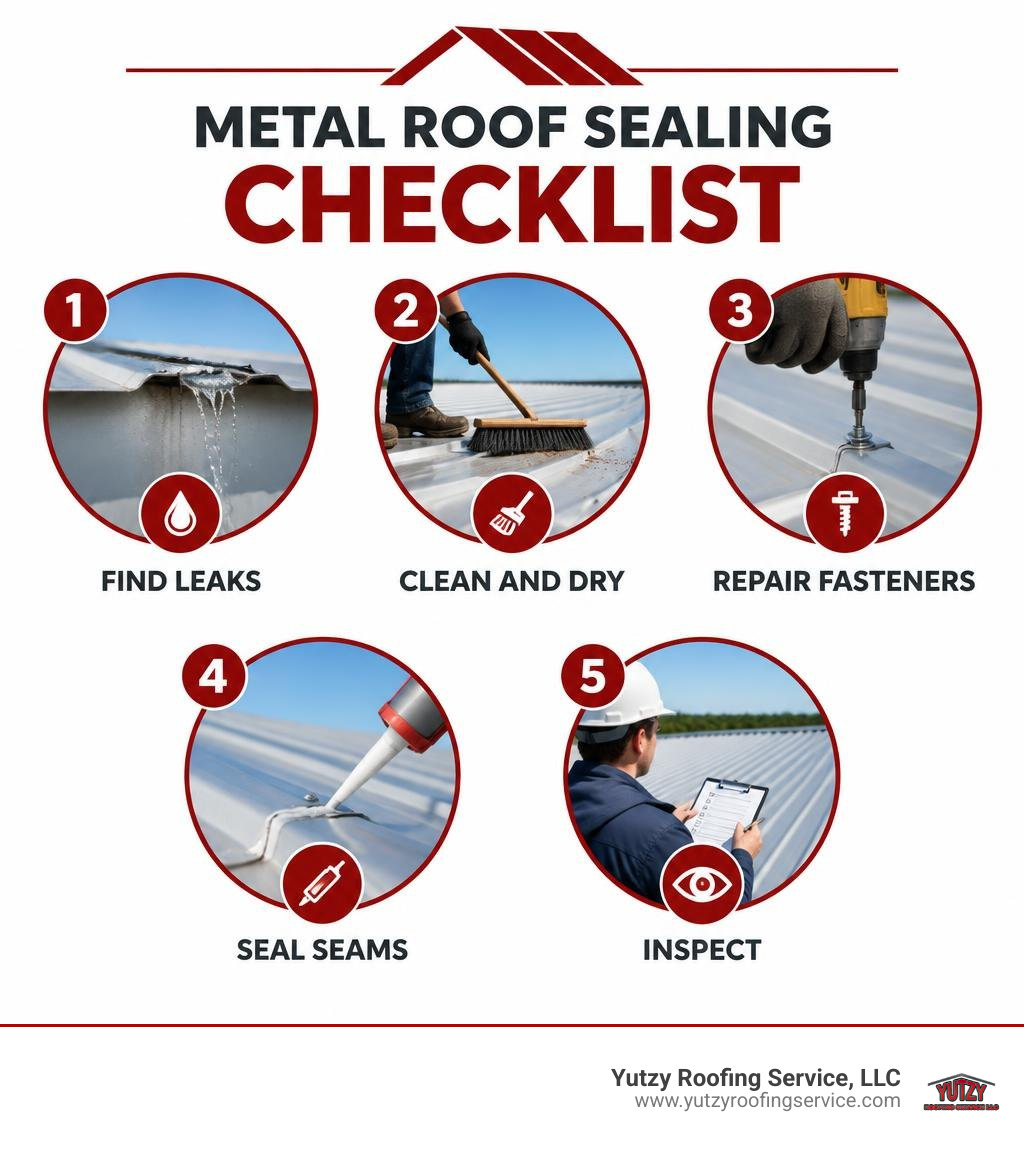
Find the leak before you coat the roof. Clean and dry the affected area, remove loose rust and failed sealant, and repair any loose fasteners. Use butyl tape inside panel laps that can be opened. For exposed seams and fasteners, use a roof-grade sealant or reinforced coating system that is compatible with the metal. Apply it only within the product’s weather and curing limits.
A coating alone will not fix a loose seam or damaged panel. Finding those problems first helps keep water out of your commercial building and protects the structure below.
I’m Josh Yutzy of Yutzy Roofing Service, LLC. Our family-owned company has worked on Wisconsin roofs since 1995, and I’ll walk you through the best way to seal a metal roof, from choosing materials to knowing when a repair needs a roofer.
Best way to seal a metal roof further reading:
The Best Way to Seal a Metal Roof: Preparation and Materials
Commercial metal roofs endure punishing physical forces. A 20-foot steel panel can shift nearly a quarter of an inch between a scorching summer afternoon and a freezing winter night. This constant thermal movement stresses fasteners, separates panel laps, and tears low-grade sealants apart.
Combined with unrelenting ultraviolet rays, standard caulks quickly dry out, shrink, and crack. When surface water gets trapped in expanding gaps, corrosion accelerates beneath the panels, risking inventory, equipment, and structural framing.
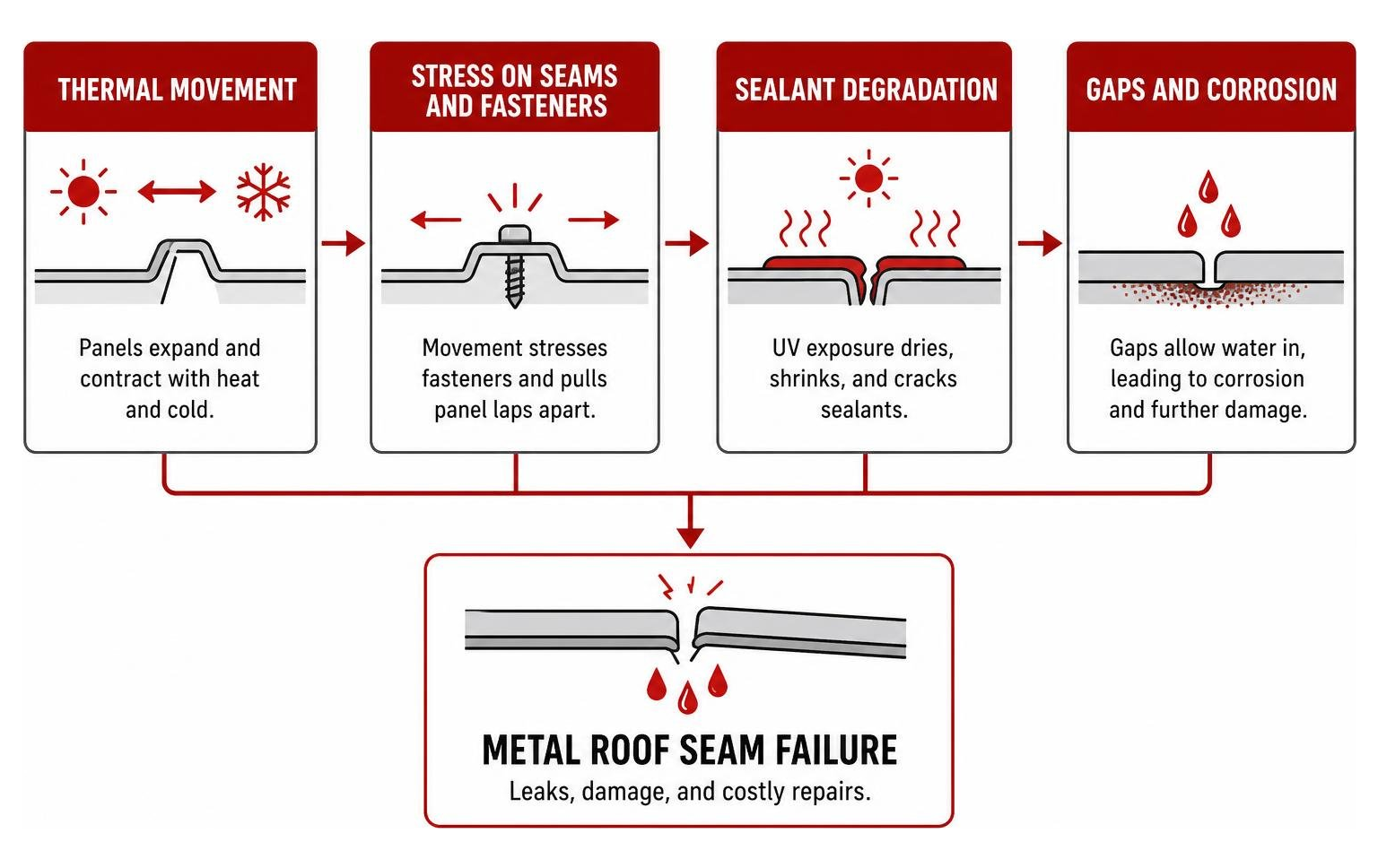
Understanding these dynamic forces helps determine the right materials and preparation steps needed for a lasting seal.
Choosing Sealants: The Best Way to Seal a Metal Roof Substrate
Never use standard silicone, latex, or general-purpose hardware store caulks on a commercial metal roof. These consumer products lack the elasticity required for commercial roofing and will fail within one to three years. Instead, select high-performance chemistries engineered specifically for metal substrates.
Using butyl tape for concealed laps provides an airtight, flexible barrier that stays pliable for decades between overlapping panels. When addressing exposed joints, penetrations, and fasteners, applying professional metal roof sealants ensures the chemistry can flex without pulling away from the panel.
| Sealant Type | Primary Chemistry | Elongation Rate | UV Resistance | Typical Lifespan | Best Use Case |
|---|---|---|---|---|---|
| Butyl Tape | Synthetic rubber mastic | Moderate | Low (Concealed only) | 20–30 Years | Hidden panel end-laps and side-laps |
| Polyurethane | Moisture-cure polymer | 300%–500% | Moderate to High | 15–20 Years | Exposed seams, flashings, perimeter terminations |
| Silicone | Inorganic polymer | 200%–400% | Exceptional | 20–25 Years | Areas with UV exposure and standing water |
| SEBS Rubber | Styrene-ethylene-butylene | 500%+ | High | 15–20 Years | High-movement seams and full-roof restorations |
For broader restoration overviews and product comparisons, explore our metal roof caulk guide and review top-rated roof sealants.
Deep Cleaning and Substrate Preparation Protocols
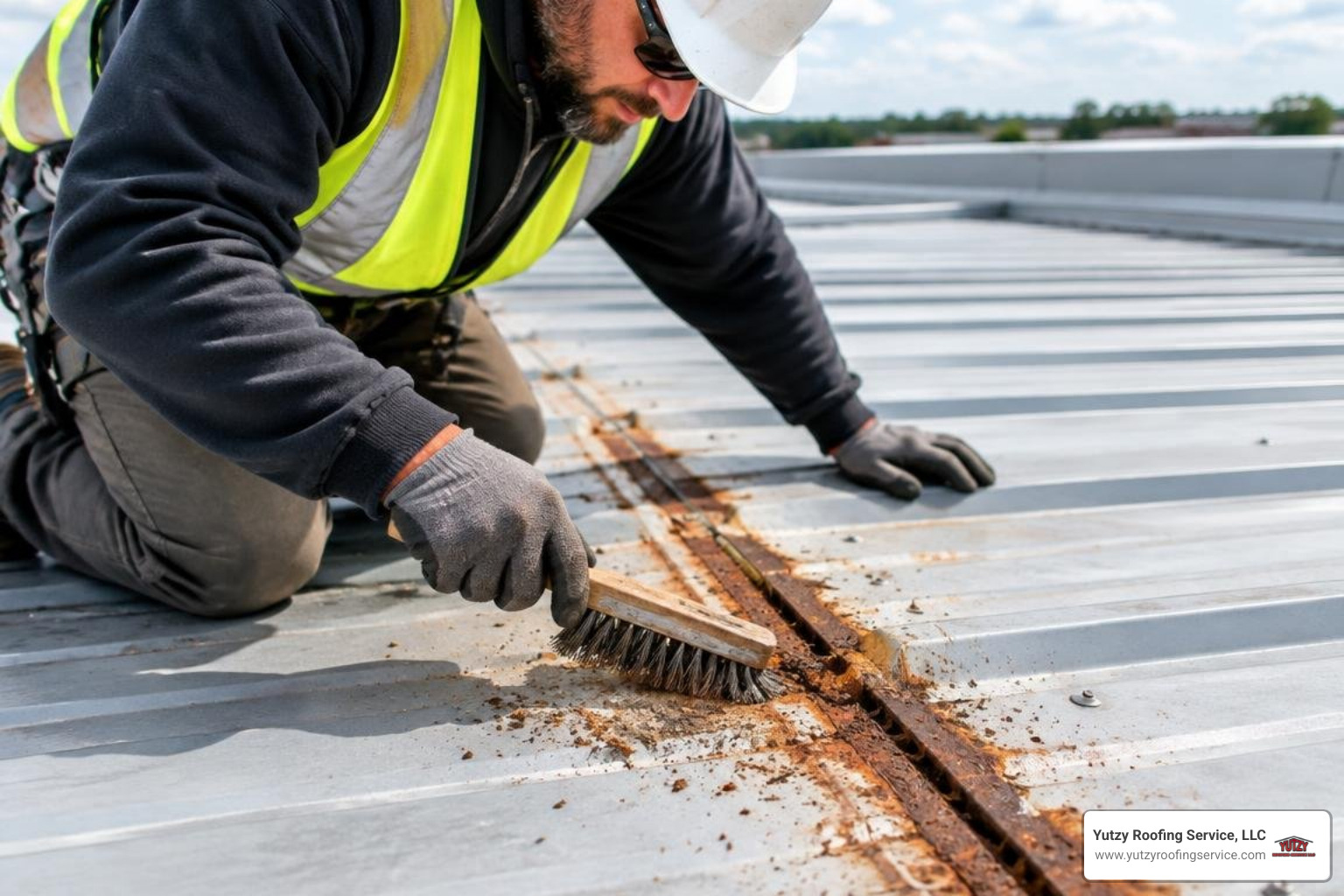
Thorough cleaning accounts for roughly 90% of a successful sealing job. Even the most advanced elastomeric compound will peel off if applied over dirt, oily residues, or loose rust scale.
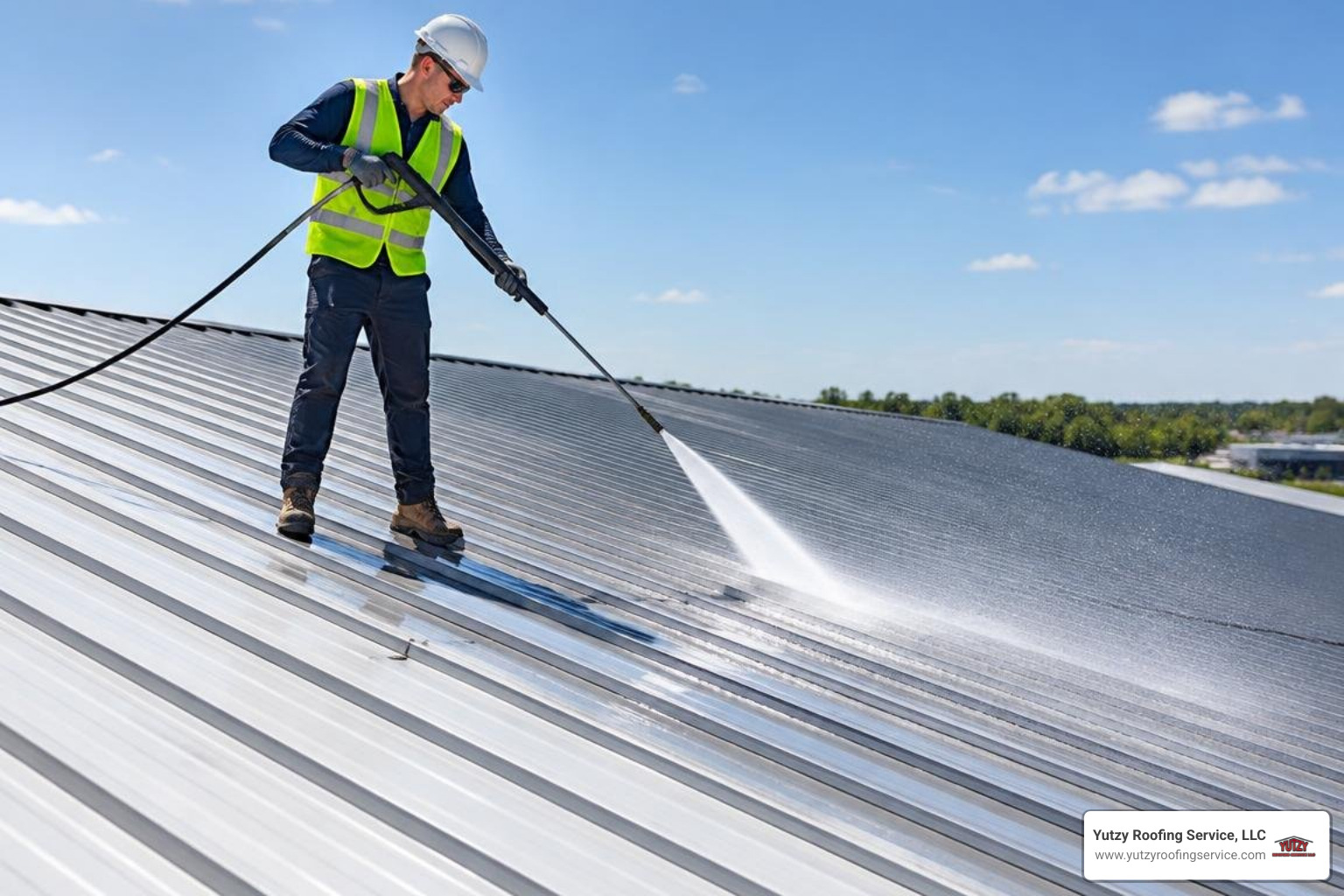
- Power Washing: Wash the entire metal substrate using a pressure washer rated at a minimum of 3,000 PSI to blast away oxidation, chalking, bird droppings, and loose debris.
- De-Greasing and Solvent Wipe: Wipe critical seams, curbs, and flashings with isopropyl alcohol or denatured alcohol to lift thin industrial oils and chemical films.
- Rust Remediation: Mechanically scrape and wire-brush all surface rust down to clean metal. Treat affected spots with a rust-inhibitive primer to prevent oxidation from spreading beneath the new barrier.
- Stripping Old Caulking: Scrape away brittle, cracked, or failed sealants. Layering new product over dead caulk guarantees premature adhesion loss.
- Fastener Inspection: Replace stripped or missing fasteners with oversized screws equipped with fresh EPDM or neoprene sealing washers. Snug down loose screws firmly without overtightening or distorting the rubber washer.
For more deep-dive steps, read our complete roofing caulk manual.
Execution, Maintenance, and Professional Restoration
Once the roof is clean, sound, and dry, applying high-grade sealants creates a seamless, watertight defense across the entire building.
Step-by-Step Application: The Best Way to Seal a Metal Roof Seams and Fasteners
Applying a field-tested three-course reinforcement strategy transforms vulnerable metal joints into an impermeable system.
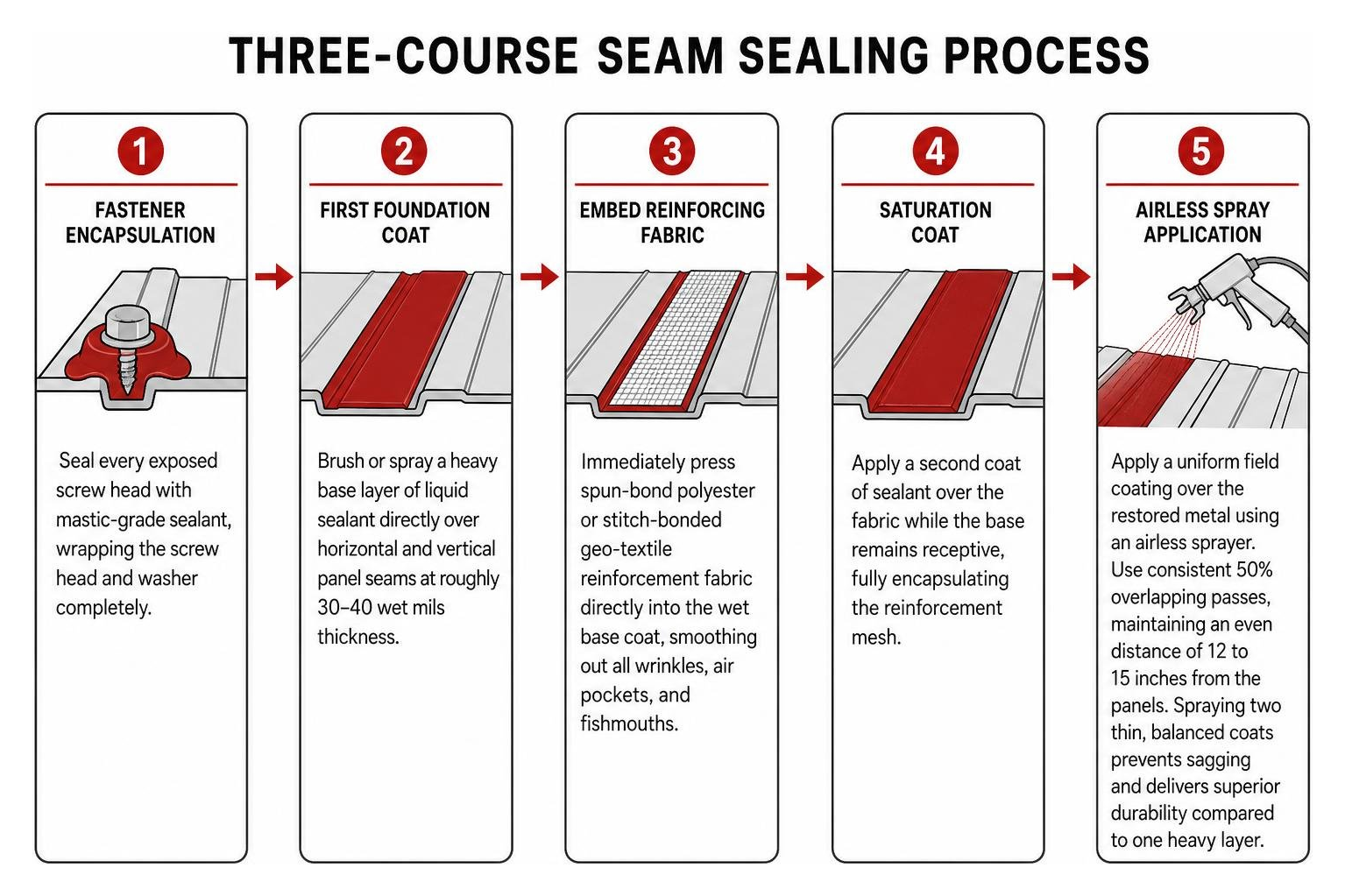
- Fastener Encapsulation: Seal every exposed screw head with a heavy dollop of mastic-grade sealant, wrapping the screw head and washer completely to prevent water from tracking down the threads.
- First Foundation Coat: Brush or spray a heavy base layer of liquid sealant directly over horizontal and vertical panel seams at roughly 30–40 wet mils thickness.
- Embed Reinforcing Fabric: Immediately press spun-bond polyester or stitch-bonded geo-textile reinforcement fabric directly into the wet base coat, smoothing out all wrinkles, air pockets, and fishmouths.
- Saturation Coat: Apply a second coat of sealant over the fabric while the base remains receptive, fully encapsulating the reinforcement mesh.
- Airless Spray Application: Apply a uniform field coating over the restored metal using an airless sprayer. Use consistent 50% overlapping passes, maintaining an even distance of 12 to 15 inches from the panels. Spraying two thin, balanced coats prevents sagging and delivers superior durability compared to one heavy layer.
For facilities requiring total surface rehabilitation, a full commercial metal roof restoration creates a monolithic protective shield across all joints and fasteners.
Critical Weather Conditions and Mistakes to Avoid
Climate conditions play a massive role in how well sealants cure and bond. In regions like Wisconsin, wild temperature fluctuations can easily sabotage an application if timing is off.
- Temperature Thresholds: Apply liquid sealants and coatings when ambient and surface temperatures are between 40°F and 90°F. If the steel exceeds 120°F in direct summer sun, the material skins over too fast, trapping solvents and causing pinholes or blisters. If temperatures dip below 40°F, liquid rubbers and polymers will not cure correctly.
- Moisture and Condensation: Never apply sealants over morning dew, frost, or within 24 hours of expected rain. Trapped moisture guarantees peeling.
- Avoid Over-Thick Single Layers: Applying an excessively thick layer of sealant in one pass causes “alligatoring,” where the top skins over, cracks, and splits as the underlying material struggles to dry.
Integrating routine maintenance practices into your building management schedule ensures issues are caught before water penetrates the interior.
Material Estimation, Inspection Schedules, and Professional Solutions
Accurate material planning is essential when staging a restoration project. Because corrugated and standing-seam panels feature profile ribs, valleys, and overlaps, the actual surface area is roughly 10% to 15% larger than the flat square footage of your building footprint.
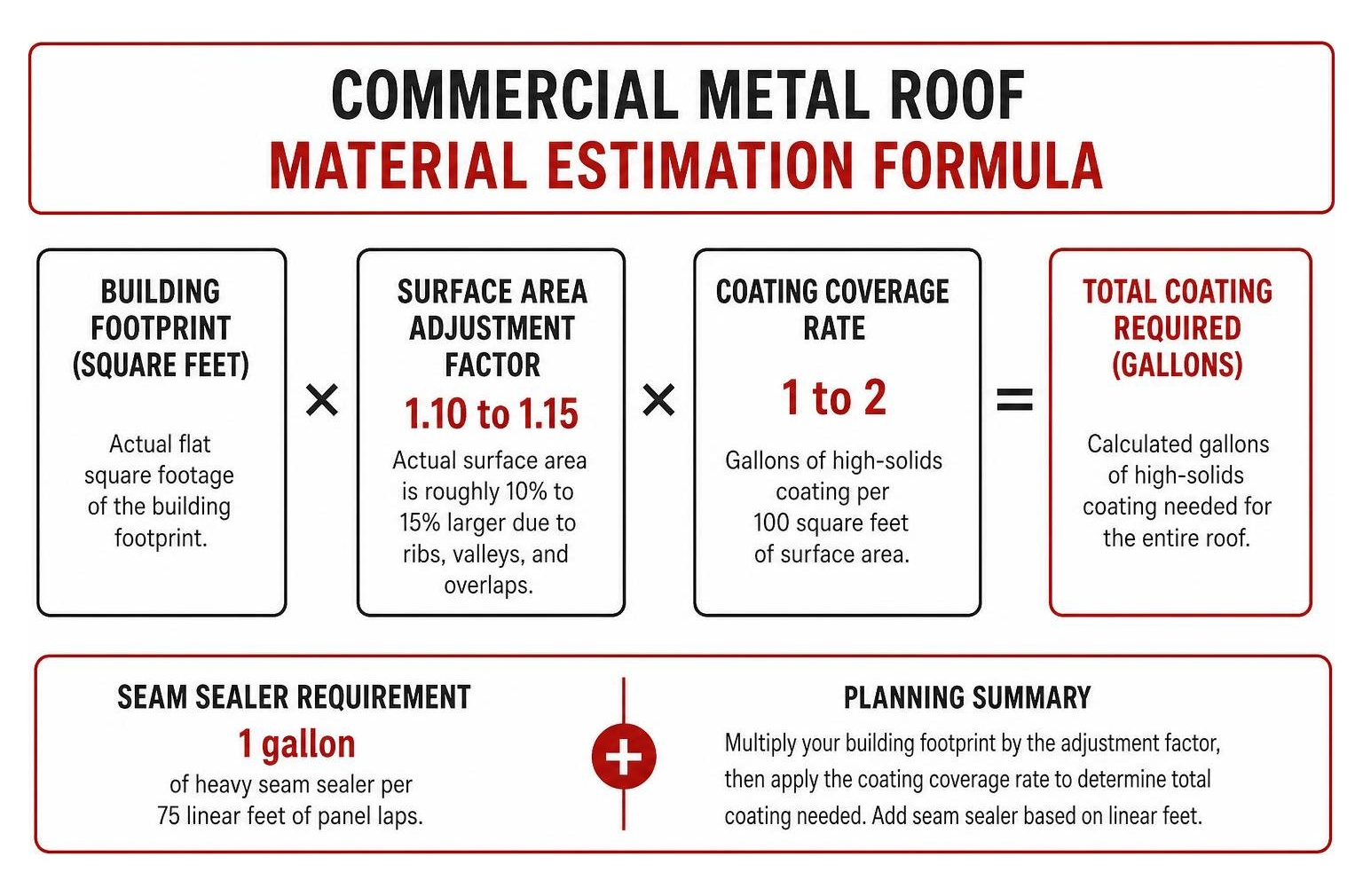
Plan on approximately 1 to 2 gallons of high-solids coating per 100 square feet for field coverage, along with 1 gallon of heavy seam sealer per 75 linear feet of panel laps.
Inspect your commercial metal roof at least twice a year—once in spring following snowmelt and once in late autumn before freezing weather sets in. Inspect critical transitions, drainage troughs, pipe boots, and perimeter flashings for movement or wear.
While minor, low-slope patching on accessible panels can be handled in-house, large-scale seam separation, widespread fastener failure, or aging standing-seam profiles call for certified expertise.
For complete building peace of mind, check out our complete metal roof sealant guide or read our overview on comprehensive metal roof restoration. At Yutzy Roofing Service, LLC, we restore commercial facilities across Madison, Appleton, Eau Claire, Fond Du Lac, Green Bay, Wausau, and Marshfield, WI, backing our installations with up to an 18-year non-prorated, renewable warranty. Contact us today to evaluate your commercial roof and stop costly structural damage before it starts.
